Podcast
Blockchain Australia, Steve Vallas.
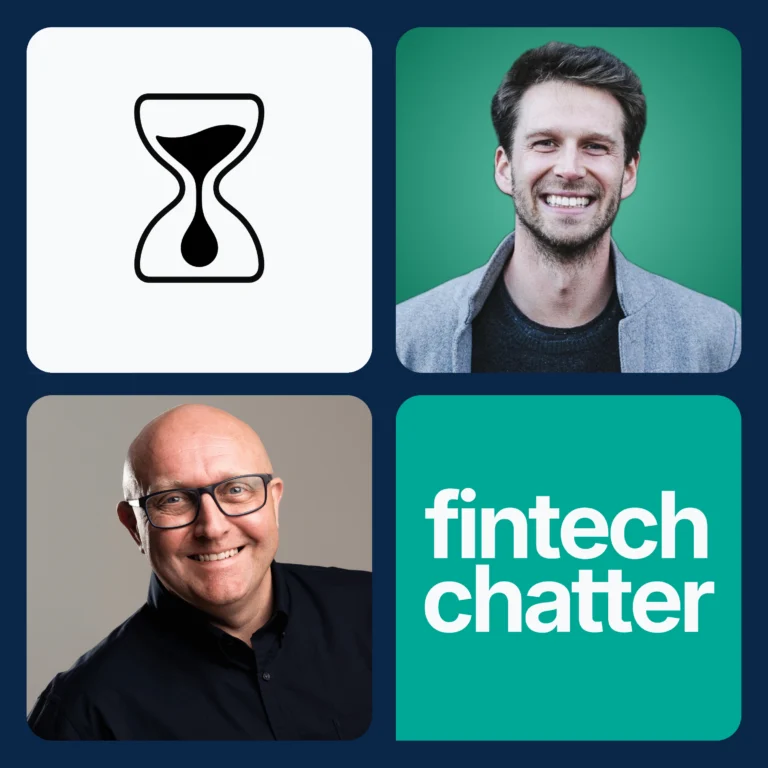
In episode 78 of the Fintech Chatter Podcast Dexter Cousins is joined by Steve Vallas, CEO of Blockchain Australia.
It’s a big week for Blockchain Australia as they launch the very first Blockchain Week, a festival bringing together over 100 speakers to talk all things Blockchain.
Blockchain Australia aims to encourage the responsible adoption of blockchain technology by industry and governments across Australia as a means to drive innovation in service delivery across all sectors of the economy.
Steve shares his candid views of where the industry is at in Australia and what Government and industry needs to do to make Australia a real innovator in the space.
To attend Blockchain Week
For more info visit Blockchain Australia
Follow Steve on Linkedin
Links from this episode.
- Digital Economy Council of Australia, the industry body formerly Blockchain Australia, renamed in 2024
- Blockchain Week, the national festival Blockchain Australia ran
- Steve Vallas on LinkedIn
- Senate Select Committee on Financial Technology and Regulatory Technology, later renamed the Select Committee on Australia as a Technology and Financial Centre, chaired by Senator Andrew Bragg
- Tier One People
Steve Vallas on Fintech Chatter.
- The Blockies Awards 2021, recorded live at Blockchain Australia’s industry awards
- Fintech News Today (2022), with Steve on his next venture, Blockchain APAC
More on blockchain on Fintech Chatter.
- Senator Andrew Bragg (2021), on chairing the Senate inquiry into fintech
- The Blockchain Podcast (2020), with guests from R3, ConsenSys, BTC Markets, Civic Ledger and AgriDigital
- Genesis Block, Chloe White (2022), on digital asset policy in Australia
- All Fintech Chatter episodes
Full transcript.
Lightly edited for readability — filler words removed, wording otherwise unchanged.
Dexter Cousins
This is Fintech Chatter, presented by Tier One People, leaders in fintech executive search, and I’m your host, Dexter Cousins. This week is Australian Blockchain Week, and I’m here with Steve Vallas, CEO of Blockchain Australia. In today’s show we chat to Steve about the role that Australia’s industry body is playing in the development of emerging technology in the digital economy.
Our client is a digital transformation consultancy working with world leading brands. The banking and financial services practice is the fastest growing in the group, and they’re on the hunt for a country managing director to launch and scale the APAC region here from Sydney. We’re looking for someone to develop award-winning digital experiences for digital challenger banks and mid-tier banks, with deep domain experience in banking and lending technology. Ideally you’ll be coming from a recognised digital consultancy or an enterprise banking software player. If that’s you, we’d love to hear from you, so check out my LinkedIn profile for further details.
Welcome to the show, Steve.
Steve Vallas
Thanks Dex, I appreciate the opportunity.
Dexter Cousins
Mate, really good to have you with us. Do you want to tell our listeners a little bit about Blockchain Australia?
Steve Vallas
It’s an organisation I’m the CEO. I’ve been in the role for, I think it’s about 10 months now, Dexter. Before that I was aware of the organisation. I’ve been in the blockchain ecosystem for the last three or four years. Since I took over I’ve changed the focus a little bit.
The previous sort of history of Blockchain Australia was it was the merger of two organisations, one Blockchain Australia, the other the Australian Digital Commerce Association, that slightly different focus. One was much more grassroots, one more cryptocurrency focused, the other was very much government and advocacy focused. And that merger that happened about two years ago meant that those two competing priorities were kind of mashed together a little bit. So I’ve been doing my best to make sure that both of those narratives are served current version of the organisation.
Dexter Cousins
That sounds a bit complex.
Steve Vallas
I think it’s a complex beast. The challenge here is it makes my life interesting, but it also does create issues, because the perspective that people bring into rooms when they’re talking about blockchain, distributed ledger technology, can be very, very different. You can be a true believer at one end of the spectrum and talk about the fact that you don’t think there should be any involvement of governments, regulators and the like, and then you’ve got others that say this is business as usual, but it’s process improvement. So depending on which view is being put, I try to offer up that perspective.
Dexter Cousins
Great, great. So where are you at now then in terms of number of members?
Steve Vallas
I believe for me, post COVID, we’re seeing a surge of membership. We’re well over 100 corporate members now. I think there’s an expectation that that number will continue to surge. I think it kind of feels, and this the reason I took the role on, Dex, that it felt like the timing was right. There’s a bit of coming together of circumstances that mean blockchain DLT in Australia is being given some degree of recognition. We’ve been a bit of a laggard when it comes to some of international conversations, but right now the interest is growing, and it’s growing across a wide variety of sectors. Education sectors are committing to, tertiary institutions are coming on board, industry is there, the startup ecosystem is always active too.
Dexter Cousins
So if we were to kind of take the media as an example, if you ask the public what they knew about blockchain, I think you probably get two answers now: Bitcoin and now NFTs. What’s the kind of, what do you see as being actually the opportunities for blockchain here in Australia? Is it the cryptocurrency bit, or do you think it’s going to be more of the kind of government and regulatory side?
Steve Vallas
I definitely think the way you’ve characterised it as what the news is, the news is Bitcoin, the news is speculative elements of cryptocurrency, so perceived or so-called. I think the reality of this rain ecosystem is much of the conversation is drier. It’s in the distributed ledger technology space, it is indigenous process improvement. I think we like to tell ourselves stories often in the Australian ecosystem about how innovative we are, but I think the reality is when it comes to this kind of technology, most of the drive is coming from traditional businesses.
So again, that’s part of the challenge of this ecosystem, because it’s not necessarily the case globally that’s where the interest is being created. So from our perspective though, I think it’s a lot easier to have a conversation in boardrooms at the moment about some of the applications of this technology, because those that believe at the other end of the spectrum, in the cryptocurrency space, they tend to just want to do their own thing and move forward as quickly as possible.
Dexter Cousins
And so there’s also been kind of applications that we’re now seeing from a kind of finance perspective, where we’ve got DeFi. What’s the kind of, I guess, the state of play here in Australia? I’m aware of one or two kind of projects here down under, but from a cryptocurrency side there doesn’t seem to be an awful lot happening here in Australia. Is that a kind of fair assessment?
Steve Vallas
I think it is a fair assessment, Dexter. The challenge has been the position that was probably best evidenced in the National Blockchain Road Map, of which I am a committee member, steering committee member. Australia, through the federal government and through the Department of Industry, chose some places to start the conversation, and those starting points were and are supply chain, credentials, R Tech and cyber security. Deliberately you don’t hear the word financial services, because I think the implications are a little bit too big to having a law of rooms at the. So we started with subject matter that is a little bit more comfortable.
One of the conversations I’ve had relatively recently, part of submission I made to the Senate committee with respect to fintech and RegTech, was that we need to bring the conversation closer to financial services and to the finance sector, because it’s happening internationally much more than it’s happening in Australia. We can’t be shy about bringing that conversation closer together. Now, it made sense not to do it for a period of time, because the truth is it felt a little bit too scary, a little bit unknown or is. Right now, the shifts that are happening globally are happening around the sector involved, financial services.
Dexter Cousins
Yeah, well when Bitcoin’s value is more than that of the Aussie dollar, I think it is a conversation that we need to be having, right?
Steve Vallas
Absolutely, Dex. I guess the thing about these rooms is, having traversed them for three or four years, the outliers are no longer outliers. And it was the case that you were lucky to find one first. It seems to be a lot more people now that are happy to have a conversation and to varying degrees have interest in the space or participation. But it’s not that difficult to find people who are willing to talk about that subject matter now. With respect to their own views, they might still think it’s the scariest thing they’ve ever heard about, or the other perspective, which is this will change the world. So those conversations are much more.
Dexter Cousins
Yeah. I guess one area where we are leading, you talked about some of the kind of applications, we got some really great businesses that are focused on things like agriculture, utilities, etc. What are you seeing from that side? How much more traction are you seeing in the kind of the physical applications of DLT?
Steve Vallas
I think the supply chain one is probably where everybody starts, Dex. I know when it was flagged by the federal government to me a little while back, I said it’s a natural starting spot, because people like to tell stories, national stories, Australian stories. A lot of businesses, I think, naturally gravitate towards supply chains because they are by and large, in many instances, dysfunctional or inefficient. So I think it’ll continue to be the case that a lot of people will go to that subject matter.
I think you and I spoken before a bit, Dexter, about the challenges that are sometimes people oversold what this potentially could do. And I think now there’s been a bit of a revision where now, looking at friction points, they’re not approaching things from a full stack perspective. They’re saying we can improve our process, and I think that’s going to lead to greater uptake in supply chain application in blockchain DLT space. So I think it is the natural spot where people will go to. And I can tell you that globally, every nation thinks they’re telling supply chain DLT stories. Australia, I think, is very well placed to do that, given that it’s something that is so baked into the Australian story. We are exporting to the world, that’s what we do from this side of the world.
Dexter Cousins
Awesome. No, it’s come a long way in the last few years, particularly if you look at the kind of from 2017, and there’s challenges for the industry. We had the ICO issues that kind of really set it back. What do you see now as to kind of where it’s at, and where does it go from here?
Steve Vallas
The 2017–18 sort of window, Dex, brought some great outcomes. It also brought some legacies that we continue to have to deal with. I describe it often the Ghost of Christmas Past. The reality here in Australia is, although we told a story about how actively we participated in the ICO sort of stage of this ecosystem developing, we weren’t that active. Jurisdictions like Singapore, the United States and the like were very, very active.
So there’s a legacy there, and the legacy primarily is a lot of people formed a view of what this technology could be at that period of time, and they’re committed to that view. And I guess the challenge for me in a lot of these rooms is to say to people, are you willing to revisit your view? And not to you should change it, it’s just, are you willing to revisit it? And it’s meant that from a regulatory perspective we’ve kind of stood still in the last year or two. And I think that’s the concern that I’m bringing home to politicians across the country now, is not this is what Australia should be doing, but much more, this is what other jurisdictions are doing at the moment. Is this in step with what we should be doing?
Dexter Cousins
Who would you say kind of internationally is really leading the charge in the space, Steve?
Steve Vallas
It’s funny, my view has probably changed over the last 12 months a few times. I guess it’s when I look at it from a global perspective, there are different jurisdictions now that are all finding their way, and I think that’s the bit that’s garnering attention now at the Australian level. The US has not been too quick to move, but if you piece together some of the decisions across their treasury in particular over the last six months, then they suddenly look like they are allowing their banking sector to give this the consideration it deserves, proactive in some of the regulatory perspectives in pursuing the has been pursuing a few projects. So they make sure there’s an appropriate mix of people ensuring this restraint in the space and also growth. So the US has moved materially.
China is moving incredibly quickly, particularly with respect to the central bank digital currency, so they’re not quite ased as many other nations are with respect to the way they roll out this technology. Singapore is the perennial. They’ve moved quickly here. They need to maintain and want to maintain some strength in a Pacific region with respect to this sector, so they’ve moved.
Interestingly for me, the EU is moving. There’s a process at the moment that involves what they call Mic, the market in crypto assets, where they’re looking at a whole of EU approach to regulatory frameworks. And it’s slowish, but the reality of the EU is if it’s naaps together, then it naaps together and applies to all the countries. So globally there is of movement, all slightly different, so people are having to pick winners here, Dex.
Dexter Cousins
And that’s really interesting event they just. And so if you were going to pick a winner, who would it be?
Steve Vallas
I think in this ran context, I look at the version that we are likely to be when I consider our history. The truth is, we tend to do things in a relatively similar way to what this UK does. We have a similar legal system, so we look to guidance into what the UK does. Singapore, we don’t move as quickly as Singapore, we tend to follow them in. So I think it’s much more likely that we would look to those sorts of jurisdictions, the UK and the familiarity there, and Singapore, the regional one, to give us our cues.
Dexter Cousins
Awesome. Well, we’re going to take a quick break, Steve, but when we come back I want to have a chat with you about something that’s happening next week. It’s very special.
Tier One People is proudly partnering with one of Australia’s most successful fintech, an innovator in the consumer lending space. This business has been a driving force in fintech for almost a decade. They’re entering the next stage of hyper growth and need a people and culture expert to scale the organisation sustainably. As head of people, you’ll get to play a pivotal role in turning this successful startup into an enterprise. If you’ve taken a startup on a similar journey or scaled a fast-moving tech company, you’ll know how important it is to retain the original values while bringing in new structures. If that sounds like you, you’ve got the credentials and you’re up to the challenge, go to my LinkedIn profile or check out the show notes for further details.
Welcome back to the show, Steve. Mate, so as I mentioned just before we had that ad break, something special happening next week. Do you want to tell our listeners a bit about it?
Steve Vallas
Special is one way to describe it. This Ione say a little bit crazy. I’ve decided that Blockchain Australia was ready to run Australia’s first National Blockchain Week, so it’s effectively a festival of all things blockchain and DLT across the country. So at this stage we’re tracking at 120ish speakers, 50 plus sessions across the eastern seaboard and across the rest of the country as well. So quite an initiative, but I’m pretty excited about the fact that I get to give a lot of people an opportunity to tell part of their story.
Dexter Cousins
Fantastic. And look, I guess what else is fantastic about it is we actually get to have in-person events again.
Steve Vallas
Dex, I am a huge believer in the serendipity of face-to-face meetings. Pre-COVID, I think I was averaging two or three meetups a week for probably three years, so it’s literally hundreds of events. And the reality in those rooms is, if you’re tuned to what’s happening in financial services markets and fintech markets, you can catch up on that news most of the time on the internet, but there’s so much value in being face to face. Although this entire week is built to be COVID-proof, if the borders were to shut down at the very last minute, we sort of anticipated it, we can still run it, we’re really looking forward to being in rooms with people and getting a sense of what they’re doing close up.
Dexter Cousins
Now, you got some great speakers lined up, one in particular, which is a bit of a coup for you, and it’s been interesting to see how much interest that they’re showing in the space: Senator Bragg.
Steve Vallas
It’s a good conversation that we’ve gotten started, this extra. I think Senator Bragg, to his credit, has done something with a lot of other politicians probably haven’t done. He’s been willing to put the subject matter on the agenda. I spoke at the Senate select committee on fintech and RegTech that he is the committee chair of, and most of my submission related to the fact that we should be giving consideration this subject matter, and it’s something that he has embraced. So I’m really looking forward to him standing on the stage and telling that to the world, so we can move forward down the conversation in financial service rooms and the broader enterprise rooms Australia and say this is something that requires consideration, and it needs consideration now.
Dexter Cousins
You’ve also got some really great companies there. I mean, the space has moved on so much. We got the likes of consensus, all three, who are doing some really interesting stuff in the space. It really seems to kind of have evolved, particularly in the last two years. What do you think is going to be the kind of the real theme of Blockchain Week, and who should come along to the event if they’re interested in the space?
Steve Vallas
It’s funny, Dex, I did a launch event last week, and one of the key points I made in that room was look to your left, look to your right, this is the blockchain DLT. And there weren’t a lot of people in that room who I think would identify themselves as just being in blockchain. The observation here is that these conversations are in your room. It’s often the case people say to me, yeah, but doesn’t apply to my industry. And then when you start talking about some of the fundamental tenets of the technology and what can potentially impact, suddenly people say, that is what I do. So that’s part of the key here, is we want people to look around and see themselves. We want them to see people who are adjacent to what they’re doing.
Interesting, your observation about of R3, consensus algorithms and other. It’s a real important stage, I think, with respect to how this Australian ecosystem is building, because those kinds of businesses are infrastructure businesses, and Australia has not got a deep liquidity call when it comes to the creation of these sorts of infrastructure businesses. So I think it’s really important that we encourage international businesses to give consideration to Australian startups.
Yeah, the other part of the Blockchain Week is effectively saying, at the application layer, the builders, people within Australia who are seeking to build out, give them some voice. So that’s kind of the two sides of this conversation. There are those that are external international businesses that we encourage into our jurisdiction, and it is the elevation of this trans story that says we’ve got capabilities in this country to export in an enormous way, ones and zeros and IP. So that’s one of the key things I want to get across over the course of this week.
Dexter Cousins
Cool. Well, it’s kind of book plug time. I guess it’s a really important time for the industry, and as you mentioned, it’s impacting a lot of different industries. But if people are listening, who should be interested in becoming a member of Blockchain Australia, and what’s in it for them?
Steve Vallas
It’s funny, I’ve been a bit contrarian the way I’m sort of been selling membership. The truth is, I ask people to find the value and then look to the organisation and say, are these businesses you’d like to talk to? That’s part one. The other part that think it’s really important: I’ve spent three or four years navigating through the ecosystem, and I can save a lot of time. Blockchain Australia can save people a lot of time. That’s one of the key values here. There is complexity, because you look in every direction and see part of the ecosystem sort of growing out, so time is a critical asset for everybody.
So from that perspective, anyone that looks and says, look, with like a bit of a rails run, we want to get a sense of what the Australian ecosystem is, we want to understand what this looks like internationally, and we want to understand how those ecosystems connect, that’s the value of Blockchain Australia, in addition to obviously advocacy aims, which is something we do consistently. A lot of these conversations continue to happen behind closed doors because there is a lack of familiarity with the subject matter. They’re not rooms that are easily accessible. We hope to be, and we seek to be, the voice of many, many different people.
Dexter Cousins
Cool. Now, if we put kind of blockchain to one side, one of the things that I kind of really think is the theme, not just for you guys but for our business as well, is fintech has evolved, blockchain has evolved, and like yourself, we’re seeing there’s this kind of divergence but convergence at the same time, where everything now is so interlinked that I asked the question, what is fintech, what is blockchain, what is insurtech, what is regtech? And if there’s something that I kind of overlays across the whole thing, it’s the digital economy. We’ve got clients that are gaming businesses. It’s kind of crazy when I think back just a few years of where fintech was and where it is now. What do you see, or what has got you most excited right now, and are there any companies that kind of stand out to you as going, hey, this is the future, this is one to watch, this is where I think this is all heading?
Steve Vallas
I think on the first point, Dex, what you’ve described is those discrete segments. I don’t view them as discrete segments either. I think you have a similar view. I see the mesh, and that’s the thing that makes these rooms very interesting for me. When I talk about participation of a blockchain DLT sort of environment in those rooms, it doesn’t have to be at the front of that room. Sometimes at the back of that room, sometimes it plays a very small part. I think a good example, in a subject matter which you are incredibly well boosted on, something like the Consumer Data Right: blockchain DLT is not playing a particularly big role in that ecosystem, but as the CDR is rolled out across a variety of sectors, I think we’ll find that blockchain and DLT will. So it’s kind of just getting a sense of where it is in that ecosystem at the moment, and is there a place it’s going to go.
Dexter Cousins
Yeah, and there’s things like digital identity, right, where you think Bitcoin and digital currencies is, I mean, it’s kind of pivotal to a digital ID, and those conversations just don’t seem to be happening.
Steve Vallas
It’s funny, like, that is the subject matter, is probably the perfect example. Some people think that no one should be involved in anything to do with the personal affairs, there a genuinely anonymised world that we should live in, from one perspective. And the other perspective is that government should be able to access these things to make sure there is no bad behaviour. That conversation is enormous. That conversation can run for days and days and days, and that’s what makes interesting again for me. Depending on which view you’re at, there’s a technology stacked as a solution that’s being developed, which is why I say we’re in every room when we’re talking about this general subject matter.
But that’s a perfect example of the mesh and what it looks like, because when people talk to me about projects and they say, is it a blockchain DLT project, sometimes I say just the fact that we’re talking about digital identity in a genuinely private and anonymous way will make it a subject matter of interest to the space. So we find a home in most of the rooms that they’re in.
The question of what gets me excited and interested, again at two opposite ends of the spectrum: decentralised finance and the conversations around it are super fascinating at the moment. I am interested in the conversation about what liquidity looks like, recognising that, again, I mentioned before, in Australia with any pools when it comes to investment and the L relatively shallow. We’re a small country, so the pools aren’t what they are in other jurisdictions. Watching what people are doing at the moment, the pooling of funds and what that potentially becomes in the future, is super interesting to me. Yeah, because I think it allows people to have access to things that they might not otherwise have. It’s scary, I know, there is risk associated with at the moment, I know, but it’s also that peer-to-peer lending on steroids is a very interesting space to be paying attention to.
And the, which is the vanilla version, is process improvement. The truth is there is enormous efficiency to be gained from process improvement on the most rudimentary of tasks. We still do so much via paper and via email, backwards and forwards, and trying to establish ownership and trust. Those costs can come out. So depending on which part of the world you live in, there’s something for everybody.
Dexter Cousins
Yeah, well Steve, it’s been really good to have a chat with you. Good luck with next week. If people want to come along, where do they need to find out more about Blockchain Week?
Steve Vallas
There’s a very simple URL, Dexter, happy it’s blockchainweek.com, and I’m very happy to say we’re not selling tickets. This is an open event across the country. We want as many people as possible to expose themselves to this subject matter. After it’s all done we’ll upload all of the content, but blockchain.com is where you’ll find information about what we’re doing.
Dexter Cousins
Brilliant. And if people are interested in becoming a member of Blockchain Australia, where do they go?
Steve Vallas
It’ll be blockchainaustralia.org, and if you just push through an email, it’ll come to Amy-Rose, who handles the membership inquiries, and it’ll come to me. Very happy to have a chat. You know, I speak to more people than anyone else I know, and very much enjoy getting cont.
Dexter Cousins
I’ve got you cing, I’m gonna say you second, but we should have a count. Well, really looking forward to next week. I think it’s going to be fantastic to get everybody together. And look, it’s such an exciting time. It’s still very much the beginning, right? And it’s still so much kind of unknown and so many things to play out.
Steve Vallas
I think that’s the critical bit, Dex. I’ve said to people, just keep your options open. It really is the beginning. So I’m excited, because professionally, after a long time in professional life, I’ve never been more excited about what the next 5, 10, 20 years look like. So keep your mind open to the options.
Dexter Cousins
Fantastic. Well Steve, it’s been great to have you on the show.
Steve Vallas
Thanks Dexter, appreciate it.
Dexter Cousins
You can find me, Dexter Cousins, on LinkedIn, or follow the Fintech Chatter podcast page on LinkedIn too. Thanks for listening, and if you like today’s show, please subscribe to the podcast, and don’t forget to leave us a review, because it really helps me bring on great guests like Steve. This show is produced by Tier One People, leaders in fintech executive search. We’ll help you launch, scale and innovate by delivering world-class talent, and you can reach us, info at tieronepeople.com. Until the next episode, stay safe.
What happened next.
This episode was published in April 2021, the week Blockchain Australia ran Australia’s first national Blockchain Week, with Steve tracking about 120 speakers and more than 50 sessions.
In December 2021 Dexter caught up with Steve at Blockchain Australia’s industry awards, the Blockies, the day after the Treasurer announced a path forward for regulatory reform. Steve said Blockchain Week had been a flag in the sand, and that media coverage had shifted from eight out of 10 articles against blockchain to five. He said meetings that used to be one-on-one now had teams showing up, and that planning for Blockchain Week 2022 would start the following Monday.
- The Blockies Awards 2021, with the full transcript
- All Fintech Chatter episodes