Podcast
Genesis Block, Chloe White.
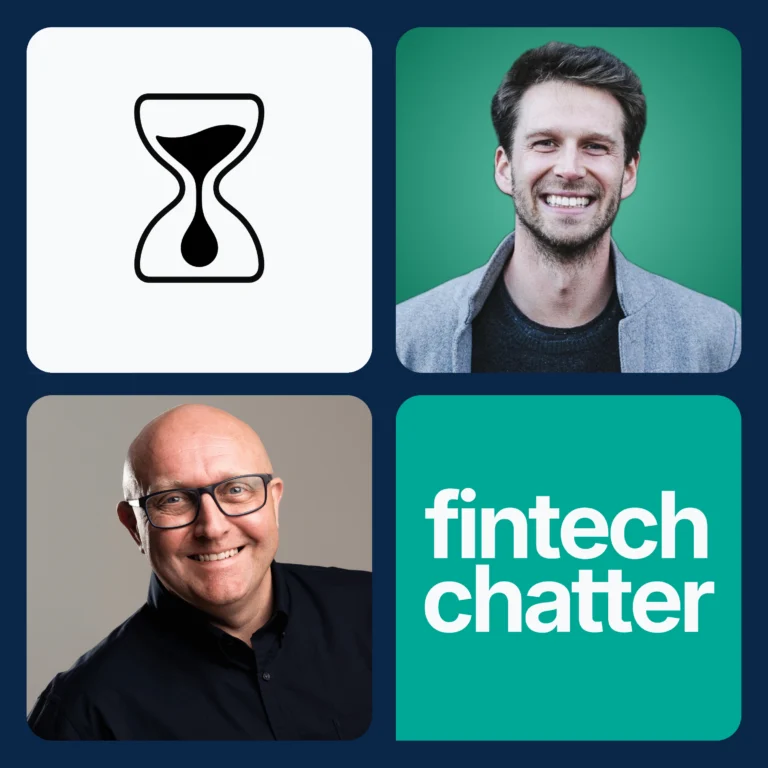
In episode 111 of Fintech Chatter Podcast Dexter Cousins chats to Chloe White of Genesis Block, Australia’s leading experts in digital asset policy.
Chloe has become one of the most sought-after advisors on digital assets and was recognised as Australia’s Blockchain Leader of the Year and Professional Advisor of the Year at the Blockchain Awards 2021.
She supports the emerging digital asset industry to de-risk growth strategies, deploy capital, and engage with government policy.
Having spent 10 years of her career with the Federal Government, Chloe has served as a key contributor to policy processes in Parliament in both an internal and external capacity.
These have included the crypto-asset Senate Inquiry, National Blockchain Roadmap Lead to the Commonwealth Treasury, and as a representative on multiple Council of Financial Regulators blockchain and finance working groups.
Chloe sat on the Advisory Board of INATBA, as the represenative for the Australian Government, and was the Founder and Director of the APS Blockchain Network.
Chloe holds a number of board and advisory positions, including the appointed Strategic Policy Advisor to Blockchain Australia, and an Advisory Board member of the RMIT School of Economics, Finance, and Marketing.
Dexter and Chloe talk about:
– Reinventing your career and finding what gives you energy
– Building a profile as a highly sought after Advisor
– The challenges in scaling a consulting business
– Where Australia ranks in digital asset innovation
– How to get a consulting business off the ground
You can find out more on Genesis Block and Chloe https://genesisblock.com.au/
Never miss an episode of Fintech Chatter, subscribe now:
Spotify – https://open.spotify.com/show/1et6klZeJGmxMsgcOaNsW8
Apple – https://podcasts.apple.com/au/podcast/fintech-chatter/id1486716249
TOP – https://tieronepeople.com/fintech-chatter-podcast/
What happened next.
This episode was published in May 2022, as Chloe talked about building Genesis Block into an advisory business on digital asset policy.
By the Blockchain News published in May 2023, Chloe was working with businesses that wanted licences under Dubai’s new virtual asset licensing regime, had guest lectured to regulators on policy principles for a Cambridge University executive education course on virtual assets, and was joining from an academic conference in Croatia on stablecoins and CBDCs. She said she would keep supporting companies seeking licences in Dubai and continue her research on stablecoins.
- Blockchain News, May 2023, with the full transcript
- Is it game over for blockchain? Chloe White (2023)
- All Fintech Chatter episodes
Links from this episode.
- Genesis Block, Chloe’s advisory business
- Chloe White on LinkedIn
- Digital Economy Council of Australia, formerly Blockchain Australia, the industry body Chloe and Dexter discuss
- Tier One People
Chloe White on Fintech Chatter.
- The Blockies Awards 2021, where Chloe was named Blockchain Leader of the Year
- Blockchain News with Chloe White (2022), on the RBA’s CBDC work and the Ethereum merge
- Blockchain News live from Singapore Fintech Festival (2022)
- Blockchain Chatter episode 001 with Chloe White (2022), recorded the week after the collapse of FTX
- Blockchain News, May 2023, on CBDCs, tokenisation and regulation for blockchain and AI
- Is it game over for blockchain? Chloe White (2023), the last Blockchain News
More on blockchain and digital assets.
- Steve Vallas on Blockchain Australia (2021), whose move to stand down as CEO Chloe and Dexter discuss
- The future of digital assets: crypto, compliance and stablecoins (2025)
- All Fintech Chatter episodes
Full transcript.
Lightly edited for readability — filler words removed, wording otherwise unchanged.
Dexter Cousins
Fintech Chatter, brought to you by Tier One People, leaders in fintech executive search.
Welcome to Fintech Chatter podcast, the show where I connect with fintech leaders and share their stories and insights on hiring and capital, scaling the business and, of course, a bit of chat. I’m your host, Dexter Cousins, and in 2022 I’m showcasing Australia’s next wave of fintech entrepreneurs. Show your support by watching Fintech Chatter TV on YouTube and giving us a subscribe and like, or if you prefer listening to the podcast, please consider leaving us a five-star review. It really helps in promoting the show to others and the fintech community. Now here’s a few words from today’s guest.
Chloe White
Hi, I’m Chloe White. I’m the founder of Genesis Block. We help crypto startups de-risk their strategies and help investors allocate capital in the digital asset world.
Dexter Cousins
Chloe, welcome to the show.
Chloe White
Thanks for having me.
Dexter Cousins
It’s awesome to have you here. So, little bit of an intro there as to Genesis Block, but would you like to tell our listeners a little bit more, and our viewers a little bit more, about who Chloe White is?
Chloe White
Yeah, sure. I’ve been working full-time in crypto for over four years now. I’ve got a real passion for the space, and I had a 10-year career in the Australian federal government, mostly working on economic policy and financial market regulation. So I’ve really enjoyed all the twists and turns of my career. Raised in Sydney, left there when I was 19, spent some time overseas. I’m European citizen as well, so it’s very privileged to be able to live and study there, doing my masters in public policy. And now living in Melbourne at the moment, but I’ve barely been home since Covid lockdown ended, just going around the world attending conferences and meeting people in the industry.
Dexter Cousins
Awesome. Now, you and I, I think we’d connected obviously over socials and stuff, the industry, but we connected in person at the Blockies Awards last year, where you were named Blockchain Leader of the Year. And I was really very, very keen to get you on the show, because I think your kind of backstory is a one that I personally find really fascinating.
Around about five years back, I kind of wrote a number of articles and kind of held a number of events for people in my network, really trying to encourage them to rethink their careers. And the kind of vision that I had is pretty much exactly what you’ve done with your career, Chloe. And I was, rather than kind of positioning myself as some visionary, I thought it would be great to have you on the show, because I think you’re just such a great example of what kind of a modern-day career can and should look like. So I wondered if you could maybe kind of start off by sharing with us a little bit about that journey of where you were working in government, and then you decided that you were going to go out and launch your own business.
Chloe White
Yeah, absolutely. For me, the decision to leave government, it wasn’t so much about launching my own business, although that had always been a lifelong dream of mine. It was more about wanting to unchuck myself from the constraints of that kind of traditional environment, where there were a lot of hoops to jump through in order to get things done. And I guess I sort of didn’t see all of those constraints as being necessary for me to achieve what I wanted to, which was to really have as much influence as I could in helping to drive forward Australian digital assets.
And so leaving government, I spent the first three months of Genesis Block doing actually very similar work to what I had been doing in the Treasury and in the National Blockchain Roadmap, which was really about helping to facilitate communication between policy makers and regulators and the industry. And so I had a lot of involvement in the Senate inquiry that was happening at the time, and I was also helping a number of startups with their strategies and helping them to understand what is the pipeline of regulatory reform that is coming, and what does that mean for operations and communications and compliance, and how do you as a founder position yourself with that ongoing change.
So I think that making the transition, it actually felt very easy and very natural, because it was really just about doing very similar work but in a much more free way, where I had full decision-making power over how I deployed resources and who I worked with and where and when I did my work. And so it really was a very easy decision.
Dexter Cousins
Yeah. It’s a really good point that you make there, because one of the, I think, the challenges that I’ve seen for people who’ve gone down this path as well, and typically they’ve kind of gone down a consulting path and had their own consultancies, is they’re outstanding at their job and they’ve got so much knowledge about their job, but what they don’t have much knowledge of or experience is business development and marketing themselves and networking and all the stuff that is actually critical to being able to bring in business for your own business.
How did you go about kind of building the profile that you’ve got? Because you got such a great reputation within the industry, you have got a great profile, and yet you’re not somebody who, to my understanding anyway, is gone and done the personal branding piece and the photo shoots and the Instagram and the… everything that you put out there on socials is all driven by the space that you work in, versus you kind of promoting yourself.
Chloe White
Yeah, I definitely haven’t invested in trying to learn business development, and I’d say that’s been a skill that I haven’t really been forced to learn since launching my company. And I think that really our careers tell us what are the skills we need to acquire, and so what I’ve really had to acquire is a lot of subject matter expertise.
And so when I first entered the space four years ago, I took a very humble approach of saying yes to every opportunity that I had to learn anything. And so I would involve myself in forums that were quite unusual for a Treasury official. I would go to community meetups and go to, I guess, just have conversations with ordinary people who didn’t necessarily have any special status in fintech or weren’t necessarily CEOs, but people who just had a lot of passion and had been doing research for many years. And I really listened and I asked a lot of questions, and I got to naturally build a network by going through that process.
And then I just continued to be curious and continue to position myself in every kind of room where I felt that I could possibly learn something. And so my network grew very organically over a number of years, and by the time I was ready to leave government and work for myself, I suppose I already had that community and already had that reputation. So it was really just about saying yes to things and just being very curious and open.
Dexter Cousins
It’s a really good advice up, because it actually kind of flies in the face of a lot of advice that I’ve seen there, I’ve read in books, and it kind of tends to come from the same kind of crew who populate Silicon Valley and have the Amazon bestsellers, and that being that you kind of need to learn, you need to say no to things. And my own experience is very similar to yours actually, is that in the early days you had to say yes to everything, and almost earn the right to then be able to say no to opportunities that came your way. Do you think that’s kind of the position that you’re in now, where you now have to kind of be a little bit more discriminate in who you and how you say yes?
Chloe White
Oh yeah, absolutely. It is something that I really struggle with, because I want to say yes to everything and I have a lot of FOMO. I’m interested in too many things. And so it’s a really difficult thing, but I’ve definitely had to learn how to say no, and I have been getting better at that over the last couple of years. And I find increasingly it does blow my mind that the institutions and opportunities that I’m saying no to, but it’s a wonderful problem to have.
And it really forces me to be very aware all the time about what my goals are, and it’s a real blend of professional and personal goals that start to play in to decision-making when you have that wonderful problem of so much opportunity. So it causes a lot of continual self-reflection about where I am and what I’m doing. And I think that saying no is really a skill, and I’ve sought mentorship on how to do it, because it’s actually not that obvious how you navigate that problem.
Dexter Cousins
Yeah, yeah, it is tough. I’ve had instances where I’ve kind of, I felt, politely said no to opportunities, and the people have said no to have been offended, and it wasn’t to cause offence, it was just simply that you kind of, we, with limited resources, you really have to kind of pick and choose from so many different angles: commercially, kind of values-wise, all of those different things kind of come into play.
Do you find, Chloe, with you being the kind of fulcrum of the business as well, that these, there’s a, you have to then focus on some of those other elements, like things like your health and your mental health comes massively into play into, and having the energy to be able to deliver for clients? Do you find that you’ve had to kind of change those aspects of your life in order to have a successful business?
Chloe White
How that ties into my decision-making is I really make sure that I say yes to people and pro… that energise me, right? I want to feel like I’m emotionally invested in the success of the team, and that I actually really enjoy the company of the people that I’m working with. And so how I decide what to say yes to is a combination of what will I learn and how much fun will I have. And I’ve been experimenting since the launch with how I can scale my output, to try and say yes to as many fun and interesting things as possible.
And I guess that the physical and mental health aspect of that certainly is a major consideration. I don’t think it’s really possible to sustain a high and intense pace of output if you’re not actually enjoying what you’re doing. And so some of the things that I am saying no to at the moment are quite prestigious opportunities, but if they’re not the things that I feel I will learn the most from or have the most fun with, then it’s actually a very comfortable, easy thing for me to say no, because I realised that in order for me to enjoy the pace and the lifestyle, it really has to be enjoyable, and in a genuine way that I feel is exciting for me every morning.
Dexter Cousins
Yeah. And could you tell us maybe a little bit more about Genesis Block and some of the kind of wins that you’ve had and the types of clients that you deal with?
Chloe White
Yeah. It’s been really rewarding working with Blockchain Australia, influencing the direction of Australian crypto policy, and that’s been quite complex work, because we’ve had to coordinate a diverse group of members of that organisation and help to bring some more maturity to how that organisation approaches its work with government. And so I’m really proud of the work that my team did last year leading up to the December announcement by the Treasurer, and now we’re going through that process with the Treasury, where they’ve got a consultation paper out, and so I’m actively involved in the industry’s response to that process. And so that really stands out as a big highlight.
But some other things that I found really rewarding have been working with small businesses, crypto startups, where you can really empower people in the space who they don’t necessarily know how they can have their voice heard or get their message out there. And by giving them the tools and the knowledge of, this is how you can be influential and get involved in those kind of conversations that they want to be a part of, and then getting to see the result and getting to see those clients feel like they really had a win, and then I feel like I get to share in that success with them. So that’s something that I feel really proud of.
Dexter Cousins
Having watched from the sidelines, I mean, that’s been, those discussions and kind of around policy have been fairly feisty at times, with some fairly strong opinions, and I mean, even to… felt even sometimes fairly aggressive, the way in which those opinions have been put across. I think when I’ve observed you, Chloe, I used the term elegantly fearless and the way in which you’ve conducted yourself, with a lot of grace. But you haven’t let that kind of feistiness or that kind of sometimes aggression kind of flinch, or you haven’t been kind of deterred by that at all. And if anything, you’ve met it with even more grace and more elegance and how you’ve responded.
What’s kind of your experience and feeling of working in the blockchain space, when it comes to particularly some of the guys out there and how they’re communicating and kind of presenting themselves?
Chloe White
I really appreciate the feedback, Dexter. And I think that for me, where I get the perspective from in terms of conduct in this space probably goes back to when I worked on climate change policy, and I was involved in climate change for five years, five or six years. And that’s been a very hot-button issue in Australian politics for a long time. I worked on the front line of policy development through Rudd and Gillard and Abbott and Turnbull. And what I’ve kind of realised with these hot-button issues is that there’s an endless number of things to argue about. There’s always a new debate or trigger that gets people arguing all the time, and it’s kind of a never-ending cycle of disagreement and negativity if you allow yourself to get sucked into that toxicity.
And so while I really understand and respect the strong passion that people have who get involved on every side of these kinds of debates, I think that the most important thing is that we cannot lose our humanity. And unfortunately I think some of the way that people conduct themselves, particularly on social media, where it’s so dehumanising and the algorithms are encouraging people to get emotional, we can often forget that most people out there really are well-intentioned and are trying their best, and people are wanting to understand what is the best approach.
And so I try to listen to as many different people as I can, and that’s been the mandate of my job for most of my career, that it’s my job to uncover every stone and hear all the different perspectives that exist. You can’t do proper analysis if you are only listening to one subset of voices. But the other thing is, I see that as the years go by, it really stands out in my mind who are the people who’ve conducted themselves with that humility and respect, even towards people that they disagree with. And I really admire those people, and I want to model myself in that way, and also show people that it’s possible to disagree and still have respect in how you communicate and behave.
So it’s something that I value, and I hope that other people value it as well. And in the crypto space, I think we’re going to continue to see a lot of those passionate voices, but ultimately the people who will stand the test of time as people who have the respect of the community, I think will be those people who were able to get their point across and be influential without that bad behaviour.
Dexter Cousins
Yeah. Talking about respective peers, you were recognised by up peers at the Blockchain Awards in 2021, at the end of 2021, Blockchain Leader of the Year. How did that make you feel?
Chloe White
I was really proud to be awarded Leader of the Year. I really felt seen and recognised by the community. It meant a lot to me, and it was a fantastic celebration and a great way to end what had been a really remarkable year for the whole space. So yeah, I was really, really grateful for that, and it really touched me.
Dexter Cousins
Awesome. And I guess, kind of, if you’re thinking of the kind of community as a whole, where do you see blockchain is now? You’ve been involved for the last four years, probably, certainly it’s a significant amount of time in a fairly young kind of industry and technology. Where do you think we’re at here in ours, and then kind of here J the position at globally, as to where we’re standing?
Chloe White
I think we’ve had a lot of momentum in Australia and globally in the last year, 18 months. And although it has taken Australia a little bit of time to get to where we’re at now, where we have these more substantive policy processes underway to plug some gaps in our regulatory environment, I think that there is still a long way to go. And what I think we really have going for us is, for whatever reason, I guess partly for some cultural reasons and the fact that we have a fairly well-educated cohort of young people who are coming up with this big interest in crypto, we’ve got a lot of entrepreneurs who want to build here. But unfortunately we haven’t yet gotten to a position where Australia is their first choice of destination to actually set up their operations. And so that’s where I think there’s a bit of a litmus test, and we can keep coming back and testing that in the coming years and seeing whether that is changing.
And what I’m seeing happening internationally is that crypto is still looking for a home of sorts, but different jurisdictions are having a advantage in particular subsets of blockchain and digital assets. And so depending on your business model, one jurisdiction will be more attractive than another. And so the industry is becoming so large and complex now, it’s becoming a little bit redundant to talk about the crypto industry or the blockchain industry, because we’ve got all these different sub-sectors, applications, business models. And I think that’s going to transform the types of jobs that are created in the space, and also it’s going to change, I think, the way that we think and talk about policy and what a good policy environment looks like.
Dexter Cousins
Yeah, yeah, it’s a really good point, Chloe. And my kind of main interest in digital assets is around the DeFi space, whereas NFTs, I feel, hey, that’s… my kids are more into that. It’s gaming, it’s entertainment, it’s odd, it’s cultural stuff.
Where does your kind of real passion lie within the space? So you were, you, the NFT side, or do you, DeFi? Where do you see that being the kind of, if it’s really going to lift off and we’re going to see it kind of fulfil its promise, where do you think it’s going to begin with?
Chloe White
I really love applications related to economics and finance. That’s my original training, and I’m still an econ and finance nerd at heart. So I tend to enjoy thinking about Bitcoin, for example, because Bitcoin raises so many questions about money and monetary policy, and people talk about that in a macro context. But DeFi is something that I feel is so underrated and really needs to be built out, and I cannot wait to see the future of DeFi. Every time I interact with TradFi, I just feel so frustrated, and I need to see DeFi come to life.
I got some physical mail in the post the other day. I was to some of the brokers at Caleb and Brown, and I sit on their advisory board, and they were telling me that I really need to have some exposure to Boomer assets, and I can’t just have crypto in my SMSF. So I went and invested in a few different ETF products with my super, and then I got post in the mail telling me that now I need to do some kind of registration or sync up my super ETFs with my tax or something something, and I’ve got paperwork that I have to do now. And I got some other letters as well saying that I need to apply for some special kind of director ID and link all these Web 2.0 directories and things, and I don’t want to have to do all of this extra work. I just want everything to be seamless.
And Australia is so much better at fintech than almost every other nation in the world, but there’s still so much opportunity that we’re not even talking about, let alone leveraging and implementing. And I can see all of the potential there. It just needs to be built out and integrated, and people need to engage with it and see how things could be so much more efficient. And so I’m really hungry to just get to that day in time where I don’t need to receive physical mail giving me extra homework to do.
Dexter Cousins
What do… and when you kind of, I guess, you look at the talent here in Australia, what’s your senses to… I think one of my biggest frustrations is we just keep on hearing about a talent shortage, and I can’t understand how there’s a talent shortage with 7.6 billion people on Earth that we can connect with, who can work from anywhere. I get there’s skill shortage, but there’s a massive difference between skills and talent. Kind of skills can be learned; talent, a very, very different kind of prospect. What’s your senses to where we’re at here in our, when you look on a global scale, as to the people that you meet and the talent that’s out there?
Chloe White
Yeah, it’s an interesting market. I’ve seen some enormous finders fees being offered, and large bonuses for referrals for hiring. And so it definitely is a big topic of discussion in the industry. I think that it’s not really clear to me how we transform that untapped talent into ready-made skills and a labour force, because there’s obviously, I guess, a bit of a risk for people who may be quite comfortable in their roles and don’t necessarily feel the impetus to make a career change. And although there is this skill shortage, the labour market’s been very tight for a very long time, and so generally people in Australia don’t really feel that sense of urgency to have to reinvent themselves or retrain themselves.
And now the government is trying to come up with incentives for upskilling and training across a whole range of industries, and digital being one. And this was something that was an area of focus in the Blockchain Roadmap as well. But I think that until people really feel a push or a pull, that it becomes really urgent and important for them to do that retraining, something needs to give somewhere. And with the labour market being as tight as it is, maybe we’ll finally start to see that push in wages that we’ve been waiting to see for so many years now. And with inflation finally ratcheting up as well, maybe that is going to be finally the trigger that we’ve been waiting for. But I really don’t have the answers.
Dexter Cousins
Yeah. What was your experience like when you kind of moved out of government and, day one, you’ve got your own business? Was it a, did you have a, kind of, was there a time leading up to that where you’ve been threatening it for a long time, and you were debating whether you should do it, and there was a sense of fear there? Or is it something that you kind of decided fairly quickly?
Chloe White
It was a pretty easy decision, and once I’d kind of seen the opportunity, I couldn’t unsee it, and I knew that I had to do it. So I didn’t feel any fear. I was really 110% confident that I was making the right call, and that it was the right time as well. So it was a few times in life you just get that feeling in your bones that you know what you need to do, and that was one of those moments for me.
Dexter Cousins
Yeah. Now, I want to, and I’m springing this on you, but there was a big announcement from Blockchain Australia last week, with Steve Vallas standing down, and there’ll be a new CEO. First of all, are you going to go for the job? Because I couldn’t think of anybody better. And second of all, what’s your kind of view on the job that Steve’s done and why he’s taking the organisation?
Chloe White
Thanks, Dexter. I’m very flattered when people make these kinds of suggestions to me. And Steve has done a really fabulous job. I remember when Steve and I were chatting about, okay, you do Blockchain Australia, I’ll do the Roadmap, we’re going to work as a team and we’re going to move things forward. And I’m really glad that I’ve had the opportunity to work so closely with him, and really proud of what we’ve achieved together, and looking forward to continuing to work closely with Steve on whatever we end up doing next.
In terms of who should replace Steve, when I think about where Blockchain Australia has gotten to as an organisation, they’ve really built up their brand, their membership, and some of the massive events that they’ve put together have been seriously remarkable. And Steve is one of those people who always pulls a rabbit out of a hat. Every time he announces the project, it sounds impossible, and then he levels up again. So that’s a really important quality of someone who’s going to be in such a difficult role, where you have a lot of complicated stakeholders to manage and there’s always change and you’re operating in a political environment: that ability to relentlessly, and with so much resilience, just pursue increasing levels of, I guess, output, and try to achieve higher and higher goals. So that’s a personality thing that I think is important for really any CEO in a fast-growing space.
But in terms of the specific skills that I think would be important for Blockchain Australia, I think Blockchain Australia would really benefit from somebody who has been involved in a more mature and larger industry association in Australia. I think that it’s time for Blockchain Australia to level up again in its sophistication and maturity, and it needs to continue on the growth journey that it’s been on for these past few years. And so the next person at that role doesn’t necessarily need to have the same background and skills as Steve, but they do need, I think, to be someone who can see from the inside of an organisation that’s already been where Blockchain Australia needs to go. And I think someone with that industry association background is someone that I would be looking to point.
Dexter Cousins
Yeah, it’s a really good point to raise there, Chloe. It’s something that we see not just in organisations like this, but I think startups in general, is that these phases of growth, they’re very distinct and different kind of phases that require different and distinct people. And Steve was absolutely the right person to take it to where it is, and it’s great that he’s kind of recognised the point at which he feels he’s made his kind of maximum contribution, and now wants to move on and do the next thing. I think it’s much wiser to leave on a high than to kind of overstay your welcome, and for things to then, particularly in organisations and startups where there’s nowhere to hide, you kind of really have to be giving it your Ro every day.
But I guess, as we kind of come to a wrap-up, what’s the future got in store for Genesis Block?
Chloe White
This coming year for me is all about going international. I’ve just returned to Australia from around the world tour, moving through meetings and conferences in a few different continents. And I guess for me it’s really about what’s going to be the next step or the next level up for me, and that is really about going global. So I’ve been really excited to start to talk to some companies who they have a lot of global coverage and now they’re looking to enter the Australian market, right? How can I support types of businesses on that journey?
And it’s always very rewarding when you help Australian homegrown companies to expand up and out, but being able to move in both directions across the border is something that I feel drawn towards. And it makes me ask questions about what are the types of products or services or business models that we should have in Australia, that consumers should have access to, that no one is bringing here or that haven’t been built here yet, and how can I be a bridge in those types of conversations.
So policy making is another aspect of that. I’ve been talking to people internationally about how the regulatory environment is shaping up overseas. I think that, perversely in a sense, as the crypto industry becomes more complex and more large, the global community needs to shrink in some ways. The CEO of FTX called the other today for more coordination in global policymaking, and we know that in a country like Australia, where we tend to be a policy importer, we do often look to other jurisdictions to see what has worked and what hasn’t worked and what can we learn from. So I think that there’s a lot of potential in having some more of a global perspective and doing more cross-border projects. So that’s something that really excites me, and that I want to really build out. So that’s, yeah, that’s really the number one thing.
Dexter Cousins
Yeah. And I guess, as you become more successful, what thoughts have you had around scaling the business? Because I’ve got the issue where I can’t replicate myself, and if I would, I’d definitely grow my business. But there’s the IP and a lot of things that kind of I really struggle to be able to find, and if I can, that person’s likely going to have their own business and doesn’t want to work for me. So how are you kind of tackling that issue around scaling, Chloe White?
Chloe White
Yeah, exactly. I’ve tried to replicate myself and it doesn’t really work. So some of the scaling experiments that I’ve had, I guess the initial phase of my business was really building out the team in terms of manpower and trying to delegate as much as possible. And what I found is that there’s always a bit of backlash from clients when you try to delegate too much, because they want you in every meeting, they want you across everything. And so you do need to put a lot of time and investment into building up a team’s capability and brand as well. And it’s really about building up the brands of those individuals and the brand of the company standalone as the brand of Chloe White.
And I guess that there’s a limit to how much I am willing to do that, because the more people that I contract and the bigger the team, the more time that I’m spending managing contractors rather than actually doing the stuff that I initially started out wanting to do and that I still do want to do. And so for me, I’m very cautious around, I don’t want to grow out the business or the team just for the sake of growth, or just to be able to say yes to everything. It really comes back to those priorities that I mentioned at the start, around I want to enrich myself around intellectual richness and the enjoyment of what I’m doing. And so I guess that kind of scaling solution works really well for people who want to build an empire, but they may eventually be on a track to selling their business to bigger consulting group or something of that nature, which is not really the goal that I have in sight.
The second scaling solution that I then explored was trying to productise my work, but that’s a very challenging thing to do in an environment where a lot of the solutions that I’m offering are quite bespoke, because different businesses are at different stages of growth, they have different challenges that they face. And I do see a lot of common themes pop up again and again across all these different businesses, of things that they struggle with, and that is really useful, because it means that I can see what’s working in different companies and transfer that knowledge across to different clients.
But the challenge with trying to productise strategy is that it ends up, I guess, being a little bit of a hammer-nail problem, where you then start looking for clients who have particular problems, rather than looking for clients that are doing cutting-edge innovation and have the best culture. And so once I realised that that was the trap of that scaling solution, I thought, okay, well, again I need to keep coming back to my values and my priorities. So how do I scale for this particular value set?
And so now the phase of structuring that I’m in with the business is I’m scaling myself by doing less of the kind of really large written kind of products, where I’m sitting and typing out pages and pages of strategy documentation and policy papers. And I’m able to get across a suite of clients and activities by making sure that the types of engagements that I have are really focused on advisory roles. So I’m sitting on boards, and I’m getting involved in projects by advising the teams that are doing that really detailed, lengthy drafting, and trying not to be the person in the team who does the first draft of the strategy or the policy paper. And that means that I can be really efficient with my time.
So sometimes what I’ll do for clients now will be, I’ll go and workshop a problem with them. And so I’ll spend half a day with them saying, okay, this is the investment that you’re interested in, or this is the product that you want to roll out, or this is whatever the situation, let’s go through and cover off what’s happening in the market, or what are the risks and opportunities. And I’ll kind of give them the insight as to how they should be prioritising, how they should be allocating resources or capital, or just what factors they should be taking into account, or who they should be working with or partnering with, or whatever the relevant factors.
And so through half a day of work they can get a huge amount of value out of me, in terms of my IP, my network, my experience, what I’m seeing in the market, and then they can go away and actually have somebody else to then flesh that out into a roadmap. So that kind of model means that I can deliver maximum value with the least amount of time, and it means that I don’t have to say no to as many things, which is really good for me.
Dexter Cousins
Awesome. You’ve pretty much described my last five years. I’ve been on exactly the same kind of journey. And I think one of the challenges that I’ve found is the kind of, you talked about FOMO earlier, and particularly with social media, you see kind of competitors, or you see, oh, they’re doing that, I should be doing it, and you have to keep kind of withdrawing and going, okay, what’s this feeling and this urge that I’ve got? Where’s it coming from, and is it in alignment with what the actual end goal is?
I think what’s really helped me, Chloe, is just understanding what’s the outcome that I’m looking for, and it’s not to build as, I think we, and I ended up coming up with a say whenever anybody asked me if we were going to scale and grow the business, or we were going to hire developers, or kind of go and not do executives and do everything else as well. And the term that I came up with to clients was, hey, I’m here to help you build that your empire, I’m not interested in building one myself. And I think it’s kind of really helped me to just get back from, when you get those urges that are based mainly on jealousy and envy and kind of ego, to go back to basics and, hey, let… what are the fundamentals here? Why am I doing this? Why am I here?
Chloe White
Yeah, and it comes back to that conversation around sustainability as well, that if you’re being driven by anything other than your values, or if it’s a fear-based decision, I think that’s a path to exhaustion, because really everybody’s got an opinion, and there’s never going to be any of triggers out there to try to convince you that you’re doing things wrong or that you have something missing. No one’s ever going to get everything perfect. But I think, as you said, if you understand what is actually going to be the guiding light for you personally, then you don’t have to put all that pressure on yourself to try to get every decision perfect, because ultimately there’s always going to be another opportunity around the corner.
And so that’s something that I find myself coming back to all the time, is just… a lot of people call it an abundance mindset, and that term gets thrown around all the time, but I actually really have observed in myself and other people that people who have that mindset versus people who don’t make very different decisions, and how they experience that decision-making is very different, and really impacts on their mental health and their enjoyment of their work. And I’ve noticed that in myself as well, that once you realise there’s no need for all of that fear and anxiety, that actually you can just put one foot in front of the other and everything always works out in the end, then how you interact with people, how you go through your day, it becomes a self-fulfilling prophecy.
Dexter Cousins
Yeah, absolutely. And you touched on the aspect of to do things that give you energy, and I think it was Briy Alsome we had on the show a few weeks back who said exactly the same thing, was she’s learned that she needs to focus and do the things that give her energy. And not everything that she has to do in a business kind of gives her energy, but if she can focus on those things, that really kind of helps with the mental health side of things, and just maintaining a positive outlook when things might be so positive around you at the time.
Chloe White
Briy has always struck me as a highly energised person, so I think that makes a lot of sense. And when I think about a lot of people in my network who they always seem to be successful and levelling up from one opportunity to the next, they do tend to have that longer-term perspective. And we were chatting earlier today, Dexter, about the crypto markets are in freefall today, as they are a lot of the time. And it’s always very funny to me when I see people are so predictable in how they respond. I always know who are the friends that are going to be freaking out and panic selling, who are the friends that are going to be hungrily buying the dip, who are going to be the cynic online talking about how crypto is dead, and everybody’s always got the same tape every time.
And when you recognise these patterns and you can see through the cycle, it gives you that comfort, I suppose, to say, here we are again, and it’s just kind of things playing out on a loop in a sense, but…
Dexter Cousins
Well, it is, it’s almost 12 months to the day, isn’t it, we last one. Here we go, the annual dip overall. And look, I’m one of the ones who sit in the cynical bank, but I’m more cynical of the people that you’ve just described, rather than whether crypto is going to make it or not. I think I put out a tweet today saying WAGMI, WAGMI, WAGMI, WAGMI, WAGMI, because I haven’t seen a single tweet saying WAGMI for the last three weeks. So yeah, it is, we are gonna make…
Oh look, this is it, right? It’s like, do any of us know what it’s going to look like in 10 years’ time? Not really. I think anybody who kind of positions themselves as an expert in making those types of predictions, it’s fairly dangerous. But I think we all agree that digital assets, and just the example that you gave earlier, right, of your own experience, and that is, that is an, it’s a centuries-old approach to solving a problem. And I think we are at that kind of moment in time where it’s the Delta, and we all about to kind of, web to, and whatever the, they, putting an analogue world into a digital world. I think we’re now, we’re at the cusp of actually creating a digital world for a digital world.
Chloe White
I have nothing to add to that. Yeah, I fully agree.
Dexter Cousins
Well, Chloe, it’s been fantastic to have you on the show. Where can people find out more about Genesis Block?
Chloe White
I’m across all of the platforms, not the Instagram one, I guess, but I’ll get around to it eventually. But on Twitter I’m Genesis Block Oz, which is the A-U-S, or Chloe White Oz, A-U-S.
Dexter Cousins
You got your blue tick?
Chloe White
That’s also my… What’s that?
Dexter Cousins
Have you got your blue tick on Twitter yet?
Chloe White
No, no, I’m not a blue check, no.
Dexter Cousins
Twitter, get on to it.
Chloe White
Yeah, we’ll see. I thought about it a few months back when I was being impersonated by a scammer, and that was horrible feeling, because I was concerned that someone was going to get ripped off. But fortunately I’ve got very clever followers and nobody fell for it. But yeah, so make sure that you’re following the right Chloe. Or you can connect with me on LinkedIn, but please include a message in the connection request, because I only accept connections with messages. I think there’s just too many spam accounts on LinkedIn these days, so yeah, I tend to ignore most of the connections.
Dexter Cousins
Cool. Well, Chloe, thanks so much for joining us. Well done on a fantastic year, and lot… it’s been really great to hear about your journey. Some great advice there for anybody who’s, I guess, in a corporate career and is thinking about life as a consultant and the value that they can have. But I think more importantly, the impact, like, it’s incredible the impact that one person has had on a whole industry. And I think we should never, ever underestimate ourselves in our potential to be able to have that kind of impact.
Chloe White
Thank you so much, Dexter. It’s been such a pleasure chatting with you.
Dexter Cousins
And you can follow me, Dexter Cousins, on LinkedIn and Twitter. Thanks for tuning in. If you enjoyed today’s show, please click follow on your podcast player and leave us a five-star review. It really helps us in promoting our guests to the fintech community. Until the next episode, stay safe.
Fintech Chatter is presented by Tier One People, leaders in fintech executive search. We’ll help you launch, scale and innovate by finding world-class people, and you can find out more by going to tieronepeople.com.