October 15th - 17th Melbourne. Intersekt 2019, Fintech Australia's annual gathering took place. Tier One People Founder, Dexter Cousins shares the highlights of an outstanding event.
Wow! What an event. What a team.
Complimenting the team at Fintech Australia was our favourite MC and great friend Ghela Bhoskovich, Intersekt19 felt more like a celebration than a conference and there was a lot to celebrate.
Fintech in Australia has become a significant industry, with its own Minister it is a multi-billion dollar sector. While previous Intersekt events were great fun, some of us were secretly wondering whether we were drinking the Koolade. Exactly one year ago at Sibos 2018 I talked about the rise of Australian Fintech. The growth and progress we’ve seen in the last 12 months is phenomenal.
A year ago Fintech Australia were facing significant challenges and from the outside, things did not look promising. So, I’m in awe at how quickly the entire team at Fintech Australia has not only got the organisation back on track, but taken it to new heights.
If ever there’s a Phoenix from the flames story, Fintech Australia is it.
So, it was fitting that the VIP Speakers Dinner was the pinnacle of Intersekt for me. To finally meet so many people in the global Tier One People network and celebrate together was an unforgettable experience. There is an elevated feeling of community and kinship in Fintech I have not experienced in any other industry and it was heaps of fun. Fintech brings together a really special group of people.
And on that note I have to say a special well done to Rebecca Schot-Guppy for her dedication, commitment and relentless passion in making Intersekt and Fintech Australia what it is today.
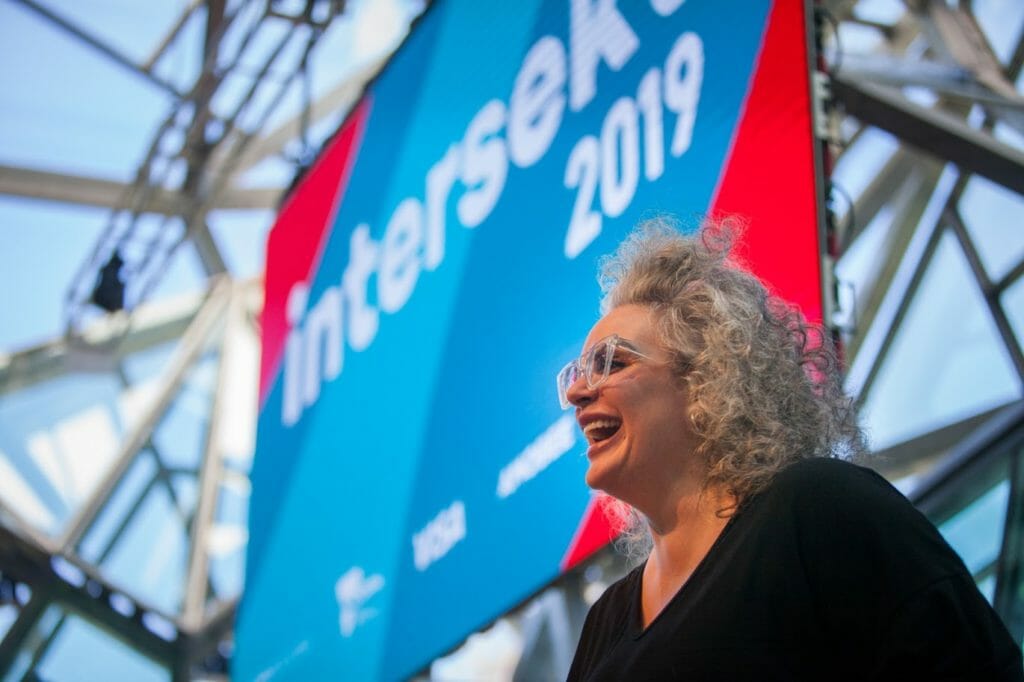
A record number of international businesses were at this years Intersekt. Revolut, Klarna, Tink, True Layer were just a few whom we connected with.
So, what is making Australia so attractive to international Fintech?
Hats off to the Government for such an ambitious Consumer Data Right initiative. While the UK is ahead on Open Banking, Australia’s strategy is much broader with greater potential for innovation.
A similar demographic, geographic proximity to Asia and highly profitable banks with a burning platform for change are just some of the reasons for the foreign influx.
A lot of credit has to go to Vic Gov and the UK DIT who work so well together on the UK/Aus Fintech Bridge. Tess Thomas and the team have achieved a huge amount in the past 12 months. Vic Gov are doing everything in their power to make Melbourne the home of Australian Fintech. And they are attracting Fintech giants like Revolut, Stripe, Square and promising startups like True Layer.
FinTech Australia and EY launched the FinTech Australia Census 2019 at Intersekt. It is a study designed to profile and define the industry, identify inherent challenges and provide insights. Meredith Agnew, Partner Fintech for EY presented the latest findings - Download The Report
The previous day I recorded a Podcast with Duncan Currie, host of the Fintech Growth Podcast and Founder of Stage 3.
Coincidentally (or maybe not) many of the challenges founders have highlighted in the Census we cover in great detail in this podcast on hiring. Including the No1 challenge to come out of the research, Product/Market Fit.
It's worth a listen as I share some useful tips and insights on attracting talent. If you are Fintech leader or even if you are remotely interested in Fintech you need to subscribe to Duncan's podcast. He's a TOP man.
It was an excellent line up with AirWallex, AfterPay, Revolut, Klarna, Tink, Xinja, Up, Volt Bank, Prospa all sharing their views on growth and opportunities.
I have to confess, I had so many meetings I missed many of the panel sessions. Here are the sessions I couldn’t miss.
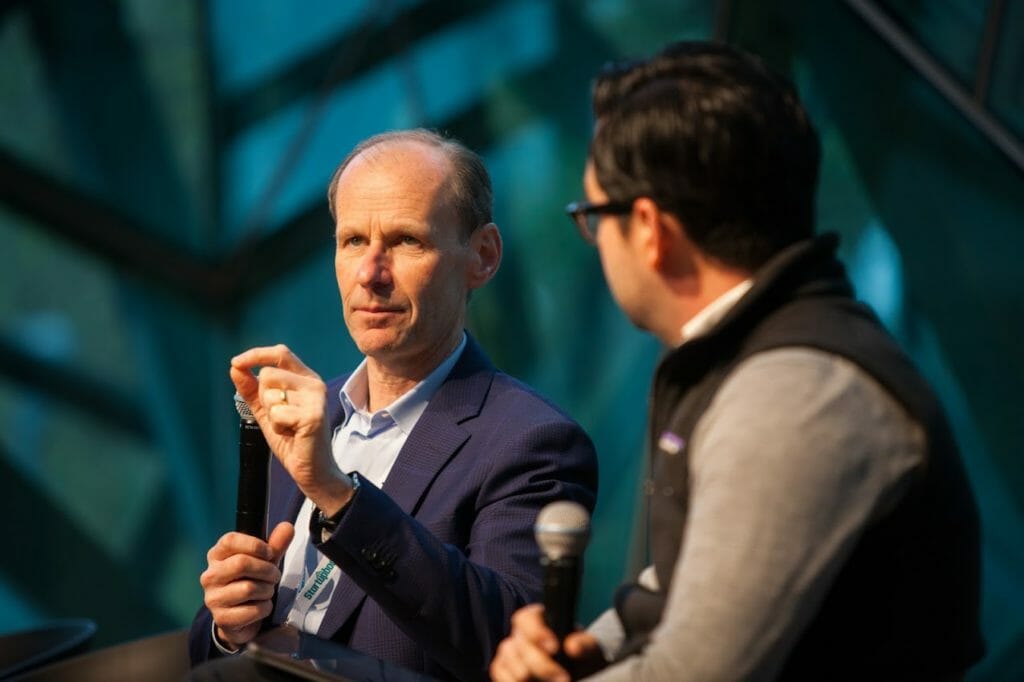
For a Big 4 bank CEO, Shayne Elliot is so candid when he chats which is refreshing. I am still not filled with confidence that the Big 4 banks are changing fast enough. The wash out from the Royal Commission has done little other than force investment in compliance which is hampering the ability to innovate.
When asked what he would focus on if he were to launch a Fintech, Shayne Elliott came straight out with SME banking (not just lending). He took a side swipe at the success of SME lenders who are supporting the very customers the big banks continue to ignore. As CEO of one of the worlds most profitable banks surely you're in a much stronger position to support small businesses than a couple of young guys in Surry Hills!?
Open Banking seems to be an unwanted distraction and while the right things are being said, the actions (or lack of) coming from the Big 4 suggests there’s a reluctance to progress.
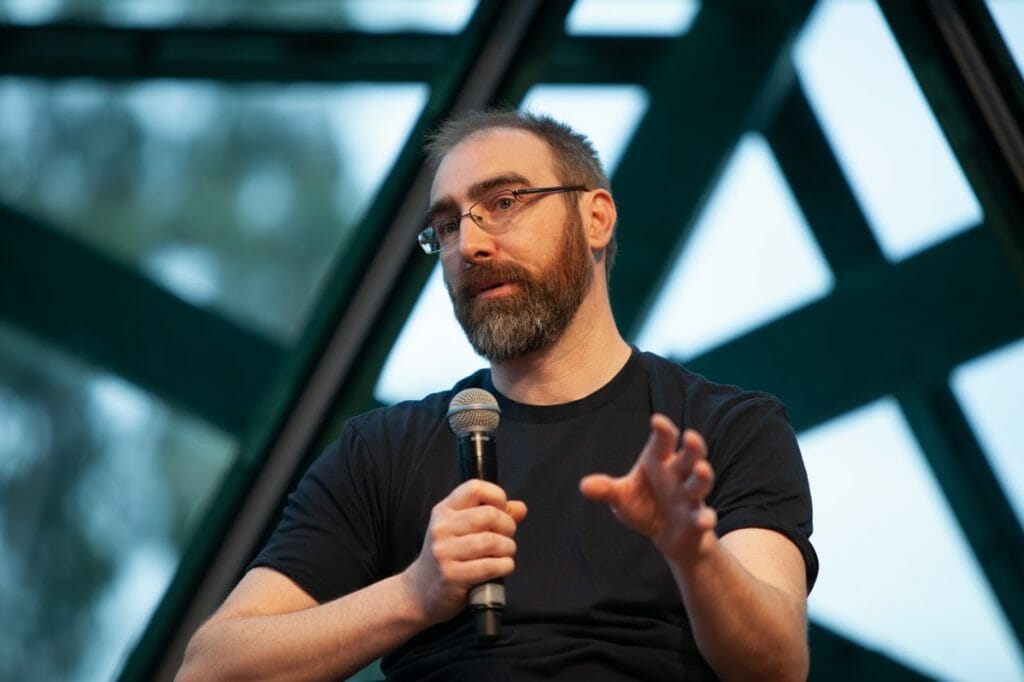
I call Dom “The Steve Jobs of Australian Banking” so it was great to see him on stage twice!
Dom has a knack of cutting-through the noise and honing in on the real problems in banking. His style may not be to everyone’s liking, I think the man is a genius and the approach of Up Bank “Tech led Banking” is delivering an amazing product that customers love. Dom has built possibly the best tech team in Fintech outside of eastern europe.
My favourite quote from the whole event:
"I don't think we should go slowly. I think it's pretty simple. It's said in the acronym 'CDR': consumer data right. It's pretty obvious what it is,"
"The mind shift that needs to happen here...is that the consumers own that data. They have the right to do what they want with it, and they're the ones that control it, not the organisations that are currently the custodians of that data."
Anthony is one of the most promising CEO’s in Australia. His presentation was that good he literally had people queuing up asking for a job! Anthony presented on one of our key observations, the evolution to Fintech 2.0 and how Wisr are working to help Australians get out of debt and manage their wealth.
Thanks to everyone who came up and said 'Hi' at the event. I am blown away by the compliments, well wishes and support of you all. When I launched Tier One back in 2016, it was with a vision to become the leading brand for recruitment in Fintech.
It feels like the vision is becoming a reality based on your feedback, introductions and support we received over the three days. I can't thank you all enough.
We’ll be making some major announcements soon on new clients and exciting opportunities.
If you are in Fintech, Banking or Financial Services and want to make some serious business connections Intersekt is the must attend event for Australia. Like Sibos 2018, there is real intent at the event for business to be done and key decision makers, investors and government are available and willing to talk.
#HireGameChangers.
We bring together the people to build, grow and scale next generation Fintech.
“The FinTech Awards recognize businesses as well as individuals, with Awards such as CIO/CTO Of The Year, Female FinTech Leader of The Year, and FinTech Leader of The Year,” said Frost.
Since launching in 2016, Tier One People has interviewed hundreds of Fintech leaders. These frank discussions on the challenges of growing and scaling a startup sometimes can contradict the popular advice from Silicon Valley. We have researched and analysed the hiring strategies of Google, Facebook, Netflix and other tech firms and see some major flaws in following the strategies for a startup in Australia.
Katherine McConnell is Founder and CEO of Brighte. She is recognised as the Outstanding FinTech leader in Australia and was named in the Top 10 most influential women in Fintech globally. Katherine had this to say about hiring on culture fit.
Today we’re able to attract great people because of the brand, our investors and the fact we are a solid business. But a year ago, no one had heard of Brighte.
Attracting great people to a start-up is very difficult. You don’t have much leverage. Hiring based on values is nice but not always possible. Now Brighte is established we absolutely recruit on values and cultural alignment.
Initially I hired people based on technical expertise. I had to take a gamble on whether the person would work out or not. We just had to build the platform and get it done. The advice I was given was ‘hire slow, fire fast’ but in a startup sometimes you have to hire fast and fire slow. As a leader you have to make tough decisions.
Martin McCann is CEO and Cofounder of Trade Ledger, winner of FinTech Startup of the year 2019. Trade Ledger is rapidly scaling with offices in Sydney and London.
We don’t focus on people’s experience or their background, we focus on whether or not they would fit well with the team or will they be disruptive in the team. We prefer to hire people with high potential or high propensity for success.
What we’ve found is interesting. People who are under-experienced, properly motivated and show high potential are a much better fit for this organisation than people who’ve got proven experience.
People with high potential fit the way we work. They want to get ahead quickly, they appreciate the opportunity to be able to contribute and to learn. And they understand the value it creates for them as an asset that differentiates them in the market.
Vincent Turner is Founder of Uno Home Loans. He is a Fintech veteran now on his third startup. Vincent spent five years in Silicon Valley, setting up the Valleys first ever Fintech Meetup. Vincent had this to say about failure.
We are a consumer focused fintech, so our culture is driven by discovery and big ideas. You can conduct focus groups, give customers a prototype, let them observe it, but that customer will act differently when you ship the product. To get to something that works is an act of discovery
The team is encouraged to come up with extraordinary ideas and to test them out. Then we make a frank evaluation of what worked and what didn’t. We don’t talk about failure at uno. Failure is when you are reckless in the way you try things. But an experimentation-led culture, where you can call out what works and what doesn’t, is the absolute mainstay for any customer centric business.
George Lucas is CEO of Raiz Invest and ASX listed investment platform that helps people save and invest automatically. The app has been a big hit with millenials and George applies the same approach to customers as he does managing his team.
Raiz has gained a lot of traction with Millennials, more than 900,000 people have downloaded the app and we are managing more than $250 million in funds.
We have developed a lot of loyalty within our customer base. Engagement is key and we are always listening to our customers. If you look at our product development releases to date, some examples being Raiz Kids, Raiz Rewards, My Finance and most recently Raiz Super, it has all been driven by our customers.
Maybe the difficulties other finance companies experience tapping into the Millennial market are self-inflicted? Let’s face it, Financial Services in Australia is heavily dominated by middle-aged men. We have seen several instances in the last twelve months where young people feel the people in power are out of touch with the modern world.
Rather than lecturing our customers on whether they should spend their money on Avo and Toast, we are providing them with the tools to save for a home deposit, or a holiday, or their kids school fees. Millennials are no different to any other customer. Just listen, give them what they need and treat them with respect.
We have adopted the same approach with our people who seem to enjoy the challenges of a FinTech startup. I listen and provide my team with the tools to do their job. Then I let them get on with it. Its a very laid back environment, we don’t manage people, no one comes in to work in a suit and tie, we’re not that type of financial services organisation. We have a mutual respect for each other. And I am learning so much from our people. It’s a very young business, most of our people are under the age of 30. And they seem to be laughing a lot, so they can’t be that unhappy!
Alex Badran is Co-Founder of Spriggy, Fintech Startup of the year. By adopting a Lean Startup approach to hiring, Spriggy has managed to assemble a diverse group of highly talented people, while bootstrapping the business.
We have brilliant people in the team and a very eclectic mix of backgrounds. My co-founder is a physicist and an electrical engineer. Our CTO has been building apps ever since apps were around. Our CMO is a software engineer, one of our software engineers has a medical degree and our customer success lead used to be a geneticist.
We have managed to hire remarkably talented people who are great people, not just intelligent. They work hard, they care about what they do, they care about the people around them and they care about our customers.
This might sound simple, but talented people want to work with talented people who share the same values and ethics. That’s it. Sure, our people have flexibility, equity and all the advantages of working in a startup, but they are not the key motivators for joining.
Our people really buy into the Spriggy mission too. I love coming to work, and I learn so much from our team, every day. They are just amazing to be around. I am sure it will become harder to hire exceptional people as we scale, but right now, hiring talent isn’t a challenge for us.
We wish there were a rule-book for hiring, but every business is different. The one thing all of our interviews have in common? Each leader took their own course and made their own decisions. None followed ‘the Google way’ or ‘the Amazon way’.
Our advice is to go with your gut feel. Instead of focusing on finding the perfect match, focus on the business problem you are trying to solve. You may find there are alternative solutions to hiring. Or as we find in most instances with clients, the person you think you want is not the person you need to hire.
If you are in the process of hiring and want to get some advice contact Dexter or Joanne, info@tieronepeople.com
If you aren't following 11:FS and their podcast Fintech Insider then you simply ain't into FinTech. A game changing digital consultancy for Banks and FS, a ground breaking banking platform in Foundry and publishers of the #1 Podcast FinTech Insider.
In the latest episode, a cheeky question by our very own Dexter Cousins sparked a healthy debate on the emerging Australian FinTech scene. Hosts David M. Brear, Jason Bates and Sarah Kocianski share some interesting views. What is undisputed is the world is taking notice of Aus FinTech!
AWESOME - listen to the podcast
Our friends at Douugh, made a major announcement signing a long-term strategic partnership agreement with Regional Australia Bank. The bank will become Douugh's sponsor bank partner in Australia and challenge the dominance of the ‘Big Four’ banks.
On a mission to democratise banking globally, Douugh is building a ‘smart’ bank account designed to help customers live financially healthier, thanks to Sophie - its AI personal financial assistant. The agreement with Regional Australia Bank follows a global strategic innovation partnership announcement with Mastercard at the end of 2018 and a sophisticated raise on leading Equity Crowdfunding platform Equitise which remains live until February.
Douugh’s smart mobile banking app, will offer a Mastercard debit card and suite of everyday banking functionality, as well as multiple enhanced and unique features - focused on helping users pay off debt, spend less, save and build wealth. Sophie offers real time insights and guidance, learning how you spend money and understanding your goals to help you get ahead.
Currently in beta testing in the U.S, Douugh is gearing up for rapid growth. Launching first in the U.S market next month, with Australia set to follow later in the year. Douugh is fast becoming one of Australia’s most promising international fintechs.
“We are thrilled to be partnering with Regional Australia Bank, who share our cultural values and vision on helping Australians become financially healthier”, says Andy Taylor, Douugh’s Founder & CEO.
With an initial focus on the global millennial market, Taylor believes the sweet spot of the Millennial demographic for early adoption of Douugh, are the HENRY (High Earner Not Rich Yet) segment.
“This segment is ready to plan for their future and start accumulating wealth. This is where Douugh can educate and automate their finances, and alleviate the stress involved. Helping them live financially healthy by still enjoying the now while planning for their future,” he said.
“We believe the future of banking is about platform, data and identity. Our ultimate goal is to become the financial control centre, where people’s finances are managed on autopilot.
“Technology and the pioneering of a new platform based business model, will be the key differentiators in winning customers from the major banks and it will be the true fintechs with global scale that will ultimately be best placed to capture market share in the long-term,” says Taylor.
Regional Australia Bank CEO Kevin Dupé says, “Douugh has a big focus on customer financial well-being and this aligns perfectly with our approach. With our industry continuing to evolve at pace, we are excited to be partnering with Douugh and help take such a cutting edge technology platform to market”.
Douugh is currently closing out a $5m crowdfunding offer to wholesale investors on the Equitise platform. For more information visit www.equitise.com
As Sibos 2018 comes to a close and the worlds biggest players in banking head home the event can be considered a huge success, especially for FinTech.
Sibos is the worlds premiere financial services event and what an event it is. 7000 banking and financial services professionals from across the globe gathered. With Money 20:20 taking place in Vegas at the same time the turn out was incredible.
Tier One People covered the four day event.
A dedicated Fintech exhibition, The Discovery Zone drew huge crowds. Innotribe, presented the worlds foremost experts on Blockchain, AI, Quantum Computing and Open Banking. The Oceania Lounge, hosted by FinTech Australia showcased some of the brightest emerging FinTech startups to the 7000 attendees.
FinTech thought leaders such as Ghela Boskovich, Leda Glyptis (exclusive TOP interview coming soon) and Brett King could all be seen engaging with some of the most visionary FinTech founders from the US, Asia, Israel, Europe and the UK.
My fondest memories of the week are the friendships that have developed with some of the very best people in FinTech. Straight shooting visionaries like Leda Glyptis and Ghela Boskovich think Australia has potential to become world pioneers in areas like Open Banking. They are genuinely excited by the talent and tech on show.
VC firms are actively pursuing Australian FinTech's who are considered advanced in RegTech and Compliance technology. I expect to see more overseas investors look to Australia in 2019.
Sibos presented an opportunity to put Australian FinTech on the map and everyone involved has delivered. Congratulations to FinTech Australia and a special mention to Rebecca Schot-Guppy who is doing an incredible job as interim CEO. You really have done the FinTech community proud, Rebecca, muchos respect!
A UK FinTech delegation led by Alastair Lukies (Theresa May's Ambassador for FinTech) and the UK Department of Trade added a little bit of spice and rivalry. The UK is almost 12 months into Open Banking and there is so much we can learn from our UK cousins.
In many areas Australian FinTech is catching up to the UK. There is a golden opportunity to make Australia the FinTech gateway to Asia if we approach the next 12 months in teh right way.
I spent the week getting to know many of the UK delegation and there is a real desire to collaborate and leverage opportunities. A breakfast forum on open banking covered many areas of the consumer data right, which creates even more complexity to the debate (which is becoming very heated here in Australia.)
Andrew Stephens of the Data Standards Council was astute enough to point out, while banks and FinTech's jostle over open banking, the consumer (who's data they are fighting over) seems to have been forgotten about.
The work of Tess Thomas and Odette Hampton and the rest of the team from UK Department of Trade is highly commendable. It is fantastic to see so much energy and enthusiasm to build the FinTech Bridge, attracting investment and capital for both nations.
The Discovery stage was standing room only as the hottest topics were covered. Van Le (Xinja), Steve Weston (Volt Bank) and Robert Bell (:86400) debated challenger banks, open banking and how to win customers from the big banks. Personally I can't wait for 2019 when challenger banks will finally launch.
Simon Lee, Co-Founder of Assembly Payments gave a straightforward account of partnering successfully with an incumbent bank. Exciting times for Assembly as they go through a period of rapid growth and the partnership with Westpac pays off. Simon is a top guy and is spending a lot of his time in the US talking to potential partners and VC.
For many FinTech businesses, partnering with a bank is the fastest and often times the only path to success. There has been some friction in previous years with banks being accused of 'innovation theatre'. At Sibos 2018 banks were ready to do business and a number of FinTech's we talked to were in advanced talks with documents signed and commercial terms being drawn up.
The energy at Sibos was so exhilarating that even an overnight 10% tanking of the markets didn't seem to dampen spirits!
KPMG and H2 Ventures announced the FinTech 100. Coincidentally three of Australia's recognised FinTech startups were lined up next to each other at Sibos - Trade Ledger, Look Who's Charging and Airwallex. Tier One People have been waxing lyrical about Trade Ledger and Look Who's Charging for several months.
The rise of Airwallex has been phenomenal. I caught up with GM for Australia, Steven Deglas who was delighted.
"It is a big milestone. We are three years old now, there are lots of entrants in our space and not many make it past 18 months. So it is a big testament to the team, the founders and our investors that we continue to grow. There are lots of opportunities for us and we are really excited about the next 12 months."
"I thought we had been invited along as guests, when they called out Look Who's Charging I was pleasantly surprised. David and Stu (David Washbrook and Stu Grover co CEO's) are in Vegas for Money 20;20 as we look to expand. The partnership with NAB has really given momentum and we are very excited about the global opportunities ahead. We have lots of interest from banks and FinTechs at Sibos and Money 20;20. And everyone seems prepared to talk business."
"It is fantastic recognition. The business is only two years old and we now have offices in London and Sydney. I have moved to London to focus on partnering with international banks. The KPMG FinTech 100 recognition is paying off with several banks exhibiting at Sibos approaching me today. The only downside to being in London is I miss my Sunday morning surf!"
I was really fortunate to shadow a group of hand-picked FinTech companies as they hustled for new partners and potential investors. Here is my pick of the best of an already elite group of FinTech startups.
Priviti Group is a startup from Ireland with a Consent Management Standard for Open Banking. It is a visionary technology that allows the Consumer to grant, review and revoke consent for the use of their personal data. I spent the whole week with CEO Dave Cunningham and Head of Asia Dermot McCann, these guys are phenomenal entrepreneurs and have a visionary solution. Absolute game changers!
Bud Financial is an API platform connecting banks to 90 FinTech applications. Leading the way for open banking in the UK, Bud enables big banks to partner with multiple FinTech applications, giving the user one simple interface. Bud is the perfect solution for FinTechs and large banks to collaborate, with HSBC their biggest client. There are no plans to head out to the Australia at this stage.
Arctic Intelligence is a regtech software business going through huge growth. Offering a risk management and compliance solution suitable for businesses from startup to global enterprise. I caught up with CEO, Anthony Quinn and there is significant interest from global players in banking.
R3 Blockchain platform, Corda, that enables any business of any size to build and operate on the blockchain. Corda records, manages, executes institutions’ financial agreements in perfect synchrony with their peers, creating a world of frictionless commerce.
Scanovate is an Israeli startup with a mobile first, dynamic, identity management platform using facial recognition for KYC compliance. I spent a day with the CEO
Revolut I hear the wait will soon be over. Can't say anything else at this stage sorry.
Tuesday 16th October 2018. The 5th FinTech Summit took place in Sydney. An all-star line-up of FinTech leaders and a sell-out crowd made this the best FinTech Summit yet.
The topics of open banking, the rise of challenger banks, the recurring themes of raising capital and hiring talent were all debated. But the prominent themes of the day were integrity, ethics and genuine care for customers.
There was a real sense of excitement in the room, with the audience recognising we are at the beginning of a new era in FinTech. Presentations by UP Bank and Xinja demonstrated the differences between a digital challenger bank and a neo bank.
Using ground breaking technology, Up (challenger bank) have taken an established bank and re-imagined the banking experience based on the premise 'living not banking.'
Xinja (neo bank), on the other hand are building a totally new bank and new products, using technology to 'bring humanity back into banking.'
Two very different angles, two very different visionaries but two people united in making Australian banking the best in the world.
A panel discussion with challengers Volt Bank, Athena Home Loans, Douugh and Judo Capital and a final presentation by Martin McCann of Trade Ledger painted an exhilarating future for Aussie FinTech. In 12 months time Australian consumers could be spoilt for choice.
David Hancock of AfterPay opened the FinTech Summit with a fantastic presentation on customer trust. AfterPay has a market cap of AUS $2.6bn and is without doubt Australia's greatest FinTech success story to date. The global growth story is astonishing, even Kylie Jenner wants AfterPay for her cosmetics business!
The paradigm shift in risk management, based on trust and customer care, has played a big role in AfterPay's success. Social platforms, technology and access to data have all enabled the rapid growth and adoption of new business models. His words of advice to the major banks were
“The cost of mistrusting people is significantly higher than the value of mistrusting people.”
Katherine McConnell, CEO and Founder of Brighte shared her journey. Incredible to think exactly three years ago, Katherine arrived at Stone & Chalk with a vision and a laptop. Today, Brighte has written approximately AUS $200m in loans, has $90m banking facilities, with investors including Mike Cannon-Brookes and AirTree Ventures.
The 10x vision for Brighte is to enable the mass adoption of batteries in the home and play a pivotal role in making Australia a clean energy country. Despite all the success and awards, Katherine remains one of the most humble and accessible people in FinTech. It is fantastic to see the continued success of Brighte.
Xinja CEO, Eric Wilson was as passionate as ever in his mission to bring humanity back into banking. We caught up with Eric afterwards where he shared big announcements and a new product release (not Xinja Chocolate.)
Although unable to name names at this stage, expect announcements on high-profile board appointments (rumoured to be Brett King) The series C funding round is coming to a successful close with lots of interest from overseas investors. Talks with regulators are on track. And the core banking system implementation (a world first partnership with SAP) is ahead of schedule. Hopefully all should be announced at the next AGM planned for November.
So, only one questions remains (quote Billy Zane in Zoolander)
‘Eric, when you gonna drop Android on us buddy?’
Soon!
The afternoon event consisted of 4 break out sessions on open banking, raising capital, regtech and compliance. Yours truly chaired a panel discussion with Kylie Vitale of Volt Bank, Kristen Holmes of Zip and Will Blott of Cover Genius. Three highly progressive People and Culture leaders with a pioneering approach to scaling businesses through Values and Culture. The value of hiring a People and Culture specialist in the early stages of growth is huge.
Martin McCann of Tradeledger ended what was an energetic event with a rallying call to action on open banking.
“If we make Banking as a Service a success, we could unleash Aussie financial muscle on international markets, on a scale never seen before”
What a fantastic message to end a landmark day.
My closing thoughts? Open banking is a once in a century opportunity for Australians. For the future of Australia and our ability to compete on a global scale, we simply cannot allow open banking to become the exclusive domain of the big four banks. Scott Morrison has asked the FinTech community not to screw it (open banking) up. Today, the FinTech community fired the same message straight back to the PM.
Up is a partnership between Australia's 5th largest bank, Bendigo and Adelaide Bank, and Ferocia, the software team behind Bendigo's award winning banking platform.
Tier One People Founder, Dexter Cousins was one of a lucky few guests at the launch event in Sydney. The launch itself was more akin to an iPhone launch than the launch of a bank. Founder Dom Pym (the dude in the beard) wowed the crowd with an amazing product demo. Guests watched on as Dom transfered money from his UP account into the account of Head of Product, Anson Parker (pictured next to Dom,) using a voice command, in seconds.
Users can sign 'UP' for an account in two minutes (the average sign up time is 2 minutes 5 seconds to be exact!) and use the account immediately through Apple Pay while your card is issued. UP is the first cloud-hosted bank platform using Google Cloud Services, testing results on the platform are incredible. During 11 months of testing, the platform has spent a total of just over two hours in down time!
The technology is super powerful with features like spend tracking, spend analysis, automatic transaction recognition, instant payments using Osko and Siri integration. And they have been super smart to preempt open data reforms by giving users total access to their data. The tech is backed up by seriously slick UX and design.
I asked founder Dom Pym if UP were classing themselves as a challenger bank to the Big 4 Australian domestic banks. This is what he had to say;
“Bendigo and Adelaide Bank’s strong track-record provides us with a credible banking partner, coupled with the creative licence to design Up in the most ‘non-bank’ way possible. It has meant we can offer customers a new way to manage their money ahead of everyone else.”
“The alternative would have been to apply for a restricted banking license and be in the same boat as the neo banks – unable to launch in any meaningful way until at least 2019.”
“We’ll keep working at a fierce pace to add new and exciting features at a consistent rate. We’ve been averaging about five deployments per day, which is unusual for a bank, to say the least, and we’ll continue to do so.”

I have been using UP for the past six weeks. What I find so refreshing and unique about UP is the limited involvement of bankers in the build and design of products. UP has been built by Tech people (super talented Tech people!) and the end product is highly impressive.
The bar has been set high for challenger banks entering the market. What is so ground breaking about UP? They have taken the best of the best FinTech innovation and applied design thinking to create a banking app for a world where customers own their data. Australian consumers are long overdue an enjoyable and convenient banking experience. UP delivers and then some.
Skip the wait list and get access now. Download the UP Banking App on iTunes and Android and enter code DEXTER - Limited to first 50
Another excellent report by KPMG has just been released, providing some interesting insights on global Fintech investment.
US - In H1’18, US fintech companies received $14.2 billion in investment, including over $5 billion in venture capital investment
EUROPE - In H1’18 investment in fintech companies in Europe hit $26 billion across 198 deals
ASIA - In H1’18 investment in fintech companies in Asia hit $16.8 billion across 162 deals
Click to access the full report
Over 50 thought leaders shared their expertise and sparked great debate. 20 plus events across Sydney, Melbourne and Perth brought together people from across the startup ecosystem. “It was great to see so many amazing women coming together to support each other and learn from one another. All of the speakers – female and male – were very generous with their time and shared great insights.” said Julie Demsey, former General Manager of SBE Australia
Fintech in particular is dominated by males. Only 3% of tech firms are founded by women. Yet, when funded, female founded tech startups deliver 35% higher ROI than male led firms. Start Up Muster’s 2017 Report revealed the number of female founders is continuing to trend upwards, sitting at 25.4% up from 23.5% the previous year.
Tank Stream Labs have set out to tackle the burning question - How can we grow this number and what do we need to do to increase female involvement in what has been a male dominant space.
“Female Entrepreneur Week is such an incredible initiative by Tank Stream Labs, it helps to start great conversations amongst the startup community and empower our current and future female entrepreneurs”. Christie Whitehill, Founder of Tech Ready Women and one of the many amazing panelists of Female Entrepreneur Week.
A highlight of the week long event was a fireside chat with Katherine McConnell, CEO and Founder of Brighte. Katherine's story is one that left everyone in the room inspired. In less than three years Katherine has gone from quitting her corporate job at an investment bank to becoming FinTech Leader of the Year. She has won investment from Atlassian founder Mike Cannon-Brookes, Airtree Ventures and recently closed an $18m series B investment round. Clearly, Katherine is forging the way for females (and males) and rewriting the rule book when it comes to becoming a successful Fintech entrepreneur.
Read an in-depth interview with Katherine McConnell.
With Open Banking reforms set for July 2019 we have seen the launch two new Digital Banks in Australia, 86 400 and UP Bank. Cuscal backed 86 400 has serious funding and weight behind it with Anthony Thomson, founder of Atom Bank in the UK, as Chair for the bank.
86 400 is still to receive a full banking license and hopes to launch it's first products early next year. The executive team is in place, in execution mode and there is significant hiring behind the scenes.
UP, backed by Bendigo Bank has quietly entered the market place with prepaid card offering. The UX is super slick with an account set up in minutes via the app. The card is beautifully designed and the app itself let's you track your spending on the card. It is an encouraging start.
Judo Capital announced the second-largest fundraising round in Australian start-up history and expects their full banking license by the end of 2018.
Xinja meanwhile recently held their first AGM and announced series C capital raise valuing the business at AUS $95m. With regulators yet to grant Xinja a restricted banking license the raise is conditional on securing a license.
We are hearing that Neo Banks are turning capital away, significant amounts. Australian consumers and investors are raring to go.
Volt Bank, the only licensed Neo Bank in Australia is quietly going about their business. There is significant hiring with the business now over 70 people strong. Most hiring is on the development side but as yet, the mobile app has not been released. Volt Bank Deputy CEO Luke Bunbury was speaking at Mumbrella recently talking about distrust of banks. And he is 100% on the money.
Recruiters are having a hard time right now trying to convince top talent to join the big 4 banks. And top talent of the big 4 banks and financial institutions seem eager to move on.
The enquiries are so great in numbers that we are actually having to turn candidates away from large financial institutions. While we would love to help, the career transition from large corporate to startup is difficult with many people failing to make the leap.
And many people in banks offer a very narrow skill set. When you consider CBA has 40,000 staff a Neo Bank will only need 400 staff. So it doesn't look pretty for career bankers, especially the support staff in operations, finance etc.
Despite the high risk involved and the fact that even the licensed Neobanks in Australia are yet to offer a single product, top talent are showing a strong desire to switch.
Peers in the UK are witnessing a similar trend. Contacts at the Global Search firms in London tell me it is a real struggle to fill the top banking jobs. Executives would prefer to join a Fintech where the regulatory sandbox is making life easier, the rewards greater and the opportunity to build and drive change in the industry fulfilling.
Asian Investment in Fintech has increased significantly in the past 12 months and the UK is 5 years ahead of where Australia is now. Despite the efforts of UP, Judo, Xinja, Volt, 86400, Alex and Douugh, Australians have the choice of one product, a prepaid card. In contrast, ANT Financial in China has a 30 day Go To Market turnaround for new products. It raised US $14bn earlier this year.
The Royal Commission appears to be making life for new entrants super tough and the stance of regulators is clearly stunting innovation and progress. While third world countries advance at a rapid rate, it appears the only ship not rising with the tide is Australia.
Australian Prime Minister Hon Scott Morrison MP gave an impressive and encouraging speech at the Annual Fintech Awards dinner in Sydney recently. He made it explicitly clear the Open Banking programme is a priority with the Government relying on the Fintech industry "not to stuff it up".
If successful, Open Banking will be used as the template for all future Australian innovation. Scott Morrison has put a flag in the sand with Australia's Open Banking initiative set to go live 1st July 2019. He seems personally and politically invested in Open Banking, he can't afford for it to be his NBN!
But July 2019 is only 11 months away!
How much time and energy are we seeing wasted at innovation hubs, conferences and meetups? Are we guilty of confusing motion with progress?
(Read this great opinion piece, "ecosystem is not a safe word" by one of my favourite commentators on Fintech, Leda Glyptis)
The regulatory sandbox seems to be filled with quicksand. How many Fintech startups are spending time, energy and precious resources pandering to regulators? Waiting months for a response, only to be asked to fill out more forms, answer more questions, when a 30 minute meeting could quickly resolve any minor queries halting progress.
Quietly, small businesses and start up founders are being driven to despair (and often out of business) while corporate, government and regulators appear more interested in perception than progress.
I am convinced Australia has the talent, ideas, capital and capability to be the leading Fintech innovation hub.
So what are the regulators waiting for? Would more progress be made if the spotlight was put on ASIC and APRA?
Tier One People sponsored the awards and presented CTO of the year.
Congratulations to Jins Kaduthodil of Incent Loyalty on winning the CTO of the year award.
Fintech Startup of the Year went to Trade Ledger. Congratulations to Martin McCann and Matt Born who are taking their open banking solution global.
Fintech Leader of the Year went to the outstanding Katherine McConnell of Brighte, also winners of Innovation in Lending.
The attendees were encouraged by a heartfelt rallying call by Prime Minister, Scott Morrison MP, expressing his support for the Fintech community. He made it explicitly clear the Open Banking programme is a Government priority.
The PM is relying on the Fintech industry to make the programme a success. If successful, it could well be the template for all future Australian innovation. Scott Morrison has put a flag in the sand with Australia's Open Banking initiative set to go live 1st July 2019. He seems personally and politically invested in Open Banking and committed to supporting the Fintech community.
AfterPay - FinTech Innovation in Payments
Raiz - FinTech Innovation in Wealth Management
Brighte - FinTech Innovation in Lending
Xinja - Best FinTech Communications Campaign
Look Who's Charging - Best FinTech-Bank Collaboration of the Year
Katherine McConnell, Brighte - FinTech Leader of the Year
Lucy Yueting Liu, Airwallex - Female FinTech Leader of the Year
Jins Kaduthodil, Incent Loyalty - FinTech CTO/CIO of the Year
Audeamus Risk - InsureTech Startup of the Year
Checkbox - RegTech of the Year
Trade Ledger - Ashurst FinTech Startup of the Year