Podcast
The Spriggy Story: The Process To Get One Million Customers.
Alex Badran, Spriggy
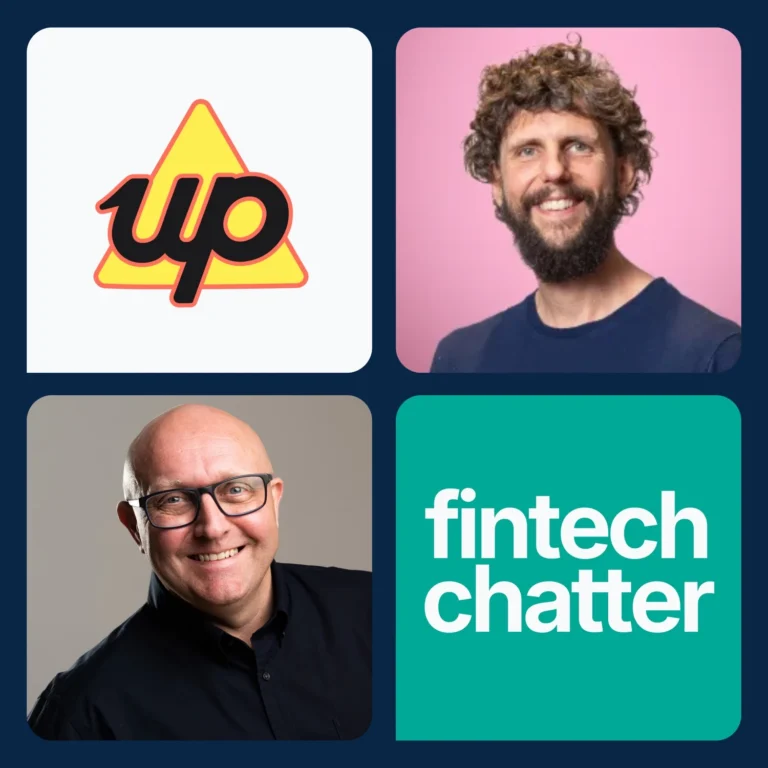
The Spriggy story returns to Fintech Chatter Podcast. Five years after his debut, our most-requested guest ever is back sharing his path to one million customers.
Dexter Cousins chats to Alex Badran, the founder of Spriggy, a fintech app designed to help parents teach their children about money management.
Reaching One Million Customers
Spriggy reached the very high bar of one million customers in back in 2022. A massive accomplishment for any Australian consumer focused Fintech App.
This isn’t just another success story – it’s a masterclass in scaling consumer fintech in a challenging market.
Alex shares his decade-long journey with Spriggy, how they’ve grown to 1.2 million users, and the importance of real-world financial education for kids.
Join us as Alex walks us through the process of building a category and product that has captured the hearts and minds of millions of Australian families.
Favourite quotes
“We created a category that didn’t exist before.”
“You can’t outsource growth to a partner.”
“Your ability to learn is what matters.”
Chapters
00:00 Introduction and Background of Spriggy
03:58 The Problem Spriggy Solves
07:13 Understanding User Needs and Early Development
10:10 Adapting to Growing Users and Changing Needs
13:07 The Impact of Technology on Kids’ Financial Education
15:57 Growth Strategies and Market Positioning
19:12 Partnerships and Their Role in Growth
22:12 Lessons Learned and Personal Growth as a Founder
29:10 The Importance of Learning and Enjoying Work
30:59 Authenticity in Leadership
33:33 Navigating Team Dynamics and Cohesion
37:00 Adapting to Economic Changes in Hiring
41:49 Future Vision for Spriggy
47:28 Behavioral Education and Parenting
51:56 Podcast intro vid no audio.mp4
About Spriggy
Spriggy is Australia’s #1 Pocket Money app that helps kids learn about money. Spriggy was founded in 2016 with a clear mission to help parents teach their kids about money.
We believe that financial literacy is a crucial life skill, one that lays the groundwork for a secure and confident future.
By learning how to manage money from a young age, kids are empowered to make informed financial decisions as they grow, mastering everything from saving and spending to setting goals and budgeting.
Links from this episode.
- Spriggy — the pocket money app, schools product and Spriggy Mobile
- Careers at Spriggy
Alex Badran on Fintech Chatter.
- Alex Badran on the early Spriggy journey (2018) — two years after launch
- Spriggy at 500,000 users (2020) — Alex’s first Fintech Chatter episode
- All Fintech Chatter episodes
Full transcript.
Lightly edited for readability — filler words removed, wording otherwise unchanged.
Dexter Cousins
A million paying users for an Aussie consumer fintech app is a remarkable feat, whichever way you look at it, and this week’s guest is here to tell us how they got there. The Spriggy story returns to Fintech Chatter five years after their debut. Founder Alex Badran is back to share insights you simply can’t afford to miss. This isn’t just another success story — it’s a masterclass in how you scale a consumer fintech here in Australia.
I’m Dex Cousins, your host and the founder of Tier One People, the executive search firm dedicated to connecting high-growth fintechs like Spriggy with exceptional leaders. For those who don’t know Spriggy, they’re Australia’s number one pocket money app. Founded in 2015, Spriggy now serves over a million customers across Australia.
Before I chat to Alex — thanks for tuning in. If you’re watching on YouTube, give us a like and subscribe. If you’re listening on a podcast app, follow us wherever you listen. And if you’re really in the mood, leave us a comment or review and let us know what you thought of today’s show.
Alex, welcome back.
Alex Badran
Thanks, Dex. It’s good to be back.
Dexter Cousins
How long have I been hustling you to do this?
Alex Badran
You asked me to come back in mid to late 2020, so it’s been a while.
Dexter Cousins
You’re actually the most requested returning guest from our listeners — one of our most popular episodes ever. And as anyone who listens to the show will know, I’m probably Spriggy’s number one fan. My kids and I have been using Spriggy for what, the last seven years now? It’s been incredible to watch the journey, and we’re going to talk about that journey today. But before we do, for anybody who doesn’t know Spriggy, can you tell us the big problem you solve?
Alex Badran
Thanks, Dex, and thanks for all the support over the years. Our flagship product is the Spriggy pocket money app. It helps parents teach their kids about money through real-world experience. Parents sign up online, and through the app they can teach their kids about earning, saving and spending responsibly. Kids get a prepaid card in their own name, which they can use to buy the things they want, and through the app they can save for the things they care about using savings goals, and earn money through regular pocket money or chores set by their parents.
Outside our flagship product we have a number of others. Notably, we have a schools product that’s used in 10% of primary schools in Australia, an investment proposition, and Spriggy Mobile, which is our latest product.
Dexter Cousins
Correct me if I’m wrong, but when was Spriggy founded? I’m getting the sense it’s the ten-year anniversary this year.
Alex Badran
This will be our tenth year. We’ve been in market for just over eight years. That first year was very much: what are we going to build, how are we going to build it — a lot of the early ideation. We launched the flagship product in late 2016, so we’ve been in market a bit over eight years, and the company has been around a little longer than that.
Dexter Cousins
Listening to you talk about the products, I feel like I’ve watched Spriggy grow in tandem with my kids. They were about six when they first became customers. My daughter is now 13, and she still calls it Spriggy money, not pocket money. It’s amazing to see — she’s out with her friends at shopping centres now, and I’m getting alerts on my phone: your daughter spent X at Lush.
Talk us through the early stage of the original product, and how you came up with the problem to solve. You don’t have kids yourself, and one of the major mistakes I see founders make is trying to solve problems they don’t have any real-life experience of.
Alex Badran
It’s a good point. You’ve seen your kids grow, and you’ve known the business since there was a handful of us, so you’ve seen the company through all those phases.
How did we empathise with the user base without having kids in the founding group? My background is academia — I did a postgraduate degree in mathematics, which was really a crash course in problem solving. So while we didn’t have customers in that demographic in our own households, we came at it with a very first-principles, problem-solving approach. I did have nephews and nieces around the age your kids are now — anywhere between eight and 13 — but we came at the problem from the perspective of: how do you teach people about money, not just kids, in a world where cash is becoming less prevalent and digital payments are on the rise? That was the starting point.
We believed — and there’s literature to support this — that you learn about money through real-world practice. You learn by doing. So pillar one was how you teach people about money as it becomes less tangible. Pillar two was that you learn by doing, so how do we create experiences that are educational but engaging, where there’s behavioural education and people make decisions they can learn from? We also looked at the themes playing out in finance: technology players owning part of the financial product lifecycle and focusing on user experience, without having to be the underlying bank.
We brought those together. Early on we had these pillars that we thought made a lot of sense, and looking at where the world was going, the themes we were playing into would only become more true over time. But we very quickly realised that’s all good in theory. In practice, you need to find a group of customers and solve a real problem for them.
So we went looking for customers of all ages — parents with kids, friends of mine, older people, younger people. And we learned pretty quickly that you form your behaviours around money at a very early age, and a lot of people have a great solution to learning about money, which is apathy. If you try to solve this problem when someone’s in their twenties or thirties, it’s too late.
So very early on we focused in: the right age to learn about money is when you’re young, and the way to teach kids about money is via their parents. Probably within the first couple of months of running the business, we went from those abstract pillars to: how do we help parents teach their kids about money through real-world experience — knowing full well that if you’re going to help the kids, you have to solve a parent problem first. We went from that abstract concept all the way down to talking to customers and learning about their day-to-day problems, and that’s been a core theme that has stuck with the business ever since.
Dexter Cousins
I remember when we first met, the product was still early, and I was probably more excited about it than you were.
Alex Badran
I think you still are.
Dexter Cousins
I think I still am. The most powerful moment — the reason I thought I had to reach out — was when my kids had been using the product for about six months. There were two terms they’d taken on: taxis they called Ubers, and pocket money they now called Spriggy money. You don’t know how powerful that is — that people now associate something so emotional as pocket money, getting rewarded, with your name.
How have you found the journey as kids grow up? A year ago I was my daughter’s hero; now when I drop her at school I have to park around the corner so her friends don’t see me. How do you deal with a user base growing into young adults and moving away from pocket money and piggy bank branding?
Alex Badran
It’s a great question, and one of the most fascinating parts of the business. We deal with parents and kids, and kids go through so many changes between the ages of eight and 15.
From a customer lifecycle perspective, what we typically see is what you’ve described. With parents of younger kids we see what we call parent-led engagement. If you look at the family, the person driving engagement is mum or dad — usually mum. They see Spriggy solving a parent problem: it lets parents give their kids independence, it has safety wrapped around it, it’s educational for kids, and it’s fun. Those are our four brand pillars. It’s typically led by the parent.
Then as kids grow up and become more independent, we see that flip: parent-led engagement becomes child-led engagement, and the behaviours within the family are shaped by what the kids are doing. That presents a really interesting product problem, which we think of in two buckets.
One is functional utility. When kids get older they might have a part-time job, or do babysitting, and need to get paid by an employer, so there are clear parts of the product that need to evolve for that. The other is emotional utility. Kids may find the branding suitable before they get to high school. When you’re a kid you want to be a kid; when you’re a teenager you want to be as far away from being a kid as possible.
Dexter Cousins
The Kylo Ren and Frozen cards are still there.
Alex Badran
And it’s funny, because kids want to distance themselves — they want to be perceived as adults. So it’s less about an absolute branding question and more a relative one. “I no longer want to be perceived as a child” is very different from “I want to be perceived as X”. And when you go from being a kid to being an adult, adults actually want to be kids again. So we have this branding lifecycle: Spriggy branding makes a lot of sense for young kids; then there’s a teenage branding piece and a functional utility piece; and across all of it there’s connective tissue, because parents sit across the whole experience, and there’s a nostalgic element — Spriggy comes from the piggy bank, and parents are thinking about their own childhood.
Learning how to navigate that as our customers’ kids grow up has been fascinating. We originally thought we’d need to put something completely different in the space for that age group, because they’d want to distance themselves completely. We’ve learned that’s just not true. While kids want to be perceived as adults, there’s a safety and familiarity that comes with a brand they’ve grown up with. We’ve run all sorts of tests in market to understand how people respond to a brand transition, and one of the most surprising insights for me and the team was how much value they place on that safety and familiarity.
We originally started with concepts where, when you turn 13, it looks and feels completely different from your original experience. We brought that all the way back in. So right now, for kids older than 13, there’s Spriggy Spark mode within the current app. When kids reach a certain age, parents can activate it. Parents can turn ATMs on and off, kids can get paid by an employer, and they can start transferring money to their friends — but it’s still supervised by parents. The look and feel has evolved: more mature card designs, a more adult user experience and branding. But critically, it’s still Spriggy. We tested a lot of permutations, and that’s what people really responded to.
Dexter Cousins
What’s really interesting — my kids are about 16 months apart, and they both got iPhones within about a year of each other. It’s almost like the iPhone has been the catalyst for the next phase, not turning a particular age. It’s changed their lifestyle and independence. I’d equate it to when I was a kid and got a bike, and suddenly I could ride anywhere. Getting the iPhone is like getting the bike: suddenly they can go to the shops with their friends, mum and dad are a text away, and if they forget their card they can pay with their phone. What changes in behaviour are you seeing as kids become more exposed to this digital world?
Alex Badran
It’s fascinating. The world is changing faster than it ever has — technology changes year on year are rapid, and they’re accelerating.
Starting with parents: when we talk to them — tell us about the world in five or ten years, how you feel about it and your role bringing up your kids — the feedback is along the lines of: I want them to grow up to be good people. I want them to be happy, healthy and kind. There’s a dimension of safety, where they see their role as keeping their kids safe and preparing them for this world, and a role of education — giving them core skills, of which financial skills are one piece of a bigger puzzle. I don’t think that’s changed from five years ago. What’s changing is the landscape they have to parent in, and I’d say daunting is the word that comes to mind for parents. There’s no manual, no easy way to do it, and while there’s a lot of advice out there, the tools don’t necessarily exist.
From the kids’ side, as you said, the technology available to them lets them access and interact with so much more of the world than you or I could. The question is how you enable them to do that safely. Technology is here and part of our lives whether we like it or not. The question is when you expose kids to the next thing, and how you do it in a way that — going back to how people perceive our brand — gives them independence safely, is engaging, because engagement is how you learn, and is also fun.
As I mentioned, our flagship app and the pocket money proposition are the core pillar of the business. As we look to do more for our customers, we’re tackling some of these other problems too. How do you think about a parent giving their kid their first phone? When that happens is different for every family. Some kids might be at boarding school and need to talk to their parents at a younger age; some parents won’t want it until much later. How do you do it safely, how do you give parents the controls to manage it, and how do you make sure kids are learning through the experience? That’s what we’re tackling with Spriggy Mobile.
Dexter Cousins
You’re going to blush, but anybody who asks me, I describe you as perhaps the most talented, authentic, down-to-earth, intelligent entrepreneur I’ve ever met — someone who perfectly balances technology, product and growth. It’s been amazing to watch Spriggy grow from humble beginnings. When did you hit a million users?
Alex Badran
About a year and a bit ago.
Dexter Cousins
For an Australia-only consumer app, that’s pretty incredible, and they’re numbers we don’t see from businesses that have spent far more money than you have. What’s your secret to success?
Alex Badran
That’s a big question — and very kind words, thank you.
The first thing is that we focused very deeply on solving a problem for people. You see a lot of solutionism — you’re seeing it with AI at the moment, where people take a solution and throw it at a customer without deeply understanding their needs. We spent a lot of time and effort trying to deeply understand the needs of a family. In doing that, finding product-market fit and holding ourselves to a high bar internally, we gave ourselves a platform for growth. You can throw as much money as you want at a problem, but if you don’t fundamentally solve an unmet need, you’re going to be pushing uphill.
You touched on it before when you said your kids call their money Spriggy money. What’s been really interesting for this business is that we created a category that didn’t exist. If you’d asked me in the early days who our biggest competitor was, it would have been cash, because no one had really solved this before. We weren’t looking at a set of existing solutions and dropping in an incrementally better one. We took an unmet need, solved it, and went zero to one in a category that didn’t exist in Australia.
That was hard at the beginning. We were talking to parents about their kids, about education, about money — and no one was Googling digital pocket money solutions. There was nothing there. By moving when we did, and focusing on the product proposition as deeply as we did, we carved out a pocket of the market for ourselves and built a brand that’s become synonymous with the category. You’re eight times more likely to Google Spriggy than pocket money.
Couple those two things with how we bootstrapped our brand. We took an unknown brand and worked with the likes of Disney and Warner Bros. to associate ourselves with brands our audience already knew and trusted as we scaled. That let us take market share quite aggressively in the early days. Later, as we invested more in marketing and our own brand story, we had the fundamental infrastructure in place — a good product, good brand positioning, a good audience. Over 50% of our growth comes from customers telling other customers. That early effort gave us a foundation that’s become a real flywheel for growth.
Dexter Cousins
On partnerships — they’re often seen as the panacea for growth, and they usually come with a whole host of problems you never anticipated. What advice would you give founders thinking, we’ll jump-start the business with a Disney partnership, or a big four bank?
Alex Badran
The first thing — and you see a lot of people fall into this — is: I’ve got this idea, I just need to find a partner, they’ll get me my customers and I’m sorted. That never works. Never, ever works.
As a founder you have a handful of responsibilities, and one of them is making sure the business keeps growing. If you try to outsource that, I don’t think you’ll be very happy, or in business for very long. So figure out growth in a structural way — how are you going to grow your business? And if something sounds too good to be true, like a big four bank giving you all your customers and your job’s done, it is too good to be true.
I’d also say that if you’re trying to grow a product or category with a partner who has failed to grow that product or category themselves, what are the chances of them getting you new customers? It’s the blind leading the blind. That’s not a criticism of any big partner. There’s a reason they want to work with you — you can do something they’d like to be able to do in their organisation. If you try to outsource that core capability back to them, you’re asking them to solve the very problem they came to you to solve. So be really clear about where you add value and where they do.
With our brand partnerships, we were very strategic. We recognised that when you’re bootstrapping a brand in a category where you don’t yet exist, trust is a key component, and we used brand to build trust with our audience. But the fundamental growth infrastructure around that was ours. We didn’t get tens of thousands of customers from third parties. We worked with them in a way that accelerated a growth engine we had already built.
Dexter Cousins
It’s funny, it’s similar with podcasts. You chase somebody with a big audience and assume your numbers will double or triple, and they stay the same. I think we overestimate —
Alex Badran
I think we also just want it to work. I make this mistake regularly and have to catch myself. You’ve got a hard problem and you want it to be an easy solve. Often a hard problem needs you to think deeply and work the problem. When someone says they’ve got a magic solution out of a box, you kid yourself — oh, I want that to work. So many times you just have to be honest with yourself: a hard problem is a hard problem, and you’re going to have to do the work.
Dexter Cousins
When you started Spriggy you came from academia, with fairly limited work experience, and went on to found a business of nearly 100 people with a million-plus customers you’re responsible for. How have you developed into the leader you are today? If you could write a letter to yourself ten years ago, as you were getting ready to start Spriggy, what would be in it — other than “don’t do it”?
Alex Badran
All the clichés are clichés for a reason. I think it would be less about work and more about life outside work. Don’t cancel your gym membership. Don’t skip the gym. Make sure you spend time with your friends. Because you will run out of time. You’ll have fewer hours in the day than you need, and you’ll start making small decisions that compound into big decisions about your life. That’s true of any job, not just this one.
When founders starting out ask me for advice, I say: have breakfast with your co-founder once a week and talk about things other than work, and lock in your gym time before you lock in your work. Those clichés — because that’s where I’m personally most likely to slip.
The other cliché is that you’re the average of the five people you spend the most time with, so pick them wisely. When I look at who I spend the most time with — other founders, friends I grew up with, family — I make sure I curate that, because they compound. They can make you much better, or send you in the wrong direction. I certainly wouldn’t be here without excellent friends who know nothing about the tech world and don’t care about it, excellent founders who’ve supported me through challenges, and excellent family who just want me to be a kind, happy and healthy person.
On the work side, it’s hard, but I think a lot of people glorify how hard the founder job is. Everyone’s job is hard. What matters is your learning rate — your ability to learn. You should never dismiss information out of hand; you should categorise it. If someone tells me something I don’t agree with, I should understand why they’re saying it and why I don’t agree, and then move forward. I should be continuously learning, because the company’s growth will be constrained by my growth. So I need to prioritise my ability to learn over just my ability to get work done without growing as an individual.
Dexter Cousins
I have a really simple equation for talent: skills, capability to work under pressure, resilience, and propensity to learn. That propensity to learn is the key, and it’s probably the big thing that isn’t being assessed at all in interview processes.
Alex Badran
It’s pretty hard to assess at a point in time. You need to see someone here, and then here, and look at the gradient.
I’d also say: enjoy it. A lot of founders think, I’ll start here, get to this point, then it’s done, and run hard at it until they get there. The reality is that regardless of how successful your company is, you still have to turn up and work there. For me, particularly in the last couple of years, it’s gone from “I’ve just got to get to the next gate” to “I want to enjoy my life, and work is part of that.” There are pros and cons to every role, so build it in a way that’s actually sustainable, so you can do it for a long time.
I was probably a bit naive about that. I always thought if I just got over the next hurdle, everything would be solved. The truth is it gets harder, not easier. But you get better, and your ability to handle pressure goes up. The complexity of the role increases, but you grow at a rate faster than that, so it becomes more manageable.
Dexter Cousins
We’ve talked a lot about managing yourself. What about leading a big group of people — how has that transition been? You’re a very humble guy. You’re not the big, charismatic, let’s-ring-the-bell leader. You’re thoughtful and considered; you want to take in all the information around you. I’ve very rarely heard you say “you’re wrong” — it’s “that’s interesting, let me have a think about it and come back to you.”
Alex Badran
Before I started here, I worked briefly on a trading floor, and there was a trader there who was exceptional. Everyone said, you should be like that guy. So I tried to copy what he did, and I was terrible at it. He was good because he worked in a way that was congruent not just with his intellect but his personality. He’d be curious and chase things down, go wide and explore. I realised pretty quickly that if I tried to be him, I’d be a poor imitation at best.
So the approach I’ve taken here is: I’ve got quirks, pros and cons. What makes me unique, and how do I channel the best parts of my personality into how I work with a team? I’m not a ring-the-bell kind of guy; I don’t like that. I’m thoughtful, I’m a problem solver, and I work with the team the same way. The most success I’ve had with the team has come from bringing as much of myself to the table as possible and being authentic. If I tried to emulate a leadership style I’d read about on Twitter, they’d know it wasn’t authentic, and I’d do a crap job of it. So it’s about bringing the attributes that have made me successful and packaging them in a way that enables teams. In doing that you come across as more authentic, because you are, and you build better relationships with the people around you.
Dexter Cousins
I think people assume leadership is one thing, and if it were, there’d be a standard-bearer for it. There isn’t. You see it in the US, where the country’s fractured down the middle because half believes a leader should act one way and the other half believes something different, with all the values and principles that come with that. At the end of the day, a leader is someone other people follow, and how you do that has to be congruent with the things parents tell their kids: be good people, have good values, work hard, give it a go, try your best.
Alex Badran
Totally. We’re a very values-oriented business. People resonate with the product and the brand. We have a lot of parents in the team whose kids are growing into this age, and they can see the problems on the horizon and want to help solve them. That helps a lot.
We also think a lot about what intrinsically motivates people, which fascinates me. There are lots of ways to describe leadership, but one I like is someone doing something because they want to do it, not because you want them to. That’s fundamentally intrinsic motivation. Across a business like this there are so many unique individuals, so how do you create environments where what motivates them is aligned with what the business needs to do? We do that at a lot of levels.
A simple one is that smart people want to work with smart people. We have a high bar in this company, and it keeps me on my toes and keeps everyone else on theirs. When you have younger team members who are hungry, learning, challenging you and your ideas, and pushing things forward, it’s motivating and makes you want to do the same. That has a compounding effect.
Dexter Cousins
It’s now five years since Covid hit, and it does feel like we had a real lowering of the bar around expectations, performance and commitment to work and the mission. What’s become very clear is that businesses succeed because of the cohesion of their teams. There’s a big battle at the moment between individualism — it’s all about me — and what about the team? We always say, don’t hire the brilliant jerk. How have you found building that team cohesion, and dealing with people who come in and make it all about them?
Alex Badran
I’ll say upfront that I’m no different on this. A lot of people talk about hiring and teams, but nobody truly does it perfectly. There’s a real risk that people see something work once or twice and think they’ve got a system they can apply.
I have an analogy for it. Founders go to the casino with a system, it works, they’re winning and going for it. Then it stops working, and instead of thinking maybe the system doesn’t work, they double down — the system works — and keep throwing more at it until they’ve lost all their money. Hiring is very similar for founders. They get two hires right and think they’ve found the magic formula.
Dexter Cousins
Exactly.
Alex Badran
So I won’t proclaim to have it all figured out. We get some things right and some things wrong. Honestly, the biggest factor was probably just time moving on, because I think a lot of it was macro. In a zero-interest-rate environment, people were throwing money at problems and hiring — a junior became a mid, a mid became a senior. There was title creep, and real salary creep, driven by a fundamental macroeconomic phenomenon. As rates went up, that corrected itself. So while I’d like to say I figured it all out, the most likely explanation is that as the economy self-corrected, the way people applied for roles, were interviewed and moved through companies fundamentally changed.
So the biggest changes of the last five years were the Covid backdrop and, massively, the macroeconomic backdrop. In 2020 there was a real demand on leadership, because people had so much uncertainty in their lives. When everything you think is immutably true about your life is changing, you look for stability and consistency, and work is one place you can get that.
As that rolled off in 2021 you had the real funny money going around. People were getting all sorts of money for all sorts of jobs, employers were suddenly making the junior a mid and the mid a senior, and you saw it across every role. It was unsustainable, and we had to decide whether to play that game. We erred on the side of not playing it, expecting rates, or the market, to turn.
From 2022 to now there’s been a lot of shake-out: companies growing their workforce, then shrinking it. I tell team members that a lot of people skipped rungs of their career and didn’t learn the skills, and unfortunately it’s those people who are struggling now. If you’re in a role much more senior than your capability, pegged to a salary and title, you have to spiral back down, and that’s very uncomfortable. And now they’re often working in environments where the people they could learn from aren’t coming into the office, so it compounds for them.
Something we have done well is choosing the hard conversation with a person, rather than throwing money and titles at the problem. I think we’ve been broadly successful at having those conversations because we’ve established trust. There are long-standing team members I’ve known for a long time, and I’ve had exactly this chat with them: look, I’m not sitting here with a bag of titles in my back pocket, hiding them from you — this is what I’ve seen play out. They go away, think about it, and they’re more patient about their career, because they can hear feedback from senior people in the business they trust. I think those two things are related — not opting into the title game as much as we could have, and having open communication with the team. They’ve helped us with the talent we have. But as I said, we haven’t got everything right, and we’ve made mistakes along the way.
Dexter Cousins
We’re coming up to Spriggy’s tenth anniversary, and we’ve talked about the first ten years. What do the next ten look like?
Alex Badran
That’s a great question, Dex. The question we ask ourselves is: what’s going to be immutably true about the future, and how do we think about that in the context of parents and kids?
When we started, we were very focused on finance — how you help parents teach their kids about money through real-world experience. What was going to be immutably true? Cash was going to become more digital, not less. The need for kids to have a solution in that space was going to increase, not decrease. The ability for players like us to spin up a solution would increase. The capital flowing into the space would increase. That was the exercise we did when we started.
What does that look like today? We’re somewhat victims of our own success in Australia. We’re at scale, and we can’t grow the same way we have historically. So when we look at the next five to ten years, and at the parents and kids in our audience, what’s going to be true? Parents are still going to care about their kids. The job of bringing up kids who are happy, healthy, kind and prepared for the world still exists, and it’s going to get harder, not easier, as technology changes faster and life becomes more complex. Demand for tools to help will increase, not decrease.
So things like finance — how you manage money in a family, and do it in an educational way. Things like digital safety — getting your kids their first phone in a way that gives them independence safely. Demand for that is going to increase. Things like physical safety, where there are players already — how much do we play there versus work with others? Basically anywhere parents are bringing up kids safely and preparing them for the world is relevant to us.
We’re a domestic business today, so we’re also thinking about what it looks like outside Australia — how we go from a strong domestic business to a global one. And we think about the universe of places where parents pay for things for their kids. We touch that with our schools business, but it’s a whole ecosystem where we could and should play. The cost of raising kids isn’t decreasing, it’s going up. Look at all the places where parents give their kids money, kids spend money and parents pay for their kids — there’s still a lot of room to go there.
But when you talk five to ten years, finance is one piece of a bigger puzzle. With your kids, you don’t care only whether they’re brilliant with money; it’s the whole universe of things you care about. We have the audience and the capability. Where we win is by creating brand and product experiences built for families, working with vendors across traditional ecosystems like finance and other verticals, where the solutions have been one-size-fits-all, and packaging them up for parents and kids.
Dexter Cousins
I remember telling you a story about my son overspending. I’d love to say he learned his lesson forever, but he keeps learning it — especially since he got the Oculus. What’s really powerful is that I’m not the nagging parent any more. He goes in and says, what did I spend that on? And the next thing he’s coming down asking, Dad, do you need your car cleaned?
Everybody has a different learning experience. For my son it taught him how to hustle. For my daughter it taught her how to save — she’s much more discriminating about what she spends. We just realised she’s had $25 sitting in one of her buckets for 12 months, saving up for a Mac. It’s amazing to see your own kids’ behaviours, motivations and styles, with Spriggy as the arbiter of their learning instead of grumpy, lecturing Dad telling them off for the same things. My daughter says, that’s unfair, I save and my brother’s always spending — and all that stress has been taken away from me as a parent.
Alex Badran
That’s not uncommon. There’s now an explicit place where those conversations happen — an explicit entity you go to for them.
I find the idea of behavioural education fascinating, and not just in this vertical. How do you make sure people eat healthily and go to the gym? That problem has been around a long time, and it’s still very hard to solve. What’s unique about our proposition is that the parent–child relationship is very powerful. You have a supervisor, the parent, who can enable as much as possible and create a world where the child makes their own decisions, while the behaviours are shaped at a young age.
We see behavioural change everywhere. We hear about kids getting Spriggy and being told, you’ll activate it and get your birthday money when you do your homework and chores — and the next day they wake up, make their bed and start breakfast, because cause and effect are really clear and explicit to them. How you shape behaviours is fascinating, full stop. And being good with money isn’t about knowing everything there is to know about interest rates. It’s about having good behaviours. It’s actually really simple: save more than you spend, manage a budget, understand now versus later. The challenge is the behavioural part. That’s what excites me about the product, and about other verticals.
Dexter Cousins
The paradox is that with health and wellness, like your healthy eating example, you can end up replacing one addiction with another — the dopamine hit of reminders and notifications. My Apple Watch tells me to get off my backside and burn off some of this, and you do get addicted to it. What works so well with Spriggy is that the product doesn’t need you getting notifications and being on your phone 24/7 to do what it says on the tin.
Alex Badran
That’s something we talk about internally: how do you think about engagement? We could be very naive about engagement, and that could shape behaviours the wrong way.
So we have a concept of an educational transaction. If you open the app to update your password, that’s an app open, but it’s not educational in any way. We look at the spectrum of behaviours that make sense when you’re learning about money, map a product event to each, and measure how much engagement around education people are doing, and how to drive it. There’s a world where we could be driving total spend, total top-ups or total time in app. That’s not how we want to think about it. It’s having a framework where, if we measure these inputs, we’re confident they’re aligned with the right behaviours. That’s our baseline.
Dexter Cousins
We’re coming to a wrap, Alex. We’re listened to in over 40 countries now, and we get amazing talent listening to this show. I’m sure a lot of them will be as blown away as I was when I first met you. If they’re interested in careers at Spriggy, what’s the best way to find out more?
Alex Badran
On our website — there’s a careers page, and you can follow the forms and enquire from there. You can also reach out to Dexter, who will reach out to me, or you can reach out to me directly. I’m pretty easy to find.
Dexter Cousins
I think I’ve made about $30 from my referral code through the podcast. If anyone listening wants to find out more about the Spriggy app, where can they go?
Alex Badran
spriggy.com.au. And Dexter, I think you’ve been ripped off — you’ve surely brought us more customers than that. I’ll talk to the team afterwards about upping your referral code.
Dexter Cousins
Alex, it’s been amazing to catch up with you again. Thanks so much for sharing your insights — I’m sure everybody will be as captivated by this conversation as I’ve been.