Katherine McConnell - Brighte

From corporate career to FinTech leader of the year.
The amazing story of Katherine McConnell.

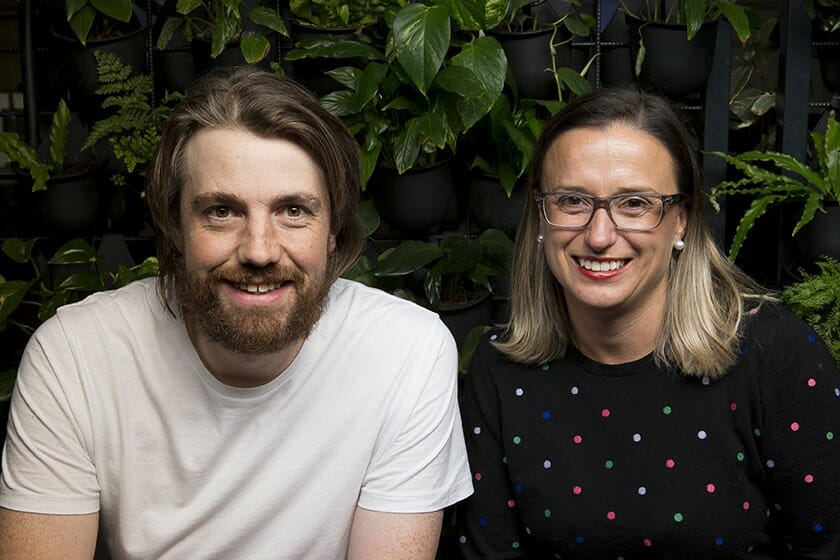
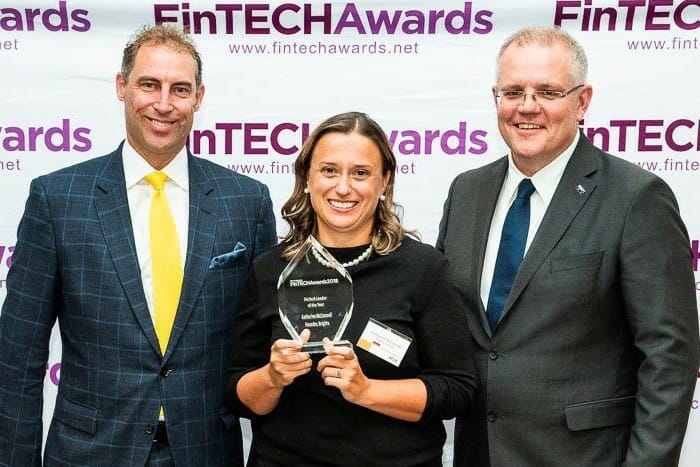
Katherine McConnell is CEO and Founder of Brighte. In 2015, Katherine was in a comfortable corporate job. Today she is Fintech Leader of the year, running a successful, rapidly scaling business and has the backing of Mike Cannon-Brookes.

I have been recruiting leadership talent for 20 years and no one has impressed me as much as Katherine. She is rightly hailed as an inspiration to female entrepreneurs. But her courage, commitment, vision and focus serves as an inspiration to everyone.

Interview with Dexter Cousins of Tier One People


What motivated you to start Brighte?

Katherine: The idea for Brighte came in 2015, it was a combination of two things; deep industry experience (Katherine spent 14 years at Macquarie Bank in asset and energy finance.) And identifying an opportunity in the market to provide a faster, easier way to finance solar panels and batteries, especially for families around Australia.

My family had installed solar and it was an exciting time. There were days where we lived totally off the grid. Some days we were putting energy back into the grid, even making money from our solar set up. Our two kids were fascinated.

However, having solar installed was expensive. I knew that as the cost of batteries came down, solar would become more accessible for Australian families. Even today, solar is still expensive to install so finance is often needed. You pay for solar panels, batteries and the installation upfront, but over time you generate savings on your energy bill.

A payment plan product where you can pay over time wasn’t on the market when I installed solar. And that is how Brighte was born. It was a mixture of personal excitement, and the realisation of a potentially huge market opportunity.

How did you get started on Brighte?

Katherine: I began working on Brighte over a period of a few months. Resigning felt like a much bigger deal than starting the business. Now I have had success, a lot of people come to me with great ideas, but they can't bring themselves to quit their regular job.

I understand why they find it so difficult. Macquarie was a big part of my life, for 14 years. How do you give it all up for what feels like a crazy dream? The only person who can get you to make the leap is you, but for someone in a corporate role, who's rational, that's a really, irrational step to make.

What is it like to go from having a stable job to becoming a business leader and CEO of one of Australia’s fastest growing FinTech’s?

Katherine: Every day has offered a different experience. A lot of what I am doing hasn’t been done before. A sole female founder, in the finance industry, starting a lending business, mum to two kids. At Macquarie I never had a team. Until Brighte I had never managed anyone in a business, no leadership training.

Everything I have accomplished with Brighte, I had never done before, and there's no guidebook. Of course, other people have launched successful start-ups in their own way, with their company and industry. You can read their experiences and stories, but your own journey is totally different to theirs.

It can be lonely being the CEO. Sure, you have your leadership team, and you can share things with them, but ultimately, you're the only one who's across everything in the business.

With so much skin in the game, managing the board, managing investors, it's a unique position to be in. But the way I think about is this is a once in a lifetime opportunity. It's like I have won the lotto, it's scary, but it's amazing. And it is a real privilege to be backed by investors.


What are your top tips for securing investment?

Katherine: My advice for seed round is this; work really, really hard. Don't give up, have a plan, and work to that plan. Don't go in with an open-ended presentation. Be clear and articulate the commitment you are looking for from potential investors.

I learnt early on that you must have a data room. If you want to win investors over, you've got to know what you're doing. We set up the data room with all the policies, processes, everything in there. We had a very slick and professional presentation in place. There were very clear next steps and everything was ready to go, it just moved so quickly from there on.

Did people doubt your vision for Brighte?

Katherine: Some people did look at me funny, as if to say,

"It is a huge vision, what makes you think you can pull it off?"

And that is okay, they have their own logic and rationale and it doesn’t align with your business plan. There were potential investors who didn’t buy into me, they would look at me and say,

"You need a co-founder, you need a tech, you need to have been an entrepreneur before."

I satisfied none of their checklists on what makes a successful entrepreneur. The only thing they could see was my deep industry experience.

What spurred you on?

Katherine: I don't believe the stereotypical indicators of a start-up entrepreneur are required for success. I truly believe you don't need a co-founder. It would make my life easier if I had one, but I knew I had the resilience and the strength to do it myself.

I don't agree that you need a tech background or a tech co-founder. I also don't believe that you need previous experience in a start-up. Understanding the pitfalls may accelerate the journey, but my deep industry experience, understanding financials, understanding commercial agreements, perhaps that is more important than start-up experience?

At no point did I think "I can't do this”. I was focussed and had total belief I would make it work. I had so much belief that we re-mortgaged the house. Eventually I met my seed investors, fantastic people who I have great respect for.

They saw in me someone who had put her life and her family's life on the line. They could see I came with deep industry experience, a detailed business plan and could answer any question they threw at me. I had identified a clear problem, identified a clear market opportunity and developed a viable solution. It made a big difference.

At what point did Brighte become successful?

Katherine: The day after I left Macquarie I bought a MacBook, sat at my desk in Stone and Chalk with a computer and a blank pad of paper. A year later, we had built a full tech platform, vendor portal, vendor app, consumer web platform, consumer app. We had built a platform with instant credit decisioning, policies. processes and legally compliant.

Within a year we were accepting loan applications on our mobile app. What we achieved in that first 12 months with just three full time people and contractors was huge. The first year was tough.

We have been writing loans for two years now. The business is 60 people and growing fast. The structure is one third sales and marketing, one third tech and one third operations - credit, risk, finance etc. Initially I hired people I knew, approaching them directly. At the start of 2017 I had to go outside my network as the next phase of growth required very specific skillsets.

How do you find the right talent?

Katherine: Today we're able to attract great people because of the brand, our investors and the fact we are a solid business. But a year ago, no one had heard of Brighte.

Attracting great people to a start-up is very difficult. You don’t have much leverage. Hiring based on values is nice but not always possible. Now Brighte is established we absolutely recruit on values and cultural alignment. Initially I hired people based on technical expertise.

I consider myself genuine and transparent, I work hard, but I am a parent and need flexibility, and that means you must trust people to get things done. I didn’t set out to create a culture, I had to hire like-minded people.

I am a huge believer in diversity and inclusion. I am very passionate about helping and encouraging fellow females. I want Brighte to be a diverse organization, it is easy to say, you must be pragmatic. As an example, it is tough to find female developers. There are three female developers in our team, which is fantastic, but they are very hard to find.

The way we have attracted a diverse work force is by accommodating flexible working arrangements, allowing people to work from home, work flexible hours or by giving extra time off over school holidays.

When you give your people clear outcomes, define what success looks like and outline what contribution you expect from them, flexible arrangements work well.

So, the culture at Brighte is based on finding like-minded people who share the same ethos on working together. We have a team of high-performing people, with a clear focus, clear direction, clear strategies. Everyone is prepared to do what it takes to achieve their goals. The team is so aligned that I rarely get involved in hiring now.

And what does the future hold for Brighte?

Katherine: We are going to keep our head down and keep working. There are new products in development we will be launching soon.  And we continue to improve the Brighte solution, whether that be for businesses or consumers.

We are working on solutions for our partners at the point of sale, making it easier for our businesses to process sales and grow their business. And on the consumer side we continue to develop ways for every Australian to enjoy the benefits of solar.

Daniel Foggo | Plenti

"If we are to compete with the large incumbents and other financial services businesses, and we want to continue to grow at the rate we're growing, we need to be doing things better than what they've been done previously, all the time. It is a constant challenge to each member of our team. "

Daniel Foggo is CEO of Plenti and a true Fintech pioneer. He introduced Australia to the marketplace lending (or peer to peer) model back in 2014, paving the way for Fintech to go mainstream. RateSetter turns 4 in October so it seemed like the perfect time for Daniel to reflect on his journey. Read on in this enlightening interview with Dexter Cousins

For people who aren't familiar with the marketplace lending model, can you explain how it works?

Daniel: Plenti provides a marketplace, much like a lot of other disruptive businesses (Uber as an example.) We provide investors with access to strong, stable investment returns via investments into consumer loans. By connecting borrowers and investors together, we can cut out costs, improve efficiency and ultimately deliver better value to both sides of the market. In operating our platform, our primary objective is to ensure our investors get a good return and that there's stability in the returns earned.

Our model is quite different to some other marketplace lenders, in that we provision for losses, to help support the stability of returns. For every loan funded, an amount is paid into our Provision Fund. Which helps protect investors from any borrower defaults. Our Provision Fund currently has about 6% of the value of our loan book in it, held in cash.

Our Provision Fund has meant that to date, our investors have received every cent of principle and interest they expected to receive. This fund is carefully managed to help ensure protection for our investors. Not just in the strong economic times we are experiencing now, but also in a sustained, stressed economic environment.

Providing a better deal all round.

On the other side of our marketplace, we provide borrowers with very attractive loans, whether they come directly to us or via an intermediary. We attract customers because we provide very good value. Our rates are up to around 8% lower than those typically offered by the large incumbents. We also provide a very convenient, easy service.

We are a true Fintech business. An equal mix of finance and technology people. Most Fintech's tend very much to be one or the other. We must get credit and finance right. We must deliver the right financial outcomes for our retail investors, We must deliver for important commercial partners such as the Government’s Clean Energy Finance Corporation. Equally we need the right technology in place to perform our duties efficiently and to ensure our customers have an unrivalled experience when borrowing or investing with us.


How did Plenti begin?

Daniel: I spent well over a decade in investment banking, latterly at Barclays Capital here in Australia. Lending money to businesses post the financial crisis was an arduous process. It didn’t seem to work very well for the bank or for the bank’s customer. Even if a loan was approved by our global credit committee, as a bank we were often lending money at a loss. For the bank to break even on lending deals, we would have to cross sell other products.

Customers were also paying high rates and fees for credit. Whilst it was hard for us to make money, it was equally hard for them to reconcile the spread between what they were earning on their deposits versus what they were paying on their loans.

It had also become clear to me the banking model had major systemic flaws. The original concept of a bank was to keep your money safe. But banks today are involved in high risk activities which put customer deposits at risk. As a society we manage those risks by ensuring a bank can withstand a one in a 50 or one in a 100-year event. So logically, we see many years where the bank model is unable to provide good value to customers. Then events repeatedly occur where taxpayers are required to bail out tough situations.

Redesigning a better financial system.

The Financial Crisis of 2008 really highlighted the issues I am talking about. Shortly after the Financial Crisis, I read in the Economist that if you were to redesign finance, you wouldn't start with a bank. The implication was that you would have banks, but that there are other models that can serve both the borrower and the investor better, whilst supporting a more robust, more resilient financial system.

This thinking led me to look for an alternative to the bank model I was working in. I wanted to see a new model prosper, a model that could leverage technology and pass on better value to customers, and not have to lean, unfairly, on the tax payer for support.

Fintech in Australia is born.

So, in 2012 I resigned from my job at Barclays, flew my family to the UK and spent 3 months visiting lots of different businesses trying to find a model I thought would resonate with Australians. On my trip I met amongst other businesses, Funding Circle, (expected to IPO in the next fortnight with an approximate valuation of £1.5bn) and RateSetter. They were both very early stage and had both funded less than £20 million in loans.

Once I explained the bank spreads in the Australia market, it was clear to them that there was a significant opportunity for a marketplace lending model in Australia. The spreads were just so much wider in Australia than in the UK. I very quickly made the decision that the RateSetter model, in particular, could prosper in Australia. I flew back here to assess the market opportunity – really to see if I could uncover any reasons why the model might not work here. A month later I returned to the UK and signed a partnership agreement with RateSetter.

It's been a very successful partnership, they've been extremely supportive in building our Australian business, especially as we went through the process of gaining our regulatory licences from ASIC.

How did you get the Australian business off the ground?

Daniel: The initial years were not the most enjoyable years of my life! I spent just under two years going through the licensing process. We started in late 2012 and the term “Fintech” in the submissions probably caused confusion, as it wasn’t a term in Australia at that stage.

ASIC took the time to understand our offering. With the RateSetter model working very well in the UK, we were fortunate in that we could point to it as an example of success.

Political support for our model in the UK and in Australia also helped. There was an increasing awareness politically, and maybe with regulators, that something needed to be done to increase the diversity of our financial system. We couldn’t just have a reliance on one model, being a bank model, but rather needed various models that work together. I think we had some success in explaining that marketplace lending could be part of the solution.

Finally, in October 2014 we had the relevant licenses in place and launched the business.


As one of the pioneers of Fintech in Australia, what are your views on the opportunities for the industry.

Daniel: The Royal Commission, Open Banking and Comprehensive Credit Reporting are creating significant structural changes in consumer finance. These changes, in turn, are creating opportunities for Fintech business like we have never seen before.

Maybe the most significant structural change is the shift in trust. We are moving into a world where large financial institutions, who may have prided themselves on having consumer's trust, are quickly finding it's being eroded. Conversely technology-led businesses are typically doing a very good job of building customer trust.

Clearly in finance it is especially important to earn a customer’s trust, although it can take much longer to earn than in some other industries. Fintech business do have a few tools in their tool box to help of course, such as by providing high levels of transparency and control to their customers.

What is the long-term strategy for Plenti?

Daniel: We are building an enduring business. There is a perception a tech start-up will become successful overnight. Seek and Carsales.com (a shareholder of RateSetter) are both examples of businesses which listed to great fanfare and are subsequently very successful businesses. What a lot of people don't know is it took each over 10 years to get to IPO.

From day one at RateSetter we've always had a very long view in mind.

This is a multi-decade opportunity to build a model that becomes a significant part of our financial system. To achieve our potential, we want to achieve it in a relatively low risk way, which means very considered growth, which is broadly consistent every month.

Although our approach to growth is conservative, that doesn’t mean we are not growing rapidly, and that there’s not a huge runway for future growth. Our leading volumes are consistently about 100% ahead of where they were a year ago. And we expect to sustain this level of growth for many years to come. We currently fund around $25 million of loans each month. At our current growth rate, within 2 years we will be close to matching a big four bank in terms of the value of amortizing non-mortgage consumer loans funded each month.

What are the secrets of Plenti's success to date?

Daniel: Long term success comes down to putting the building blocks in place. The first building block – of course – has been to recruit the right people. We have attracted great people, generally because they have quickly understood that by offering better value to our customers and diversifying our financial system, we are in fact providing a ‘social good’. There is certainly also something very democratic about our business model, in that we are providing everyday Australians with access to an asset class which was previously more or less the exclusive domain of sophisticated investors.

Of the first six people in the business, five are still here and the one person who departed is still involved. I am proud of our team, and the fact that our core senior team have a very consistent view about the purpose of our business and where we want to go.

We now have a team of about 90 people, and our team continues to expand rapidly. Everyone in the business is very focused on making sure we deliver on our vision. The challenge of course is ensuring this focus remains as our team grows, not just in number, but geographically.

The next building block is technology.

We work daily to ensure our technology is best in class. We've built a fantastic platform from which we can keep growing. The stability of the platform enables the business to grow at scale without problems. We also perform exceptionally well in terms of credit performance because of the quality of our credit data.

The final building block is investors.

Getting the right equity investors on board has been critical to our success. It has been a very conscious decision to look for investors who can contribute not just money but who can contribute more broadly to the success of the business. Pleasingly all investors on our register have contributed to the success of the business in one way or another.

Our management team and related entities, which have delivered our plans, own nearly half of the company. RateSetter UK obviously gave us a foot up and remain very supportive. Carsales and its subsidiary Stratton Finance have helped us break into the loan broker and automotive lending markets. Five V Capital, our financial investor, has a lot of experience with high growth businesses and has shared their expertise in scaling businesses. Then there are private investors who have helped us in various ways

What people challenges have you faced as the business moves from start-up to enterprise?

Daniel:As we continue to add more people the challenges keep evolving. We've been quite lucky, in that our culture has remained consistent. This mostly comes down to the way we recruit people. One of the most important questions for us in recruiting is how a new hire will fit from a cultural perspective, especially whether a candidate understands and buys into our purpose.

In keeping with this philosophy, we have sought to avoid having layers of middle management and to give people flexibility. However, we are a regulated business with significant responsibilities, so you do need to have the right controls and compliance measures in place.

If we are to compete with the large incumbents and other financial services businesses, and we want to continue to grow at the rate we're growing, we need to be doing things better than what they've been done previously, all the time. It is a constant challenge to each member of our team.

How would you describe the culture at RateSetter?

Daniel: The person at the helm is perhaps the worst person to articulate company culture and values, as you can often take your own values and behaviours for granted.

I’ve always sought to foster a culture where people are given a lot of autonomy, can take responsibility for their part of the business and are accountable for their – and where relevant – their team’s performance. Everyone in the business has a responsibility to constantly keep evolving and improving.

I believe we have created a respectful culture across the business. We all do the best we can for the customer and for each other. The customer is always front of mind.

Out of everything you've achieved so far, what has been the most rewarding part of the journey?

Daniel: Every milestone is rewarding. When we were granted our licenses, it was extremely satisfying after so much time and effort. When we funded our first million dollars, it was exciting as we felt we’d proven the model and the platform works. When we funded $100m, we were delighted to be proving to ourselves that we were successfully building a sustainable business, in the way we promised our customers we would.

Maybe that’s it. Delivering on the promise. That is the most rewarding part of the journey.

But really I still feel like the journey is just beginning. I guess that’s the privilege of starting a business that challenges the status quo in such a large part of the economy.

Eric Wilson - Xinja

Eric Wilson is CEO and Co-Founder of Xinja one of a new breed of Neo Banks. 

Dexter Cousins talks with Eric about the Xinja journey. It turned out to be the most refreshing and enlightening 30 minutes we have ever spent with a banker!


What is a Neobank and how is it different to online banking?

Eric Wilson: Good question. Let's look at how banking has evolved. Legacy banks, big monopoly banks (or oligopoly banks as we have in Australia) have gradually moved to online banking. More recently we have seen web and phone apps, but Australian banking has not evolved in the last five years.

Online banking in Australia is effectively a last century business model delivered through a different channel, your smart phone. The next evolution of online banking is a bank built specifically for smart phones. This is where Neobanks and Xinja come in to play.

Australia is in catch up mode with Europe and North America. The regulators have just allowed a new type of banking license to help businesses like Xinja get started on the journey to becoming fully fledged banks.

This is the first step. If we look overseas you get a better idea as to how the model can develop. The market ends up with four or five digital banks designed entirely for mobile.

But a digital bank is not a Neobank. Xinja and other Neobanks (Monzo being a great example) aim to revolutionise the banking model. NeoBanks are not only changing how the service is delivered but fundamentally changing the products and services a bank offers.

Sure, a Neobank might still deliver a home loan through your mobile phone but maybe Neobanks come up with alternative ways of sourcing the funding; Peer to peer? Arbitraging across jurisdiction?

Neobanks are designed for the smart phone and can deliver products, services and features a normal bank can't. I am a big admirer of Monzo Bank and we are very fortunate to have a co-founder of Monzo on the Xinja board. When we talk about digital banking he describes the journey as being one per percent complete. I agree. We are just at the beginning of the change.


How did Xinja begin?

Eric Wilson: I've spent over half my career in banking. Most recently I was the chief executive for a subsidiary of a big four bank. My father in law was an old school banker. He grew up in the country and was a bank manager for towns out in the bush. In his days, bankers were respected members of the community. They helped people manage their money, helped them get ahead. They did good and didn't lend too much money.

After years of working in the modern banking industry I recognised the banks have little connection to customers and the community. And it didn’t sit well with me. Ultimately, I was lending my strengths and expertise to something I didn’t believe in. My gut was telling me there had to be a better way.

I kept thinking of my father in law and what it used mean to be a banker, very high levels of personal service and humanity in banking. So, I set out to build a bank to deliver a similar level of care, compassion and consideration, but in today's world.

A Neobank has no branches. The shop front is a customer’s mobile phone. And with technology we can hyper personalise the service. A neobank can help people manage finances better by giving them nudges and reminders on spending.

Customers have access to loads of data to help them change their behaviours around money. A Neobank provides tools to make banking fast and hassle free. Why does banking have to be miserable and grey? Why can't it be enjoyable, fun and ultimately work for the customer?

True Neobanks are changing the model by putting customers right at the heart of everything they do. Xinja has a win-win philosophy. Every decision we make must be good for us and it must be good for our customers.

At Xinja, literally every decision we make we put the customer at the heart of it. When we design a product, we don't just come up with a product and launch it. We have real customers coming into the office, sitting with the team giving their feedback and developing product ideas.

The process of allowing customers to design the products they want, the bank they want and have ownership through crowdfunding is wonderful. It's so exciting to build a bank with your customers and for your customers. Let me give you an example. The Xinja prepay travelcard we recently launched, it glows in the dark! When the marketing team first mentioned the concept, I thought it was a gimmick.

However, the card was designed based on feedback we got from our female customers. When they out at night they take a clutch bag. The problem being in the dark they can't see which card which is. By making our card glow, they can see it. Now as a banker sat in an office not talking to people, I would never have known. But because we put our customers right in the heart of every design process, it means we can do these cool things.


Xinja was the first Australian business to raise money through Equity Crowdfunding. How was the experience?

Eric Wilson: Mind-blowing is the honest answer. The actual mechanics of getting ready for it were rigorous. I'm reasonably comfortable working with regulators, it is a key part of a banks work. The data you provide must be correct and complete. We found ASIC very helpful and great partners through the process. I can't speak highly enough of ASIC as a regulator. They were rigorous and thorough but very fair.

What really surprised me with the funding round is the appetite from your everyday Australian for a new bank. Our initial goal was to raise $500,000 and hopefully attract a couple of new investors who could become customers as well. The target was hit in four hours. Then passed $1million after three days and finished at $2.7 million dollars, which is a material amount of money in a $15million dollar series B raise. We will be going through another crowd funding raise in early 2019.

There is no better endorsement than having customers as investors.

They want to be involved and are wonderful advocates for Xinja. Our customers are willingly promoting Xinja to work colleagues, friends, family. It's so satisfying to work with customers and shareholders in this way.

A Neobank is built by its customers for its customers. It's for profit of course but it's also for purpose. Treating customers as a profit center is not how Neobanks work. We absolutely want to make money and be profitable. But the only way Xinja can be successful is by putting our customers at the center of every decision.

Australia, for too long has had too many big, oligopoly banks. The alternative has been smaller financial institutions which don't have the resources to react to customer needs. I genuinely hope Australia can have several Neobanks not competing against each other but competing against the big banks.

What we have seen in the UK is the digital banks and Neobanks don't compete against each other for customers. Customers will usually leave an established bank, CBA, NAB, ANZ, Westpac or whoever to move to a NeoBank.

In the UK, once there were two or three Neobanks established in the market customers began moving in volume. (Monzo went from 0 – 500,000 customers in the 12 months since they were awarded a banking license) I am sure we will see a similar pattern once Australians get familiar with the concept of a Neobank.


Consumer trust in banks is at an all-time low. The royal commission revealed unethical behaviours by banks and executives. How is Xinja building trust with customers and shareholders?

Eric Wilson: This is a question I ask myself every day. First, I feel a massive personal and moral obligation to our shareholders. Many are mum and dad style investors who have placed a great deal of trust in me and the team at Xinja. I started Xinja because I want to build a highly ethical bank. But me making personal promises isn't enough.

We invested a lot of money making sure Xinja has the right risk and compliance teams and frameworks in place. It is critically important, but it still isn't enough. Just look at the banks and financial institutions currently in court with the royal commission. They have spent millions on risk and compliance and employ thousands of people in risk and it still hasn't worked. Risk management is an essential element to building trust but it's not enough.

In my opinion it comes down to leadership.

The BEAR regulations, whilst a bit scary being a senior executive at a bank, are important because they bring accountability back to the directors and senior executives. Every person Xinja hires meets me at the final interview. I make our stance on compliance very clear to potential employees and our staff. My philosophy is fair and very clear.

If you make a mistake by accident and you stuff something up on compliance let us know straight away and we'll fix it. You won't be in trouble we can get it sorted. But if you try and do something dishonest in this business you will be out of the door and reported to the police faster than you can breathe.'

This message has to be made clear from the offset. You have to make sure there is never any ambiguity.

Everyone at Xinja is there to build an ethical bank. When you walk into an environment where people expect ethical behaviour it breeds ethical behaviour.  And don’t reward people in a way that encourages them to behave badly.

Shareholders and investors expect returns. How are you managing their expectations while building a bank for customers?

Eric Wilson: In some ways we've been very fortunate in the timing of Xinja's launch. The royal commission will leave a scar on the financial services industry in Australia for many years to come. But at the end of the day you just set expectations. We make it clear to our investors and our customers Xinja will make less money per customer than the big four banks. If we're going to look after our customers and we're going to treat them fairly, then naturally we will make less. When customers get something of value we'll charge them for it.

Xinja aims to deliver massive amounts of value and a hyper personalised service using technology. The model is closer to a tech business than a bank. Rather than charging 10 people $10 you build something scalable where you charge 100 people $1.


How have you attracted top talent to the business?

Eric Wilson: It's been surprisingly easy. There are currently 50 people in the business, all top talent who could easily get a better paying job elsewhere. Xinja presents a compelling career opportunity for outstanding banking professionals who have spent a career working in traditional institutions. As a native Englishman, we have an almost Churchillian rallying call to the people we think can play a significant role at Xinja

'Now is the time you need to step out, make a difference and actually do something for Australia. Help build a bank that looks after people and makes amends for what the banking industry has done.'

It is surprising how many bankers have a big heart and want to do the right thing. I can't think of anyone who has turned down an offer we have made. Most hires have approached us direct or responded to a post on LinkedIn. We usually get hundreds of people applying for roles.

People really want to work for Xinja. I feel deeply honored people entrust their careers to us. But, Xinja is doing something incredibly exciting. It is a fun place to work with no organisational hierarchy. Even our intern is quite comfortable telling me what I should improve.

Xinja offers an unlimited leave policy, employees can take as much time as they need to re-energise and be a success in the business. There is no dress policy. If you're going to trust your staff to deal with people's money, then you don't need to tell them how much leave they can take and what they should wear to work.

We spend a lot of time with individuals in the recruitment process before hiring. It is essential we get to know the person we are hiring. The Xinja fit is someone who really cares about doing the right thing and is committed to creating an incredible customer experience.

A Xinja person is not the type of person who would take 5 months off just to take advantage of an unrestricted leave policy. My challenge is getting staff to take holidays and time out. Xinja is not a job for our people. Sure, they receive a salary but many of our staff are earning a lot less than they could earn in the market. They're at Xinja because they want to do the right thing. We have a cause and a purpose.

Mandeep Sodhi - HashChing

Hashching launched in August 2015 as an online marketplace connecting borrowers to a local mortgage brokers. It is a pure Fintech play operating an Uber style model where consumers are connected to a mortgage broker who comes direct to their home. 

Dexter Cousins of Tier One People caught up with HashChing CEO, Mandeep Sodhi. He shares a compelling story and the secret sauce to making a Fintech startup a success.

How did the Hashching journey begin?

Mandeep: In August 2014, I decided to buy my first home. As a loyal bank employee, I reached out for the staff discount. At the time, I would boast to my friends about the special discounts I was entitled to as an employee of the bank.

A few days later I found out from a friend that they had secured a better rate from the bank I worked for. How come when they were not entitled to a staff discount and had never even worked for the bank?

I was infuriated, so I reached out to my bank asking how my friend managed to secure a better rate.

The bank simply replied, ‘Because your friend used a mortgage broker.’

Their answer made me even more frustrated, so I started to look at the mortgage broker model in greater detail.

From my research, I could see how much value mortgage advisers were providing their customers. Not only were they saving customers more time by taking away the hassle of completing documentation etc. brokers were securing better rates.

Initially the idea for HashChing, when we joined H2 Ventures in January 2015, was to work with the banks. We approached four of the banks who basically said;

We are happy to work with you guys, but our advisers are only available from Monday to Friday during operating hours only. We do not call clients on Saturday and Sunday or nights.

Consumers need the convenience of a broker coming to their house on the weekend. So, we quickly pivoted the model to service mortgage brokers. More than 50 percent of loans are written by mortgage brokers so we had a huge market to target.

HashChing went live August 2015 with nine brokers. The platform has 586 mortgage brokers across Australia. Each borrower rates a broker based on the service they receive. Any broker who receives less than a 4-star rating is expelled from the platform. Brokers understand.

The brokers have strict KPI's and must call customers within 12 hours of an enquiry even on a Saturday or Sunday. Today an Uber driver can turn up to your house for a ten-dollar ride within five minutes. Borrowers can be making a million-dollar decision, they expect a first-class experience.

Listen to Mandeep talk about his latest venture on the FinTech Australia Podcast

How many people were part of the initial Hashching  journey?

Mandeep: Year one, just two confounders, Atul Narang and myself. I was responsible for the broker/customer support and CEO, Atul CTO. The reason for keeping the business so lean was to understand firsthand the customer’s needs.

The approach helped in building the right product first. After year one we expanded our team from two to five people and now we are ten full time staff and one part time. It is a lean business even though we're growing fast. As a tech business, you don’t need an army of people. We are not a call center selling home loans.

HashChing is a technology business with bank level security in place. Brokers use the HashChing dashboard to collect bank statements, loan documents etc. to be lodged to the lender.  The information consumers provide to us is completely secured and protected, even our staff cannot access the information. All information is encrypted, we have to make sure we hire the right technology people.

What skills do you look for when growing a tech business?

Mandeep: I was lucky to have a Tech co-founder. As Hashching has grown we've hired a CTO from a big four bank. It is their job to make sure we continue to keep taking security to the next level.  And hiring a Senior Architect from a Telco has really helped in making the business scalable. We have grown 10x this last year but the team has not grown. It was always the vision to build a technology platform that can scale quickly.

Equally as important as the tech, is the relationship with mortgage brokers. We hired a Chief Operating Officer, Siobhan Hayden, who came from MFAA. We have not spent a single dollar on broker marketing and the reason for that is the trust Siobhan has within the mortgage broker community.

The final piece of the puzzle is marketing. How do we make the consumer aware of HashChing? If you google hashching you will see, we are in the media quite a lot. The PR has been great for brand awareness.  That's because we have the right marketing team in place. When I call it a marketing team, it's a team of two people.

What we need in the future are specialist skills in certain areas of the business. People who can help us continue that growth trajectory. When you start scaling you need to grow your team accordingly, otherwise people will burn out. New skill sets need to come into the company as it continues to grow.


How do you attract the right talent?

Mandeep: I realise that top talent do not leave a cushy job at a corporate to have the same experience. We can attract better talent than a bank because we give employees the flexibility to do their job.  There are very clear expectations and KPI's from day one. We remove all bureaucracy.

HashChing empowers employees to make decisions and offers an accelerated career path. People who joined Hashching six months ago have already moved up because they are performing well and show passion for the company. This doesn't happen at a corporate.

We have a unique environment with diverse backgrounds. Everyone is treated in the same manner. The intention has never been to hire for diversity, only to hire the best people. They just happen to come from different backgrounds. However, diversity is critical for innovation. When I consider the backgrounds of our people, they reflect our customer base. The team isn’t measured on innovation, it happens naturally. We think like our customers because we are just like them.


How do you keep people motivated?

The environment at HashChing is like coming to work with your cousins. Going to see your cousins is fun. We have a bond with one another, where we can have fun and feel like we are a family. But at the end of the day, we can go home, so you don’t get the arguments like you might with your siblings. Our people love being here.

They're not getting paid top dollar. I know they can get paid a lot more in corporate world. But it is the satisfaction they get from working with a startup, building something special that keeps them motivated and hungry.

Most of the team approached HashChing directly, explaining how passionate they were about the company. Importantly, they understood the nature of a startup. They did not approach us looking for a fantastic salary and work life balance.

The secret sauce is your team

I was on the stage at a conference recently and someone asked me the secret sauce of the company. I thought about it for a while and I realised the secret sauce is your team. It's not the technology or the algorithm. Technology is an enabler. The team makes the vision come to life. And if you have the right team, even if it is a small team you can out play a bank.

HashChing is fortunate to have super smart people who get on with the job and don't need to be managed at all. The team owns the culture. In fact, it was the team who came up with the HashChing values after two years in business. Culture is critical in a startup and if you hire the wrong person it has a huge impact. You need to act swiftly and decisively. We have made a hiring mistake in the past and I regret not acting sooner. But it was a good learning lesson.

What does the future hold for Hashching.

Mandeep: It is a very exciting time for HashChing. We have grown 10x in the last financial year. That level of growth is across revenue, number of mortgage brokers on the platform and number of mortgage applications processed. It's enormous growth.

Our first home loan product has been launched and is being distributed via our mortgage brokers. We designed the product based on the needs of the broker and the consumer. It is a product that provides same day approval. Brokers and consumers are loving it because now they don't have to wait five days for approval.

The team is continually looking for the parts of the home loan journey that are broken. If you compare home loans from the 1990s nothing has changed. We have 1500+ home loan products in the market but they're all the same. The question we ask ourselves everyday ‘How can we give the consumer more choice and help the brokers more easily fulfill a customer’s needs?’

Is the Hashching business model going global?

Mandeep: HashChing is not exclusively for the Australian market. Today, Australia is the biggest market for us and we need to stay focused. But we are looking at other geographies who have a similar home loans model and regulatory framework. Before going into the other markets, we want to make sure that the model is scalable.

The UK, Canadian and New Zealand markets are the countries we will be exploring first. In the geographies where mortgage brokers do not have a significant presence, we will look to operate a direct model launching our own products.


What is the exit point for you and Hashching?

Mandeep: I'm not thinking about exit at this point. I know a lot of investors do not like that answer but I do not want to sell to the banks. There's a reason why we're going with equity crowdfunding and that is to make sure we stay independent of the banks.

A lot of our competitors are backed by financial institutions. Some have openly disclosed their investors, some have not. Two of the big four banks have approached us in the past. We've politely declined their offers. It's just not the right model for us.

Why would a bank want to invest shareholders money in a startup? It stands to reason that they want to influence their own products on our customers. So how can we claim to be independent if there is a conflict of interest?

What we're seeing with the Royal Commission clearly shows you that banks and financial institutions have very different KPI's to HashChing. Our KPI’s are all based around customer satisfaction and we have a very clear review system to measure that. Where as banks and financial institutions base their KPI’s on sales.

What has been your experience dealing with regulators?

Mandeep: The regulators clearly want to work with startups. But they are not clear on how they want to engage. My view is regulators are setting too many boundaries around innovation which makes progress very difficult. Startups are not trying to disrupt the industry they are striving to give more choice and transparency to consumers. To do that, we need to disrupt existing models.

The regulators seem to think startups present a systemic risk. Regulatory bodies need to acknowledge that startups do better job than the major financial institutions in certain areas. We need the support of the regulators.

Yes, regulators must ensure startups do not cross certain limits or mislead the customer. But regulating a startup in the same way as a bank or financial institution is not going to work. We just don't have the resources or funding to compete.

The royal commission has been a real eye opener for ASIC and APRA. They have openly identified that the banks have done some terrible things. Maybe the regulators can now work with the startups and find ways to solve some of the issues the banks are facing? We are happy to show our tools and share our knowledge with the regulators.

Chris Bayley - Cover Genius

We were extremely focused and spotted an opportunity in a sizeable niche that was being overlooked by the large insurers. The niche we identified was car rental insurance. It's worth US$7 billion globally, US$6 billion of which is profit.

Chris Bayley - Cover Genius.

Cover Genius is an Aussie success story and is on course to becoming Fintechs next Unicorn. They are the Keith Urban of Australia’s FinTech scene, much bigger in the US than they will ever be at home.

Over the past twelve months, Cover Genius has been gaining recognition. With accolades including ANZIIF Insurtech of the Year 2018, Smart Companies fastest growing company, KPMG’s FinTech global top 100 and Insurance Innovator of the Year at Australia's Fintech Business Awards.

What is truly outstanding is the commercial success of Cover Genius. I caught up with Co-Founder, Chris Bayley to find out the secret to bootstrapping a global business from zero to US100m GWP in less than four years.

How did the Cover Genius story begin?

Cover Genius began four years ago with Angus McDonald (CEO and Co-Founder) and myself having this vision of empowering the world's largest e-commerce companies to sell insurance products.

As we see it, the market is at about 1 percent penetration. Cover Genius has developed two critical technology platforms that bring connectivity to big eCommerce companies wishing to sell or optimise their insurance products. We are the pipes, not the plumber!

We see it as our job, mainly because large insurers are not that good at providing the technology to enable eCommerce partners to sell insurance. It's difficult for them: technology platform development requires a lot of work and a skill set you will not find in a large insurer beset with legacy systems.

A sweet spot for us is global insurance wherein we combine our platform capability with extensive global underwriting capabilities (we are an authorised representative in over 60 countries). e-Commerce sites can very quickly sell insurance all around the globe from a single API call.

How many people told you that the Cover Genius vision was not possible?

Heaps. They were short conversations, but we've done it!

We are regulated in more countries than the largest insurers globally who all require dozens of country managers to sign off on every multi-jurisdictional deal.

Neither myself or Angus come with a traditional Insurance background, which has probably helped us in achieving what we have. Looking at Cover Genius from a traditional Insurers angle and seeing the scope of the challenge, I can understand to some extent why global insurers would think building a global platform is not possible. But we have done it in four years.

How did the idea for Cover Genius come about.

I previously ran the insurance team at Google. So, coming out of the Google business I could see the commercial opportunities for selling insurance online. It was just a matter of finding the right model.

The ancillary revenue for eCommerce sites is significant. However, it needs to be done at scale and to do it at scale you tend to need partnerships with the big e-commerce players. Initially Angus and I took a reasonably cautious approach because we were largely bootstrapped (Cover Genius is not VC funded and the small rounds to date have been funded by London-based insurance executives including Jim Sutcliffe, former Chair of Sun Life Canada and Julian Roberts, former CEO of Old Mutual).

We were extremely focused and spotted an opportunity in a sizeable niche that was being overlooked by the large insurers. The niche we identified was car rental insurance. It's worth US$7 billion globally, US$6 billion of which is profit.

Compare that to travel insurance, US$21 billion gross globally and about US$12 billion profit. So, the car rental market is 50 percent the size of the travel insurance market. And there was no one doing it. None of the big Global Insurers had customized car rental access products. None of them were able to sign deals with the largest distributors. It was totally overlooked. And when we engaged global insurers to provide policies for our early clients, their inability to provide capacity in short time frames and other archaic processes all got in the way.

So, we took it upon ourselves to go and find smaller agile underwriters and shortly thereafter we signed a cornerstone partnership with Booking Group (the owner of Booking.com).


How did you win the largest travel site company in the world as one of your first clients?

The nature of partnerships has changed over the last five years. Startups like Cover Genius exist to resolve pain-points that are inherent for companies who would otherwise need to partner with incumbents.

If your business model is to power insurance offerings on the world's largest e-commerce sites and you're the world's largest e-commerce site, who are you more likely to partner with? If you have grown an internet business to that sort of size and scale you're looking for like-minded businesses. eCommerce businesses know inherently from their own experience and by the nature of the industry that they're in, that it's going to be the little guys who can make it work.

When you're pitching your service to someone who understands you can do it - and you come with an attitude of wanting to make it happen - that's how eCommerce companies partner.

The alternative is big corporates who put everything through an RFE process.

That doesn't get you into the position of co-creating a solution.

It doesn't get you into the position of aligning mutual interests.

What tends to happen is the incumbents reply, because you have not engaged the tech startups, ending with a substandard outcome. And it is a real shame, because there's always a tech startup who wants to do it, who can do it and who won’t fail the partner.


The advantages of hiring a great team

We also have a great Tech team, many of whom were in the founding team of Viator (which sold to Tripadvisor for US$200m. )They had an excellent vision for a micro-service architecture, well before the word was coined.

The early versions of the API were very well received. The early release of our XCover platform was one of the world’s first APIs for insurance distribution. So, we were able to go from a couple of small clients in Australia to having the largest global travel sites within 6 months. We’ve increased gross premiums from a tiny amount in August 2015 to an expected monthly GWP of $30m by 2018 year end.


With the distribution problem solved early in the journey, what have been the challenges for the business since?

There's all sorts of stuff. The technical challenges are interesting but they're solvable. Scaling products, scaling technology, scaling the team etc. they are all interesting challenges.

We've deliberately not sought outside funding. So, we have the freedom to run an efficient, focused business and not worry about external investors. The lesson we've learned is it is better to have the founders running the business, not out raising money. It makes a huge difference.

Angus and I know all the internal workings of the product and operations. We know the internal workings of how we get new partners in place. The execution risk is reduced immensely.

It's very difficult to have your executive or senior management level performing the roles which would naturally fall to founders. I think that's probably been a cornerstone of our success, having the founders around.


What would you say is so special about the relationship between you and Angus?

Complementary skillsets. I used to think meant having someone technical and someone commercial, but we're both commercial. I am more product focused and Angus is more partnership focused. Both of us being commercial helps in the way we communicate and how we manage our expectations.

Ultimately it is like a successful marriage. Which means making it through difficult patches and remaining close. You must keep celebrating all the little victories.

How is Cover Genius using AI and Machine Learning to grow the business at scale?

We primarily apply machine learning and data science through a part of the Cover Genius platform, BrightWrite. While our XCover platform does the connectivity, BrightWrite introduce dynamic pricing and product recommendations. These optimize a partner’s profit margin, both on premium and on the risk side. BrightWrite primarily concentrates on non-traditional ratings factors and pricing factors.  It enables partners to sell product packages where the mix of individual products is bespoke to a single user.

Brightwrite is part of XCover, our distribution platform, but the microservice approach means we also sell Brightwrite to insurers.

What does the future hold for Cover Genius?

Simple - continue to work on the original vision and expand the reach of the XCover distribution platform. We’ve set up our US office, ably led by Mitch Doust who has years of US insurtech experience. Big e-commerce partners want to sell insurance and its Mitch’s job to get those to commercial and product outcomes.

What piece of advice do you have for InsurTechs just getting started?

Follow the money. Figure out who can be a big distribution partner for your business and talk to them. Then invest in the operational and technical scale.