Podcast
Fintech In The Nordics – Pål Krogdahl.
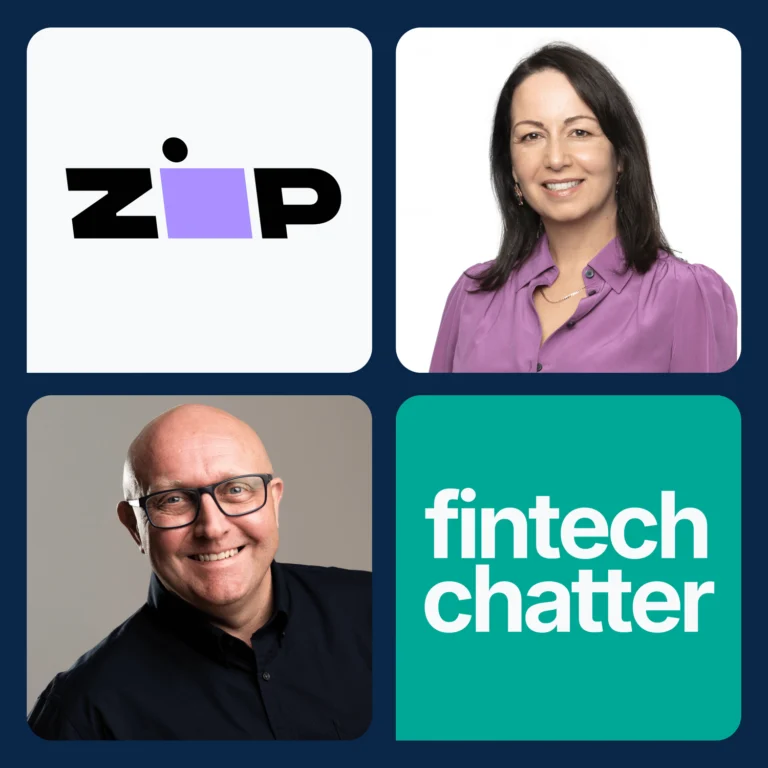
In episode 182 of Fintech Chatter Podcast Dexter Cousins is joined by Pål Krogdahl, Director of Advisory at Samlink and co-host of Fintech Daydreaming Podcast.
In this episode, Dexter chats with Pål Krogdahl about the Fintech scene in the Nordics. They talk through Navigating the Transformative Trends in Banking, a report highlighting the latest customer trends and research based on 40-plus banks, revealing the key themes and areas for innovation.
Covering everything from AI to Open Banking, Banking as a Service to Embedded Finance, and everything in between the research reveals where customers are shifting their focus and expectations from their bank.
Pål also shares some key findings on the major issues keeping banking execs awake at night, giving some clear indications on where the next wave of Fintech entrepreneurs should focus their energy.
The Nordics is the birthplace of Fintech OG’s like Klarna and Tink. It is a region with a rich history of innovation and Pål gives a rundown on the Fintech scene in his native Finland. There are some startling similarities to the Fintech scene down under and lessons can be learned from our European cousins.
You can follow Pål on LinkedIn – https://www.linkedin.com/in/krogdahl/
Download the report – https://samlink.fi/news/the-samlink-equation-2024-navigating-the-transformative-trends-in-banking/
Listen to Fintech Daydreaming – https://fintechdaydreaming.com/
Links from this episode.
- Samlink Advisory Services, which Pål heads
- The Samlink Equation 2024 – Navigating the Transformative Trends in Banking, the report Pål discusses
- Pål Krogdahl on LinkedIn
- Fintech Daydreaming, the podcast Pål co-hosts with Ville Sointu
- Kyndryl, Samlink’s owner
- Tink and Klarna, the Nordic fintechs Pål mentions
More on banking on Fintech Chatter.
- Francine Ereira on Klarna (2020)
- Leda Glyptis on Bankers Like Us (2023), on transformation inside big banks
- Antony Jenkins on the future of 10x Banking (2025)
- Sam Everington on why banks are renting Starling’s core (2026)
- All Fintech Chatter episodes
Full transcript.
Lightly edited for readability — filler words removed, wording otherwise unchanged.
Dexter Cousins
Fintech Chatter podcast, brought to you by Tier One People, the leaders in executive search for fintech ventures. Hello and welcome to Fintech Chatter, the show where fintech leaders join me for a chat. I’m your host Dexter Cousins and today’s guest is Pål Krogdahl from Fintech Daydreaming podcast and director of Samlink Advisory Services. He recently authored a report, Banking Outlook: Navigating the Transformative Trends in Banking, and I’ve invited Pål onto the show to discuss the report and get some clues as to where the genuine opportunities for fintech innovation lie. We’re also going to chat about the fintech scene in Pål’s home Finland, as well as talk about his podcast Fintech Daydreaming. Pål, welcome to the show.
Pål Krogdahl
Thank you Dexter. It’s a pleasure to join you.
Dexter Cousins
It’s a pleasure for me to return the favour, ’cause you kindly invited me on your podcast about a year ago and we had a really good time. So it’s great to be back with you.
Pål Krogdahl
Absolutely. I mean, it’s really nice I think when the wider fintech community gets together and join each other on the podcast shows and share experiences and thoughts. It to me builds the community.
Dexter Cousins
Yeah, absolutely. And look, I think nothing is more educational than travel, and while we’re able to travel again I think it’s great to be able to give my listeners a different context and perspective, and one that I’m sure they’ll not have heard, particularly from Finland. So it’s great to have something unique, and you’re the first person from Finland to be on the show.
Pål Krogdahl
I’m honoured.
Dexter Cousins
Yeah, that’s a fantastic honour to have. In fact the only other person I was aware of from Finland was M Hakin, and so you.
Pål Krogdahl
Oh, but you’re forgetting my co-host Ville.
Dexter Cousins
Well, Ville, yeah. Sorry, and Ville. So there’s Mika, you and Ville. Great. Well look, as I said, welcome to the show. Before we go into it and the report, can you tell our listeners just a little bit about your background?
Pål Krogdahl
I spent the last 26, 27 years working with the inside of consulting and IT consulting focused on the banking industry. So 25, 26 years with IBM before leaving IBM to now heading up Samlink Advisory Services, which is a business to IT consulting organisation connected to Samlink.
Dexter Cousins
Got you. You must have some real horror stories from the last 25 years.
Pål Krogdahl
Horror stories I see as being opportunities for learning, right? So there’s no horror stories, there’s just lessons in life.
Dexter Cousins
Yeah. Well, it’s great to have that context, because one of the things that I’m always wary of when you see a consultancy firm produce a report, and it’s the transformative trends or innovation, usually they’re talking about stuff that’s already happened three, five years ago and projecting it onto current clients as, oh well, this is the way to go.
Given the experience that you’ve had, and I guess the firsthand experiences of seeing the complexities and challenges that banks have in innovating, not just technology but product and regulatory restrictions that they’ve got, the scale, the political challenges that they have, I’m confident that the discussion that we’re going to have about the report is going to be a one that’s kind of grounded in pragmatism. But can you tell us a little bit more about the report?
Pål Krogdahl
I can do, and probably it will help if I also position Samlink and the Samlink company, because that’s part of what founded the foundations of the report. So Samlink is a fintech company and it’s predominantly a banking as a platform provider. It’s delivered full end-to-end banking IT capabilities to about 50 financial institutions in Finland and has been doing so for nearly 40 years, if not more. It actually started off in the beginning as a joint venture between a number of banks in Finland that decided to consolidate their IT infrastructure into one entity. And then through that journey Samlink has been acquired twice. It is now currently wholly owned by Kyndryl, which was the spin-off from IBM, and Kyndryl has been the owner of Samlink since 2022.
But so our heritage is still very much as a fintech, a small fintech focused on global growth, initially predominantly as a banking as a platform provider. But as I said, I was brought in end of last year to head up a new part of Samlink, which is advisory services, which is taking that deep experience, insights and capabilities that Samlink has built up over the last 40 years and turning that into an advisory services.
So one of the key elements that we put on the table is the fact that we’re not just a traditional consulting company that has some insights into banking. We live and breathe, we are truly walking the talk, because when we talk about delivering on compliance we have to do the same for our 40 financial institutions. We have to do the resiliency, we have to do everything else. So that also founded some of the views that we’ve got in our report. Not only did we take a deep look at what we’re doing, the collaboration we’ve got with these 50 plus financial institutions, but also looking at what we see as changes happening with inside of the banking industry globally.
And one of the things, back to what you said, absolutely Dexter, we tend to find that a lot of people who bring out, or organisations that bring out these reports tend to do it very much from the perspective of banking and the banks outwards. What we did was we on purpose said, well, the banks are going to be driven by predominantly changes in customer expectations and things that are going to influence them from the outside in. So let’s create a report that takes that view of what are the forces that are going to drive the banks to need to change. Now whether they decide to change or not, that’s up to them, but we’ve got some perspective on helping to drive that forwards.
Dexter Cousins
Yeah. It’s amazing that you say that Pål, because it’s one thing that I’ve been pushing for the last four or five years, is my personal frustration with banks here in Australia, and particularly on the business banking side, where the experience is very different and a lot poorer than on the retail side. But the banks, they expect, and I do, things that my kids will just never tolerate. They will never be on hold for two hours, right? They just won’t do any of those things.
And I think that’s, as you’ve pointed out, that’s going to be more of a driving force, because the reality is within banks a lot of the decisions are made not because it’s the best thing for the customer, but if we don’t do this we could end up in jail or in trouble with the regulators. And unfortunately that’s where most of the dollars goes when you kind of put in that position. So it’s really fascinating to kind of hear you take it from that view as well, because I think that’s where we’ve seen the big leaps in innovation, as far as I can see.
Pål Krogdahl
Oh, absolutely. And exactly to what you said there, a lot of the banks in the Nordics have a very strong perspective still, when you talk to them, that they believe they are going to continue to own and control the customer journeys and that they are going to be the main provider of financial capabilities to their customers. And I repeatedly say, the consumers have got a different idea. Most consumers, even in the Nordics, have got relationships, if you want to call them relationships, but at least five to 10 different providers of financial capabilities that they deal with, and the digital wallets are taking over, particularly in the Nordics and Europe.
Dexter Cousins
Well, can you tell us first off about the report and who it’s aimed at, and how you went about actually collecting the data?
Pål Krogdahl
The report is aimed at the banking executives. It’s aimed at the change makers with inside of the banking industry, be that both new banks, incumbent banks, fintechs, and also non-financial organisations that are seeking to start to take advantage of the growth of embedded finance and those sort of things. So predominantly the new face of Samlink.
How did we collect the information? Like I said, it was because we collaborate and provide IT capabilities to 50 plus financial institutions. We co-create with them, we collaborate with them. We don’t just provide capabilities for them, we have to work with them to make sure that they stay future relevant and they continue to be profitable. So that means that we spend a lot of time with them looking at what’s coming down the line, what is the things that they should be focused on, what shouldn’t they be focused on. So taking that from our internal repository, so to speak, that gives us a good view on what’s coming down the line.
The other element as well is we have got a collection of very senior thought leaders with inside of the banking industry that have got a global perspective, people like myself who have worked across the globe helping banks in driving relevant transformation. So we’ve taken that into consideration as well, and then created our hypothesis, which has ended up being the report.
Dexter Cousins
Okay. What was some of the key findings that really struck you?
Pål Krogdahl
So the key findings at the end of the day we’ve boiled down into four sort of main focus areas. The first one is obviously the paradox of a slowing economy versus rising interest rates, which has created a very interesting dynamic for banks, and I would say globally. With the interest rates going up they are in a short term potentially cash rich, which is good for the banks and it’s good for their balance sheets, but banks are also wary of the fact that they don’t know long this is going to last for. As the interest rates go up and the slowing economy, you’re going to have less mortgages, less loans, more defaults.
So banks are potentially, or the more risk averse banks are banking this money and sitting on it and trying to see what’s coming down the line. Some more innovative banks are taking some of this money and using this as an opportunity to modernise some of the things that they’ve been sitting on for too long. We all know that a lot of banks have got legacy systems, legacy processes that they’ve been sitting on for a long time, trying to find other priorities. We all know banks generally are driven predominantly by compliance, but now is the time, if you’ve got a little bit of extra revenue, cash coming in, it’s a time to look at how can we best invest this. So that’s one of the elements that we’ve seen.
The other one obviously is around the sort of continued regulatory adoption and growth of cyber threats to the banks. And here we made a prediction and last year that we were going to see a explosive growth of cyber threats, cyber criminality this year, and we’ve already seen that. So in the Nordics there’s been a number of high-profile cyber activity or cyber crime activity. We had ransomware attack on a large company in the Nordics that happened in January, and we’ve seen other activities as well, and I think we’re going to see more and more of this. There’s discussions now about deep fakes and how deep fakes is going to impact the banking community globally.
And then at the same time we are seeing, particularly in Europe, a number of regulations that are coming quite fast, which is impacting the banks. So instant payments has just landed as one of the sort of first requirements that are hitting the banks. We’ve got PSD3 coming down the line, we’ve got the digital euro coming quite soon. So I think we’re going to continue to see that drive of compliance as the regulators continue to play a catch-up game, and this puts a lot of pressure on the banks. Back to, they’ve got some money coming in, maybe now’s the time to look at what’s the bigger impact of regulations going forwards.
And then the last one, or two more sorry, the next one was around the sort of drive of transformational changes in technology and innovation. And here it’s, everybody’s talking about AI, particularly generative AI. We’re going to see a continued growth of that and I think it’s going to become more and more important, but it needs to be managed in the best way. And I think here most executives in banks, they understand this is coming but I don’t really understand the impact and the use of generative AI in a good way, and I think that’s a whole discussion in itself.
And what I say here to most executives is you don’t need to put all of your investment, all of your time, all of your focus into generative AI today. The train is still slowly leaving the platform, but the critical part here is you need to make sure you’re on that train, even if you’re sitting at the back of that train. You need to be on the train, because if you stand on the platform and watch the train leave, by the time that the AI train is out of sight you’re going to get smacked in the back of the head with the quantum train. There’s no way you’re going to be able to keep up. And we seeing this accelerated trend in innovation and technology and that’s going to continue.
And then the last one I think is we are seeing a dynamic change in competitive dynamics. We are seeing a growth, and I think this is taking different shapes and forms depending upon which region and part of the world you’re in, but there is a steady growth of the platformification of the banking industry, and it’s taking slightly different shapes in different parts of the world. Over in Asia Pacific there’s still a good focus on what we would call super apps. I think the super apps that we’re going to see in Europe, I don’t think we’re going to see the same sort of super apps as WeChat, but we’re seeing a growth of digital wallets.
Here in Finland, as a fintech there’s a very interesting digital wallet called Airy, which is starting to dominate an awful lot of the day-to-day financial capabilities that a consumer needs to do basic banking things. The only thing it’s missing from my perspective is the peer-to-peer payment. That’s not too difficult to implement, and once they do that I think they’re going to dominate quite well.
And then we’re also seeing the growth of larger sort of industry platforms happening in emerging markets like India and Latin America. Baroda Kisan in India, taking a full vertical in the agricultural space. I think we’re going to see more of that as well. So I think, like we said right at the beginning, banks are not necessarily having to become large platforms or become the next super app or the next big digital wallet, but 2024 is the year when banks need to define how they are going to interact and continue to be relevant in a predominantly platform based banking world.
Dexter Cousins
Yeah. One of the things that I think everybody’s been suffering from is the kind of innovation fatigue, where you’ve pointed out it’s one thing after the next, right? And say you just get your head around AI and then say, oh, now here comes quantums. We’ve had blockchain, and that’s kind of goes on its cycle. Now because the price of Bitcoin’s up, everybody’s like, yeah, blockchain, blockchain. We’ve had buy now pay later, we’ve had banking as a service. Really interesting to hear you talked about banking as a platform and that it had been a 40-year-old business.
And these kind of concepts, a lot of them are technologies that have been around for a long time and still haven’t really got traction. And so it kind of creates this, not only I guess kind of exhaustion from constantly being bombarded with the next thing, but also then, hey, well, where’s the proof to show that these things actually work and we get the return on investment from it? So with that in mind, what do you see as being kind of the things that are keeping a banking CEO up at night, that if a fintech startup was to go to them with a solution they would welcome them to sit down, rather than go, oh, not another one?
Pål Krogdahl
Yeah. First of all you’re absolutely correct. There is this sort of spiralling effect where new technologies come along, we hype it up and everybody gets excited, and then the dust settles and you realise that it wasn’t as scary or as critical or as detrimental as initially expected. But it’s a slow march, and I see that even with blockchain, it’s moving in the right direction. We can have an argument around cryptocurrencies. I mean, I make no secret about this, I’m not a big fan of Bitcoin, never have been and I never will be.
But from a banking executive’s perspective it’s actually to a certain degree quite easy. I mean, if you think about how banks operate and you think about how banks buy, it starts at compliance. If a bank does not keep up with regulation and keep the regulators happy, there is no licence. If there is no licence, there is no bank. So it always starts at compliance. Then the next thing is around the burning platform. Obviously a bank isn’t going to be able to be relevant or succeed if they keep having outages, particularly not high-profile outages where customers can’t get to their money and everything else. And then thirdly it’s around cost reduction.
So if you’re a fintech and you’re delivering capabilities towards banks, and let’s be honest, the days when we thought the fintechs were going to kill the banks is long gone. These days it’s about this whole ecosystem enablement, banks looking for what is the next capability, best of breed, that I can take advantage of to keep me relevant going forwards. Why? It’s going to start at compliance, right? If you as a fintech can come with something that’s going to help the bank deliver on the next train of regulations, then the bank’s going to listen.
And here in Europe, if you can help the banks with delivering on instant payments, which to the banks here in Europe, instant payments isn’t just about the fact that you need to demonstrate that if I send Dexter some money it is visible to him within 10 seconds. The regulation for instant payments in Europe also is instant settlement, where most banks today do settlement in batches. They might do it overnight or whatever the case is. Now it’s instant settlement within 10 seconds.
And the last thing that they have to do as well, where I think a lot of fintechs can help in here, is there is a part of the regulation that says that you need to be able to do a real-time look up or matching between IBAN number and receiver. That means that not only can I put in the IBAN, but also it will validate to me and say this is the IBAN and account, Dexter, you know that, and you’re sure it’s Dexter you’re paying. So the minute a fintech can come along and say to the bank, I can help you to deliver on compliance, the bank will listen. Then the second one is, what’s your burning platform?
Dexter Cousins
Awesome. Now, you mentioned generative AI, and I’ve got to be honest, I’m kind of struggling right now to see what are the applications for banks, genuine applications right now. Do you see that there is a genuine opportunity there?
Pål Krogdahl
I think there is. I see that there is opportunities, but I think that it’s a, let’s not get carried away in the same way as we did with blockchain and everything else. I think the initial place where banks can take advantage of generative AI and AI is more inwards facing than outwards facing. I know everybody gets excited with the idea of the next generation of chatbots and advisory services, and we’re going to get there, but until we can ensure full transparency, not have any black boxes and be able to understand and demonstrate how the AI came to the conclusion it did without any hallucinations, etc, we need to be a little bit careful about how we use generative AI in a customer facing scenario.
But internally I can see great benefits. We are seeing generative AI and AI being used in success to do code transformation, for instance, transforming from legacy code, COBOL for instance, to Java or newer languages. We’re seeing generative AI being used very successfully in documenting code. So a lot of people are saying we are worried about the fact that we’ve got an ageing group of developers that used to look after our COBOL code. They’re leaving, a lot of the information is in their head.
Dexter Cousins
Yeah, a lot of them are dying as well, it’s that old. I’m saying a lot of them are dying of old age, it’s that old programming language.
Pål Krogdahl
But so you can take your AI capabilities and point it against your COBOL code and get it documented in a human readable form, which means that the issue of not having it documented is going away now. So those sort of things is where I’m seeing great value for the banks with using generative AI. The other one also is on employee capabilities. We talk a lot about using AI to streamline and execute business processes, using AI in call centres to be able to easily identify next logical action, those sort of things.
Dexter Cousins
Yeah, certain things like insurance claims and stuff like that as well.
Pål Krogdahl
Yes, exactly. We sort of go circle back to, I said earlier, around the growth of cyber threats. We’re seeing an explosive growth now of fear around deep fakes, particularly with the voting coming up in the US, the elections in the US, etc. One of the things that we’ve always found with a lot of technology is that advancements in technology on the good side is very often driven by what’s happening on the bad side. So I think we’re going to see an explosive development of generative AI as we try to combat what the bad guys are going to be doing with generative AI, and that’s going to benefit the banks.
Dexter Cousins
Yeah, I think I heard on the radio the other day, they’ve made it illegal now in the US to use voice recognition, I think, on phone calls.
Pål Krogdahl
Yes.
Dexter Cousins
Yeah. Here in Australia I think one of the government, think was, might be in the tax office actually, Australia tax office, brought in a voice recognition program, which now is been kind of really shown to be not secure at all, particularly with generative AI. Fortunately for me I could never use it because it could never recognise my accent. But there you go.
Pål Krogdahl
There you go, right. Forget cyber security, just get jordis onto it. They’ll kind of be able to combat any cyber criminal trying to figure out that accent.
Dexter Cousins
Yeah, exactly.
Pål Krogdahl
Yeah, but there was a bank here in Europe that had some issues recently, where a group of people used AI to help to generate video etc, basically based on a false identity, to open a bank account. So even with AI capabilities these days you can trick most of the onboarding processes for a lot of the banks, which we need to stay up and ahead of what’s going on, and you get the fatigue again, like you mentioned, next.
Dexter Cousins
Yeah. Well, this is exactly what we’ve got in Australia now. So the big kind of push by the government is really around fraud and scams, and it’s kind of, they’ve had pretty harded, and the crypto industry’s taken a lot of the, I think, heat for it. But there’s a recognition as well that this isn’t just down to banks or the financial component, it’s a whole ecosystem play, where you’re talking about social media platforms, telco providers, they’re all, the channels by which fraud is kind of perpetuated, are also implicit in being part of the solution as well.
And so we’re seeing here there’s a more holistic approach starting to evolve here in Australia around tackling the problem, where it’s not just that issue that you talked about with the account recognition. We got the capabilities here to do that in Australia with PayID, and it’s just not being adopted, right? They’ve developed this technology and they’re just not doing enough to push it out to the public to raise awareness.
Pål Krogdahl
Which comes back to banks will buy first on compliance. Make it a regulation and force the banks to use it, and you’ll see the change happening quite fast.
Dexter Cousins
And I think look, that’s one of the challenges, right? They’ve already kind of had massive pushes on the banks here in Australia after the Royal Commission, which they’re still making record profits, but there comes a challenge when you just keep constantly focusing on compliance. You got to focus on customers as well. So it’s kind of getting that balance right, and I think that’s one of the real challenges, is where do you, instead of constantly fighting fires, where do you go to actually grow the business as well?
And interestingly, you talked about early in the discussion some banks are using this moment in time where interest rates have increased and therefore they’re getting bigger inflows of capital to invest in technology. And actually this is what Australian banks did in the GFC, where we were pretty much shielded from what was happening globally, and the four Australian banks became the four, I think, one the top 20 profitable banks in the world, and they were able to invest in technology. And so now we’ve got Commonwealth Bank, who, one of the leading digital banks out there.
So it’s interesting to see that these periods of kind of economic downturn are actually when the most innovation happens, right? Rather than kind of the period that we had where it was all innovation theatre and rainbows and rocket ships and we’re going to the moon, and there wasn’t really any innovation happened, right? We had maybe buy now pay later. Most of it was a lot of shouting about how great we’re going to be and what we’re building, and then two years later the business runs out of capital.
Pål Krogdahl
Absolutely. And I think we went through a process where valuations of fintechs went ridiculously high, based upon metrics that weren’t of that much relevance.
Dexter Cousins
Now, we’re listened to in 40 countries and I think Finland may be one of them. It’s probably you who’s listened to it.
Pål Krogdahl
Could be, or M H.
Dexter Cousins
But how would you pitch fintech in Finland to a global audience?
Pål Krogdahl
So I would say that Finland has a strong startup mentality. It has had for quite some time and continues to have. So we’ve got an awful of entrepreneurs here in Finland, and I would actually to a certain degree sort of bunch Finland in with the other Nordic countries. We are, Finland’s what, 5 million people.
Dexter Cousins
300 billion GDP.
Pål Krogdahl
Exactly, yeah. And with our brothers and sisters in Norway and Sweden and Denmark, we are very innovative. I mean, if you look at Tink, you look at Klarna, they’re all out of the Nordics. You could argue that buy now pay later was invented in.
Dexter Cousins
We know it was, right? We just, us Aussies just kind of took it and made, put our own little Aussie spin on it.
Pål Krogdahl
Absolutely. And on the flip side of that, the Nordics have been very digital for a long time. We’ve been very active in driving digital adoption. We are for all intents purposes cashless and have been for quite some time. I don’t carry cash anymore, and it was actually, I make a joke out of it, my children, who are, the two youngest are teenagers, they hadn’t really played with cash until we went to visit family in the UK about last summer.
So I think the fact that we’re very digital, the fact that we have a group of, I would say everybody in the region very keen to adopt new technologies, we’re not as such scared of them, it helps to drive a desire to innovate, a desire to try new things. Admittedly we maybe have a little bit more regulations and control than for instance China and other emerging countries, but we still manage quite well to drive new ideas with inside of the fintech and startup community.
Dexter Cousins
And in terms of the banking scene, how do the kind of two ecosystems play with each other? Is it a kind of true ecosystem or is there tension between the startup community and the banking community?
Pål Krogdahl
I would say in general it’s more of a partnership ecosystem feeling rather than trying to compete. Maybe in the early days we saw a certain element of competition assumed, but both the fintechs and the banks realised very quickly and early on that there was more value in collaborating and taking the strength of each party and putting them together rather than trying to compete. The banks in the Nordics have got quite a lot of scale. They are quite established and not going to go anywhere. The fintechs driving a lot of capabilities and innovation that they can bring to the table that the banks can take advantage of.
But I also think to a certain degree, without being too derogatory towards our legacy banks here in the Nordics, they may be also a little bit arrogant, assuming that they are going to dominate going forwards. And I might be wrong, they maybe will do, but I think that the way that the consumers in the Nordic are driving the need for different ways to engage, different ways to deal with their financial well-being, is going to impact the banks as well. ‘Cause I mean, let’s be honest, with all the changes going on, it’s fundamental uncertainty of the future, particularly when it comes to finances and managing your money.
Dexter Cousins
If you look at the nations, small nations who more than punch above their weight in terms of innovation, usually there’s been an element of danger or risk. Israel is an example, where their kind of innovation versus their size of nation is kind of exponential compared to say a nation like the US, where you got 350 million people. And that element of kind of dangers put this need to actually innovate. And I was just curious to see if that’s something that kind of Finland has in its DNA, just because of its proximity in Europe and the kind of history of geopolitical kind of issues going back centuries and centuries.
Pål Krogdahl
I think Finland has always had a strong ethos of innovation. Maybe sometimes it has ended up in the wrong place. I mean, Nokia is a great example, right? Nokia was dominating for a long time and then Apple came along and it missed its opportunity, and now Nokia is something slightly different. But you can take that innovative mindset and apply it to an awful lot of what’s happening in Finland, absolutely.
But also at the same time, back to what we said earlier around banks used to own and dominate the customer experience and this is changing, you could almost overlay that on the journey of Nokia and Apple as well, right? It’s the consumers that voted with their money and wanted that new experience that Apple was bringing out, even though Nokia was dominant, and Nokia was complacent and assumed that they still dominated the customer experience. Very similar to how a lot of the legacy banks or incumbent banks today believe that they’re going to continue to own that customer engagement and customer experience, and it’s changing.
Dexter Cousins
Yeah. Now before we wrap up I want to talk about Fintech Daydreaming. Tell us more about the show.
Pål Krogdahl
Yes. So Fintech Daydreaming, now in season 9. I can’t believe we’re still running, season 9. We’ve been running for about four years, Ville, myself. You’ve been a guest on it. It’s a lighthearted view and perspective on banking technology and fintech, what we see as being trends, see as being changes coming along. We try to find interesting guests to join us, and I have to actually say that we have had so many fantastic guests join us to talk about what, especially you. I mean, you joining us made the podcast successful.
Dexter Cousins
What can I say? Tonight is a highlight of my career as well, so thank you Pål.
Pål Krogdahl
Fantastic. But it’s…
Dexter Cousins
Yeah, sorry, I was just gonna ask you what made you get started, because look, and more importantly what’s made you keep going, because there’s lots of podcasts out there. I think the stats are, most of them, more than 90%, never have more than four episodes. So I guess what made you get started, and then what’s kind of made you keep going?
Pål Krogdahl
So the two are sort of partially linked. What made us get started? COVID. So Ville and I have been friends for a long time. We met each other through work, so me as a consultant, him as a, working in a bank. I was working with him on a project that they were on, we just clicked and ended up becoming very good friends, but always kept a passion between the two of us in fintech trends, fintech technologies, blockchain, everything else that was going on.
So when hit we actually made an agreement that we would get together once a week as a virtual coffee or virtual beer over Zoom and just chat, shoot the breeze, talk about what’s happening, like friends do. And one day we were sitting there talking about blockchain, I will assume, during that time, and we made a joke and said we should record our discussions, just for the fun of it. And about four weeks later we had our first podcast episode. It happened that quickly. We decided to create a podcast and go with it.
So initially we did it because it was a way for us to stay connected and talk about technology that excited us. We did it for us, we didn’t do it for others, but we thought if anyone else wanted to listen to the rantings of two techies sitting in Finland, then why not? And then we started inviting guests, and it pivot then, because I realised, and Ville as well, there are so many people that we admire in the industry that you would beg, steal and borrow to get even 10 minutes just to talk to them, and here we were getting them to agree to come and join us for an hour, to enable us to have a meaningful deep discussion with them and absorb ourselves in these people that we admire. And that’s really what continues to drive us, right?
There are so many fantastic thought leaders in fintech and banking and technology that I would love to just get to talk to, to sit down with them for an hour and say, what’s your view, what do you think, what’s going to happen, so on and so forth. And the ability to do that and record it and share it with anyone else who’s interested, that’s the driver. And so when people say to me, well, how many listeners do you have, I say I don’t care, I have no idea. I’m not doing this to drive any monetary value out of it.
We don’t monetise the podcast. If someone wants to sponsor us for an episode we’ll let them do that, if it’s to promote something specific, but it is purely personal. I get to spend time with, I got to spend an hour with Dexter talking about the growth of fintech in Australia and the impact it has globally. If I just reached out to you Dexter and said, can I sit down and have a coffee with you, the motivation would have been slightly more difficult than join us on a podcast, right?
Dexter Cousins
Yeah. Look, that’s kind of what I say to my listeners, is my intent for the podcast was I have these coffees with amazing people and these amazing discussions and I really just want to share them. And I think that kind of it still is what drives me today, four years in as well and kind of 300 episodes. So it’s great to hear that you’ve kind of still got the passion for it. I think most podcasters, as long as they’re doing it still for the passion and not just for monetary gains. There’s no money in podcasts, right, unless you’re Joe Rogan, right? Like if you’re doing up on money, it’s not really the way to do it.
Pål Krogdahl
No, exactly.
Dexter Cousins
Where can people listen to the show?
Pål Krogdahl
Well, obviously on all the usual podcasting channels and also on YouTube. We do still do the video versions as well. Just search for Fintech Daydreaming or go to fintechdaydreaming.com and you’ll get to all the relevant places.
Dexter Cousins
And finally, the Banking Outlook report, where can people download that?
Pål Krogdahl
They can find it through my LinkedIn. If they go to my LinkedIn profile I’ve got it uploaded there, or they can go to samlink.fi for Finland and it’s available there. They have to navigate to the advisory services pages and they’ll find a report there, along with other reports that we will be publishing. We’re aiming to publish a thought leader report once a quarter.
Dexter Cousins
Great. Well, thanks so much for joining me. It’s been great to catch up again Pål.
Pål Krogdahl
No, thank you. Fantastic discussion, so thank you Dexter.
Dexter Cousins
And thank you folks for listening. You can as always connect with me, Dexter Cousins, on LinkedIn. If you’re coming back, thanks so much for your support, and if you’re new to the show make sure to follow us and leave a review. Until the next episode, keep safe. Fintech Chatter podcast, brought to you by Tier One People, the leaders in executive search for fintech ventures.